
Overige boeken
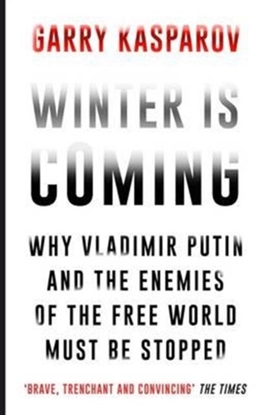
Winter Is Coming
For readers of Putin's People by Catherine Belton comes the stunning story of Russia's slide back into a dictatorship led by Vladimir Putin - and how the world is now paying the price.
'Brave, trenchant and convincing' Sunday Times
'Ferocious and unforgiving' Financial Times
The ascension of Vladimir Putin - a former lieutenant colonel of the KGB - to the presidency of Russia in 1999 was a strong signal that the country was headed away from democracy. Yet in the intervening years - as America and the world's other leading powers have continued to appease him - Putin has grown not only into a dictator but an international threat. With his vast resources and nuclear arsenal, Putin is at the centre of a worldwide assault on political liberty and the modern world order.
For Garry Kasparov, none of this is news. He has been a vocal critic of Putin for over a decade, even leading the pro-democracy opposition to him in the farcical 2008 presidential election. Yet years of seeing his Cassandra-like prophecies about Putin's intentions fulfilled have left Kasparov with a darker truth: Putin's Russia, like ISIS or Al Qaeda, defines itself in opposition to the free countries of the world.
As Putin has grown ever more powerful, the threat he poses has grown from local to regional and finally to global. In this urgent book, Kasparov shows that the collapse of the Soviet Union was not an endpoint - only a change of seasons, as the Cold War melted into a new spring. But now, after years of complacency and poor judgement, winter is once again upon us.
Argued with the force of Kasparov's world-class intelligence, conviction and hopes for his home country, Winter Is Coming reveals Putin for what he is: an existential danger hiding in plain sight.
Lees meer
Winter Notes on Summer Impressions: New Translation
Only edition in print
In June 1862, Dostoevsky left Petersburg on his first excursion to Western Europe. Ostensibly making the trip to consult Western specialists about his epilepsy, he also wished to see firsthand the source of the Western ideas he believed were corrupting Russia. Over the course of his journey he visited a number of major cities, including Berlin, Paris, London, Florence, Milan, and Vienna. His impressions on what he saw, "Winter Notes on Summer Impressions", were first published in the February 1863 issue of Vremya (Time), the periodical he edited.

Winter of the World
Winter of the World is the second novel in Ken Follett’s uniquely ambitious Century trilogy. On its own or read in sequence with Fall of Giants and Edge of Eternity, this is a gripping epic of global conflict and personal drama.
A BATTLE OF IDEALS
1933, and at Cambridge, Lloyd Williams is drawn to irresistible socialite Daisy Peshkov, who represents everything that his left-wing family despise, but Daisy is more interested in aristocratic Boy Fitzherbert, a leading light of the British Union of Fascists.
AN EVIL UPRISING
Berlin is in turmoil. Eleven-year-old Carla von Ulrich struggles to understand the tensions disrupting her family as Hitler strengthens his grip on Germany. Many are resolved to oppose Hitler’s brutal regime – but are they willing to betray their country?
A GLOBAL CONFLICT ON A SCALE NEVER SEEN BEFORE
Shaken by the tyranny and the prospect of war, five interconnected families’ lives become ever more enmeshed. An international clash of military power and personal beliefs is sweeping the world, but what will this new war mean for those who must live through it?
*Ken Follett’s Column of Fire was an instant Sunday Times HB bestseller when it published in 2017

Winter op je yogamatje

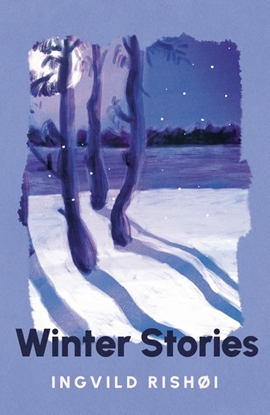
Winter Stories
In Winter Stories, we meet a teenager on the run from social services with her younger half-sister and half-brother in tow, a young single mother struggling to provide adequately for her daughter, and an ex-convict striving to overcome personal shortcomings and build a relationship with his son. We watch these characters stumble, fall and climb to their feet again, even though the deck inevitably seems to be stacked against them.
With empathy and sensitivity, Ingvild Rishøi beautifully illuminates the vulnerability of the human condition. In a time when levels of scepticism and distrust are rising, these stories remind us of the humanity that unites us all.




Winterberg


