
Theoretische geschiedenis
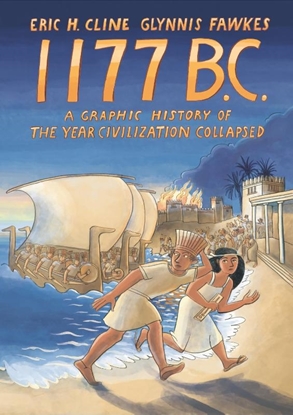
1177 B.C.
“1177 B.C. is a spectacular achievement—deftly adapted, beautifully drawn, and captivatingly colored by Glynnis Fawkes. . . . [She] doesn’t just bring history alive, she propels it across the page in an accessible, gripping way.”—Alison Bechdel, New York Times bestselling author of Fun Home
A beautiful, full-color graphic version of Eric Cline’s bestselling 1177 B.C., adapted by award-winning author-illustrator Glynnis Fawkes
Eric Cline’s 1177 B.C. tells the story of one of history’s greatest mysteries: what caused the ancient civilizations of the Aegean and Eastern Mediterranean to collapse more than three thousand years ago, bringing the Late Bronze Age to an abrupt end? In this vivid and captivating full-color graphic adaptation of the landmark book, author-illustrator Glynnis Fawkes invites us to follow two young friends living in the aftermath of the cataclysm as they unravel why it happened—and reveal important lessons for today’s interconnected and vulnerable world.
Pel, a member of the marauding Sea Peoples, and Shesha, an Egyptian scribe, visit the kingdoms of the Minoans, Mycenaeans, Hittites, Canaanites, Assyrians, and Egyptians to explore the calamities that brought them down. This graphic history depicts the people, events, art, architecture, and lands that Pel and Shesha encounter. We witness the Sea Peoples’ battles on land and sea, earthquakes on the Greek mainland, droughts and famine in Anatolia, invasions in north Syria, and possible rebellions in Canaan. Along the way, we also learn about the assassination of a Hittite prince traveling to marry an Egyptian queen, the sinking of a merchant ship laden with international goods, and the return of a pair of sandals to Crete by the Babylonian king Hammurabi.
An entertaining adventure story, this dazzling comic is also historically accurate and enlightening, inviting readers of all ages to think about the surprising factors and theories that explain why societies, whether ancient or modern, die or survive when struck by catastrophes.

31 Inventions That Built Our World
A FASCINATING DELVE INTO THE HISTORY OF THE CITY, BY THE SUNDAY TIMES #1 BESTSELLING AUTHOR OF A HISTORY OF THE WORLD IN 47 BORDERS
'Charming and outstandingly nerdish'
ROBERT WEBB
'I love Jonn Elledge; I love the way he looks at the world'
MARINA HYDE
_________
For over 10,000 years, we humans have been busy altering our environment and embracing 'progress', evolving seamlessly from hunter gatherers to the modern urban sophisticates we see ourselves as today.
But what are the ideas and inventions that enabled humanity to become, by the early 21st century, a majority urban species for the first time? How did the essential infrastructure of modern life - the innovations that we barely even notice, but without which our world would fall apart - actually come to be?
With his characteristic wit and boundless curiosity, Jonn Elledge invites us to join him on a fascinating and often surprising tour of the ideas and technologies that made modernity possible. From elevators to electric lighting, parks to pedestrian crossings, he guides us through the history of civilisation itself.
-----
***A History of the World in 47 Borders was The Sunday Times No 1 Bestseller April 2025***
-----
MORE PRAISE FOR 31 INVENTIONS THAT BUILT OUR WORLD . . .
'Would you like to learn some supremely nerdy facts about the history of tram, canal, rail and power networks? Door numbering systems? Windows and doors, sewers and shopping? Lifts and escalators? Go on, of course you do. Jonn has emptied his extraordinary brain and created a magnificent, unobvious tour through the underappreciated systems which form the backdrop to our lives.'
TIM DUNN, presenter of Secrets of the London Underground
'31 Inventions is an accessible history of civilisation told through the things around us we mostly take for granted but someone - usually someone quite odd - thought up in the past. Elledge's writing style is warm, witty and erudite, reminiscent of the late, great Douglas Adams. You will not be able to stop quoting facts from this book at everyone you meet, and they will be as amused and intrigued as you are.'
LEWIS BASTON, author of Borderlines
'Fantastic stuff! Jonn has a real gift for making the stories of everyday objects thrilling and unputdownable.'
JAY FOREMAN, co-author of Map Men
'Jonn Elledge brings an infectious enthusiasm and a joie de vivre to this masterly story of the building blocks of modern life. I loved it. Read this book to truly understand the world around you, building by building, street by street, city by city.'
JACK CORNISH, author of London Never Ends
'A smart, funny and endlessly fascinating book. Elledge has a wonderful ability to take something seemingly mundane and, with great charm, use it to transform the way you see the wider world.'
RHIANNON GARTH JONES, author of All Roads Lead to Rome
'Massively entertaining ... Equal parts history, science and farce - but never dull.'
JIM WATERSON, LondonCentric
'Fascinating and funny - it'll have you geeking out over the most everyday things!'
JAGO HAZZARD, YouTuber
'Far funnier than any book about infrastructure has any right to be.'
DANIEL KNOWLES, author of Carmageddon
'Jonn Elledge is a natural raconteur with encyclopaedic knowledge at his fingertips. 31 Inventions that Built our World is a new kind of history book for the modern age.'
GABRIELLA BENNETT, author of How to Build a City
'Knowledgeable and interesting, but never patronising nor highfalutin . . . slips down like a cool drink on a warm day.'
ARTS DESK
'Informative, often funny . . . Mr Elledge's fondness for obscure trivia is among this book's many delights.'
ECONOMIST

40 Maps That Will Change How You See the World
"This fascinating book will intrigue and delight readers and really lives up to its title." – Geographical
"It completely shifts your perspective on how maps shape our understanding of the world." – 5* Reader review
Turn the pages of this thought-provoking book, and discover maps that challenge conventional wisdom, confront social and political norms and offer fresh perspectives on familiar landscapes.
This meticulously curated selection of 40 maps spans the ages, from ancient parchment scrolls to cutting-edge digital creations. Each map is a window into a different facet of our world, shedding light on the complex interplay of geography, geopolitics, art, history, science, and society.
Maps have always held the power to transport us, not just from one place to another, but from one state of mind to another. Beyond their utilitarian function, maps have an extraordinary ability to tell stories, reveal truths, and inspire revolutions.
They are not mere drawings of geographic boundaries, but gateways to the collective wisdom of humanity. You'll encounter maps that dissect the intricate tapestry of human migration, maps that unveil the secrets of the cosmos and maps, that expose the stark realities of our changing climate. These maps are not just illustrations; they are provocations, invitations to rethink the world.
40 Maps That Will Change How You See the World is not just a book for geographers or history buffs; it is a profound exploration for anyone with a curious mind. Whether you're an armchair traveler, a seasoned explorer, a student of geopolitics, or an art aficionado, this book will challenge your preconceptions, spark lively discussions, and deepen your appreciation for the interconnectedness of our world.

A Brief History of Nakedness
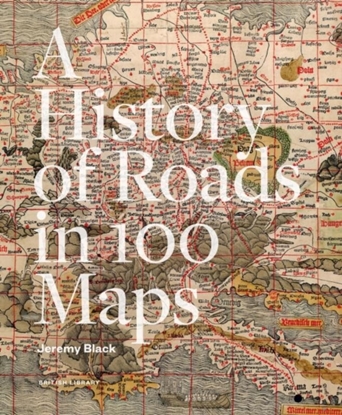
A History of Roads in 100 Maps
The major form of travel throughout history has been roadways. And while humanity has traversed these roadways on foot, by horse or in mechanical vehicles, there is the common theme of a particular route; a right of way differentiating the roadway from adjoining countryside. This book provides the first unique survey of the mapping of roads, exploring the development of these most essential of societies’ arteries.
Taking as its principal research source one of the world’s greatest historical map collections at the British Library, this volume commences with Konrad Peutinger’s celebrated map of 4th Century Roman roads but, as the print revolution develops, we are soon transported along pilgrim routes, across conqueror’s maps, along early Modern post-roads and via the beautiful cartography of Japan’s 1666 Tōkaidō map. A History of Roads in 100 Maps also explores the early maps of Automobile Clubs, heralding the dramatic revolution motorised transport brought to roads, and concludes with a similarly seismic shift, a century later, as the birth of the information superhighway reinvented the road map for ever.
Lees meer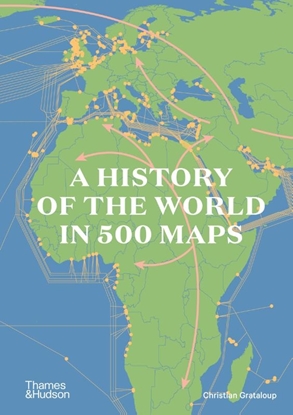
A History of the World in 500 Maps

A History of the World in Twelve Shipwrecks
AN ECONOMIST BEST BOOK OF 2024
'Masterful and entrancing - this is big history at its best.' Professor Alice Roberts, author of Ancestors
'A real-life Indiana Jones takes readers on a dive through these underwater museums, revealing the sunken secrets of the past' The Times
From a Bronze Age ship built during the age of Queen Nefertiti and filled with ancient treasures, a Viking warship made for King Cnut himself, Henry VIII's spectacular Mary Rose and the golden age of the Tudor court, to the exploration of the Arctic, the tragic story of HMS Terror and tales of bravery and endurance aboard HMS Gairsoppa in World War Two, these are the stories of some of the greatest underwater discoveries of all time. A rich and exciting narrative, this is not just the story of those ships and the people who sailed on them, the cargo and treasure they carried and their tragic fate. This is also the story of the spread of people, religion and ideas around the world, a story of colonialism and migration which continues today.
Drawing on decades of experience excavating shipwrecks around the world, renowned maritime archaeologist David Gibbins reveals the riches beneath the waves and shows us how the treasures found there can be a porthole to the past to tell a new story about the world and its underwater secrets.
Lees meer
A Little History of Economics

A Little History of Music
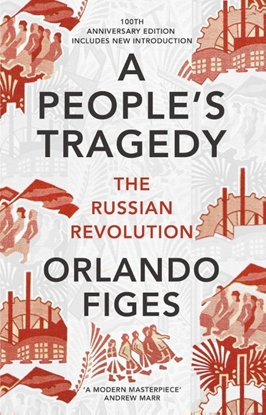
A People's Tragedy
The most vivid, moving and comprehensive history of the Russian Revolution available today.
Unrivalled in scope and brimming with human drama, A People's Tragedy is widely hailed as the definitive account of the Russian Revolution.
Orlando Figes weaves scholarship and storytelling to capture both the epic scale and personal cost of 1917. Gripping and compassionate, he draws on the diaries and letters of workers, soldiers, intellectuals and villagers as their world degenerates into violence and dictatorship, conveying above all the shocking experience of the revolution for those who lived it.
Illustrated with over 100 photographs and now including a new introduction that reflects on the revolution's centennial legacy, A People's Tragedy is - a masterful and definitive record of one of the most important events in modern history
‘A modern masterpiece.’ Andrew Marr
‘The most moving account… since Doctor Zhivago.’ Independent
Lees meer
A Short History of Slavery

Amsterdam
Updated Edition with a New Preface for Amsterdam's 750th Anniversary
Tourists know Amsterdam as a picturesque city of low-slung brick houses lining tidy canals; student travelers know it for its legal brothels and hash bars; art lovers know it for Rembrandt's glorious portraits.
But the deeper history of Amsterdam, what makes it one of the most fascinating places on earth, is bound up in its unique geography-the constant battle of its citizens to keep the sea at bay and the democratic philosophy that this enduring struggle fostered. Amsterdam is the font of liberalism, in both its senses. Tolerance for free thinking and free love make it a place where, in the words of one of its mayors, "craziness is a value." But the city also fostered the deeper meaning of liberalism, one that profoundly influenced America: political and economic freedom. Amsterdam was home not only to religious dissidents and radical thinkers but to the world's first great global corporation.
In this effortlessly erudite account, Russell Shorto traces the idiosyncratic evolution of Amsterdam, showing how such disparate elements as herring anatomy, naked Anabaptists parading through the streets, and an intimate gathering in a sixteenth-century wine-tasting room had a profound effect on Dutch-and world-history. Weaving in his own experiences of his adopted home, Shorto provides an ever-surprising, intellectually engaging story of Amsterdam. Lees meer

Anne Frank
Drawing on the unique historical sites, archives, expertise, and unquestioned authority of the Anne Frank House in Amsterdam, New York Times bestselling authors Sid Jacobson and Ernie Colón have created the first authorized and exhaustive graphic biography of Anne Frank.
Their account is complete, with The Anne Frank House Authorized Graphic Biography covering the lives of Anne's parents, Edith and Otto; Anne's first years in Frankfurt; the rise of Nazism; the Franks' immigration to Amsterdam; war and occupation; Anne's years in the Secret Annex; betrayal and arrest; her deportation and tragic death in Bergen-Belsen; the survival of Anne's father; and his recovery and publication of her astounding diary.
Anti-Zionism
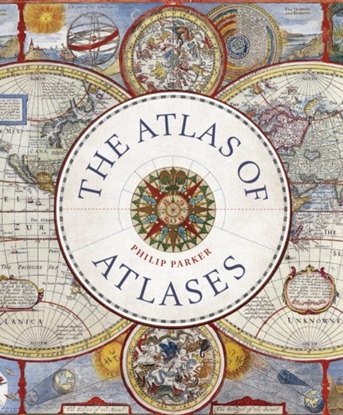
Atlas of Atlases
Atlases are books that changed the course of history. Pored over by rulers, explorers, and adventures these books were used to build empires, wage wars, encourage diplomacy, and nurture trade.
Written by Philip Parker, an authority on the history of maps, this book brings these fascinating artefacts to life, offering a unique, lavishly illustrated guide to the history of these incredible books and the cartographers behind them.
All key cartographic works from the last half-millennium are covered, including:
- The Theatrum Orbis Terrarum, considered the world’s first atlas and produced in 1570 by the Dutch, geographer Abraham Ortelius,
- The 17th-century Klencke — one of the world’s largest books that requires 6 people to carry it,
- The Rand McNally Atlas of 1881, still in print today and a book that turned its makers, William H Rand and Andrew McNally into cartographic royalty.
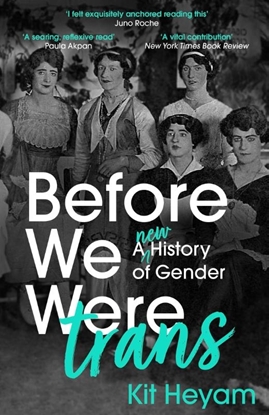
Before We Were Trans
A History Today Book of the Year
Finalist for the Lambda Literary Award
'A beautiful, brilliant, lively book that weaves together fascinating and moving examples with thoughtful analysis. Both heartfelt and rigorous, entertaining and scholarly, Before We Were Trans invites us to expand our sense of communities - past and present - in welcoming ways, rather than contracting them and policing their borders' MEG-JOHN BARKER, author of Gender: A Graphic Guide
'Celebrates trans history, whilst acknowledging the reality of what it means to live within our community with joy and kindness. In-depth research and personal stories tie Before We Were Trans up into a true treat for the mind' JAMIE WINDUST, author of In Their Shoes
Across the world today, people of all ages are doing fascinating, creative, messy things with gender. These people have a rich history - but one that is often left behind by narratives of trans lives that focus on people with stable, binary, uncomplicated gender identities. As a result, these stories tend to be recent, binary, stereotyped, medicalised and white.
Before We Were Trans is a new and different story of gender, that seeks not to be comprehensive or definitive, but - by blending culture, feminism and politics - to widen the scope of what we think of as trans history by telling the stories of people across the globe whose experience of gender has been transgressive, or not characterised by stability or binary categories.
Transporting us from Renaissance Venice to seventeenth-century Angola, from Edo Japan to North America, the stories this book tells leave questions and resist conclusions. They are fraught with ambiguity, and defy modern Western terminology and categories - not least the category of 'trans' itself. But telling them provides a history that reflects the richness of modern trans reality more closely than any previously written.
Before We Were Trans is a history and celebration of gender in all its fluidity, ambiguity and complexity.
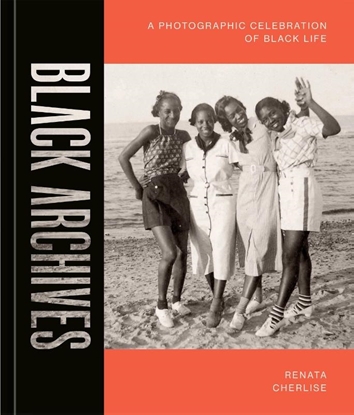
Black Archives
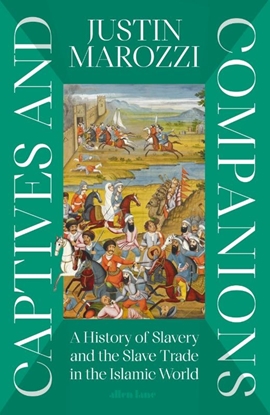
Captives and Companions
A startling exploration of slavery in the Islamic world from the 7th century to the present
Slavery in the Islamic world has a long, diverse and controversial history. Captives and Companions is a brilliant synthesis of history and contemporary reportage that brings to life the voices of the enslaved in stories of eighth-century concubines and ninth-century revolts, thirteenth-century slave soldiers who established dynastic rule over Egypt, Syria, and Iraq, eighteenth-century corsairs and twentieth-century pearl divers in the Gulf. It also has first-hand accounts of this legacy in the twenty-first century, including the depredations of Daesh and continuing hereditary slavery in Mali and Mauritania.
Justin Marozzi traces the extraordinary variety of enslavement in the Islamic world, which ranged from agricultural labour and domestic toil to elite concubinage, guardianship of sacred spaces, political leadership and even military command. He shows how Africa bore the brunt of the demand for slave labour, fuelled throughout the nineteenth century by expanding global markets and commodity chains. Slavers plied African coasts, traders raided inland for human cargo, and millions were marched across the Sahara into captivity. Meanwhile, North African corsairs turned the Mediterranean into a slave-raiding ‘free-for-all’ between Muslims, Christians and Jews.
Taking the reader on an extraordinary historical journey from Baghdad to Bamako, Tripoli to Timbuktu, Istanbul to the Black Sea, this is the riveting human drama of those caught up in one of history’s most remarkable overlooked stories.
Captives and Companions
A startling exploration of slavery in the Islamic world from the 7th century to the present
Slavery in the Islamic world has a long, diverse and controversial history. Captives and Companions is a brilliant synthesis of history and contemporary reportage that brings to life the voices of the enslaved in stories of eighth-century concubines and ninth-century revolts, thirteenth-century slave soldiers who established dynastic rule over Egypt, Syria, and Iraq, eighteenth-century corsairs and twentieth-century pearl divers in the Gulf. It also has first-hand accounts of this legacy in the twenty-first century, including the depredations of Daesh and continuing hereditary slavery in Mali and Mauritania.
Justin Marozzi traces the extraordinary variety of enslavement in the Islamic world, which ranged from agricultural labour and domestic toil to elite concubinage, guardianship of sacred spaces, political leadership and even military command. He shows how Africa bore the brunt of the demand for slave labour, fuelled throughout the nineteenth century by expanding global markets and commodity chains. Slavers plied African coasts, traders raided inland for human cargo, and millions were marched across the Sahara into captivity. Meanwhile, North African corsairs turned the Mediterranean into a slave-raiding ‘free-for-all’ between Muslims, Christians and Jews.
Taking the reader on an extraordinary historical journey from Baghdad to Bamako, Tripoli to Timbuktu, Istanbul to the Black Sea, this is the riveting human drama of those caught up in one of history’s most remarkable overlooked stories.

Cellarius Atlas
Travel to a time and universe where science and art intertwined, and the heavens were charted with breathtaking beauty. This unique volume revives Andreas Cellarius’s 17th-century masterpiece, an iconic atlas that captured man’s ambition to grasp infinity. First published in 1660, its 29 sweeping, double-folio maps detail the vast celestial systems of Ptolemy, Copernicus, and Tycho Brahe, alongside intricate motions of the sun, moon, and planets.
Each plate is a vision of wonder: constellations traced across radiant skies are framed by opulent borders adorned with cherubs, astronomers, and instruments of discovery. Often described as the most beautiful celestial atlas ever published, Harmonia Macrocosmica is one of the masterworks from the Golden Age of Dutch map-making.
More than a visual feast, this reprint includes an illustrated introduction by renowned scholar Robert van Gent that delineates the journey from ancient stargazers to the scientific revolution. He lays out the cultural, historical, and astronomical significance of Cellarius’s magnum opus, as well as the craftsmanship of his publisher, Johannes Janssonius. A detailed appendix further enriches the voyage, listing constellation myths, star names, and technical glossaries that illuminate every turn of the page.
This volume is both a delight for the senses and a portal to the skies as they were once mapped, at a time when the universe itself was viewed as work of art. For dreamers, scholars, and astonomers alike, Cellarius’s heavens still inspire awe, inviting us to lose ourselves in the theater of the cosmos.
Lees meer