
Theoretische geschiedenis
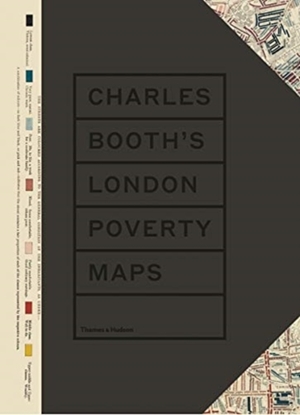
Charles Booth’s London Poverty Maps
In the late nineteenth century, Charles Booth’s landmark social and economic survey found that 35 percent of Londoners were living in abject poverty. Booth’s team of social investigators interviewed Londoners from all walks of life, recording their comments, together with their own unrestrained remarks and statistical information, in 450 notebooks. Their findings formed the basis of Booth’s color-coded social mapping (from vicious and semi-criminal to wealthy) and his seventeen-volume survey Inquiry into the Life and Labour of the People of London, 1886–1903.
Organized into six geographical sections, Charles Booth’s London Poverty Maps presents the hand-colored preparatory and printed social mapping of London. Accompanying the maps are reproductions of pages from the original notebooks, containing anecdotes and observations too judgmental for Booth to include in his final published survey. An introduction by professor Mary S. Morgan clarifies the aims and methodology of Booth’s survey and six themed essays contextualize the the survey’s findings, accompanied by evocative period photographs.
Providing insights into the minutia of everyday life viewed through the lens of inhabitants of every trade, class, creed, and nationality, Charles Booth’s London Poverty Maps brings to life the diversity and dynamism of late nineteenth-century London.
Lees meer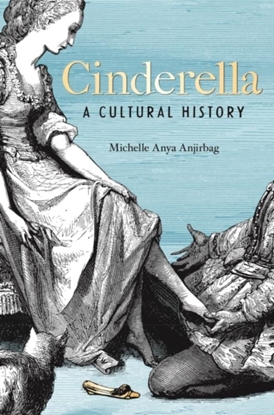
Cinderella
A bright, illuminating tour of the many fascinating and revealing manifestations of the Cinderella story, dancing artfully across cultures, forms and meanings.
Matthew Sangster, author of An Introduction to Fantasy.
A glass slipper, a fairy godmother, a transformed pumpkin, lizard footmen and seamstress mice: these familiar images evoke a very particular story, one where hopes and dreams for a new life might come true. Adaptations of Cinderella branch out through history and across the world, from early illustrated books to modern children’s and young adult novels, and contemporary films. Cinderella: A Cultural History aims to answer the question, why does Cinderella still inspire so many of us with her story?
Beginning with the literary versions of the tale that were popularized by collectors and writers such as Basile, Perrault and the Brothers Grimm, this book looks back at the folktales that informed them, out to the various countries and cultures that share similar stories, and then forwards to what writers, illustrators, filmmakers and other storytellers continue to do with the Cinderella narrative. Instead of taking a strictly historical approach, it explores the ways heroes, villains, helpers and symbols appear in different interpretations, illustrations and adaptations. It draws connections between the historical and contemporary preoccupations, concerns and hopes that the Cinderella story still addresses in the 21st century, and celebrates our enduring desire for enchantment and transformation.
Lees meer
Cunning Folk
Cunning Folk transports us to a time when magic was used to solve life’s day-to-day problems – as well as some of deadly importance.
‘A brilliant book, written with wit and vigour’ MALCOLM GASKILL, author of The Ruin of All Witches
‘Absolutely fascinating’ IAN MORTIMER, author of The Time-Traveller’s Guide to Medieval England
It’s 1600 and you’ve lost your precious silver spoons, or maybe they’ve been stolen. Perhaps your child has a fever. Or you’re facing trial. Maybe you’re looking for love or escaping a husband. What do you do? In medieval and early modern Europe, your first port of call might well have been cunning folk: practitioners of magic who were a common, even essential part of daily life, at a time when the supernatural was surprisingly mundane.
Charming, thought-provoking and based on original research, Cunning Folk is an immersive reconstruction of a bygone world by an expert historian, as well as a commentary on the beauty and bafflement of being human.
‘I adore Cunning Folk. A truly fascinating and human book’ Ruth Goodman, author of How To Be a Tudor
‘Packed with vivid historical anecdotes, this is an intriguing insight into the magical lives of past people and the history of our own superstitions today’ Marion Gibson, author of Witchcraft
‘Fascinating . . . opens a window into another world’ Tracy Borman, author of Anne Boleyn & Elizabeth I
‘Full of such magical tips and colourful vignettes . . . crackles with incident’ Kate Maltby, Financial Times
‘Spirited and richly detailed’ New York Times
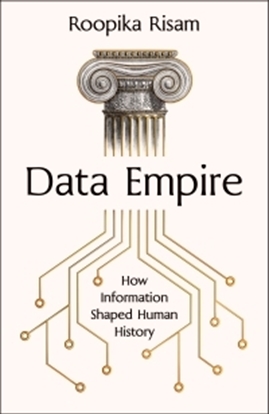
Data Empire
A BARACK OBAMA, NEW SCIENTIST AND NPR PICK
Data shaped empires. Now it's shaping our future. A groundbreaking 11,000 year global history from clay tablets to the algorithmic state, perfect for readers of Nexus and The Age of Surveillance Capitalism.
'The new history of mankind demanded by our times' Jaron Lanier, author of Ten Arguments for Deleting Your Social Media Right Now
'Breathtaking in its scope and enormously fulfilling in its depth' Lewis Dartnell, author of Being Human
From targeted advertising to mass surveillance, data shapes the course of our lives. How did it gain the power it now holds over us?
Since the dawn of civilization, people gained power by keeping count. From ancient censuses to maps and ledgers, data decided who belonged, who owed, and who could be sacrificed. Today, a handful of private brokers increasingly define what we see and what is real.
Provocative, humane and sweeping in scope, Data Empire challenges us to decide whether we will allow a new set of data empires to hardwire inequality into the next century, or fight for the benefit of all. It’s time to decide. Will technology serve democracy or replace it?
'Essential reading for understanding the opportunities and dangers of the technological revolution now transforming our world' Jonathan Kennedy, author of Pathogenesis
'This brilliant, readable book offers a striking new historical perspective' Corinne Fowler, author of Our Island Stories
Lees meer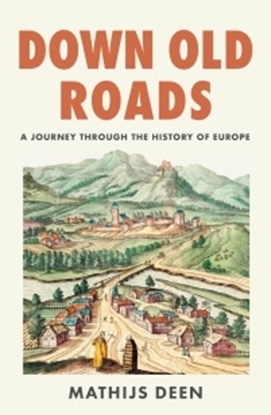
Down Old Roads
A cultured, engaging collection of historical vignettes ranging from prehistoric times to the early 20th century - all focused on the ancient roads, tracks and pathways of Europe
For a million years people have been traveling throughout Europe. From the mysterioushomo antecessorwhich left its footprints on the coast of England to the traveller on the motorways of today. Under every footstep lies an older one, under every paved road a donkey trail or wagon rut, under every footpath the prints of a hunter or prey.
And yet the long through roads of Europe dont hold a special place in the imaginations and identities of its residents. Why does the European have such an ambivalent relationship with the long roads of his or her continent?
Why have no classics been written about the E30, such as the Americans have written about Route 66? Are Europeans too attached to their own home patch? Or have they too often seen armies marching towards them along those roads?
In search of the answer to that question, Mathijs Deen follows the refugees, bandits, pilgrims, fortune seekers, conquerors and racers who found their way along the coasts and via the rivers and roads of Europe. From Boekelo to Smolensk, and from the first Europeans to the barons who raced the open roads of Europe circa 1900:Down the Old Roadsis a journey through Europe and a trip through time.
Translated from the Dutch by Jane Hedley-Prole and Jonathan Reeder
Lees meer

Elie Wiesel
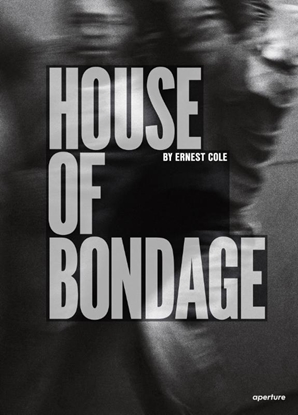
Ernest Cole: House of Bondage
Cole, a Black South African man, photographed the underbelly of apartheid in the 1950s and ’60s, often at great personal risk. He methodically captured the myriad forms of violence embedded in everyday life for the Black majority under the apartheid system—picturing its miners, its police, its hospitals, its schools. In 1966, Cole fled South Africa and smuggled out his negatives; House of Bondage was published the following year with his writings and first-person account. This edition retains the powerful story of the original while adding new perspectives on Cole’s life and the legacy of House of Bondage. It also features an added chapter—compiled and titled “Black Ingenuity” by Cole—of never-before-seen photographs of Black creative expression and cultural activity taking place under apartheid. Made available again nearly fifty-five years later, House of Bondage remains a visually powerful and politically incisive document of the apartheid era. Lees meer

Fake History
Fake news about the past is fake history.
Did Hugo Boss design the Nazi uniforms?
Did medieval people think the world was flat?
Did Napoleon shoot the nose off the Sphinx?
*Spoiler Alert* The answer to all those questions is no.
From the famous quote 'Let them eat cake' - mistakenly attributed to Marie Antoinette - to the apocryphal horns that adorned Viking helmets, fake history continues to shape the story we tell about who we are and how we got here. With doctored photographs, AI-generated images and false claims about the past circulating in the news and on social media, separating fact from fiction seems harder than ever before.
Jo Hedwig Teeuwisse, better known as The Fake History Hunter, is on a one-woman mission to hunt down fake history and reclaim the truth for the rest of us.
In this fascinating and illuminating book, Teeuwisse debunks 101 myths so you can correct your friends and family, and arm yourself with the tools to spot and debunk fake history wherever you encounter it. Lees meer

Folklore of the Sea
Filled with the myths and legends of the deep, this new illustrated edition of the cult classic folklore collection reveals the stories that swirled on the open seas, and the customs that remain part of maritime life.
The vivid, often eerie, superstitions, tales and rituals of the sea were the sailors ‘response to danger — immediate and uncontrolled. As a sailing-ship beat for weeks across the Southern Ocean, domain of the albatross, meeting no one in the lonely wastes, her crew felt an urgent need to appease the sea-gods. Even today, with engines, iron or fibreglass hulls, and less credulous seamen, much traditional sea lore has survived, especially in the fishing fleets.
Stories of phantom ships and crews (from the Flying Dutchman onwards), of the perennial sea-serpent, of lonely lighthouses; rituals such as the crossing-the-line ceremonies or blessing the fishing fleet; old weather lore, sailors’ chanties and sea language, taboos and talismans, precautions taken at keel-laying or launching — all these are recorded and interpreted here.
For everyone who enjoys strange stories and the chilly fascination of the unconquered sea, or thrills to watch man pitting himself against merciless elements, this book is a delight and a mine of information. Margaret Baker is unrivalled at collecting traditions of the past and showing the part they have played for generations of men in their daily lives. With brand new illustrations by Philip Harris.
Lees meer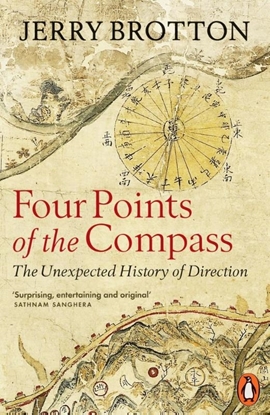
Four Points of the Compass
A sparkling exploration of direction, by the acclaimed author of A History of the World in 12 Maps
North, south, east and west: almost all societies use the four cardinal directions to orientate themselves, to understand who they are by projecting where they are. For millennia, these four directions have been foundational to our travel, navigation and exploration and are central to the imaginative, moral and political geography of virtually every culture in the world. Yet they are far more subjective and various – sometimes contradictory – than we might realize.
The Four Points of the Compass takes the reader on a journey of directional discovery. Jerry Brotton reveals why Hebrew culture privileges east; why Renaissance Europeans began drawing north at the top of their maps; why the early Islam revered the south; why the Aztecs used five colour-coded cardinal directions; and why no societies, primitive or modern, have ever orientated themselves westwards. He ends by reflecting on our digital age in which we, the little blue dot on the screen, have become the most important compass point. Throughout, Brotton shows that the directions reflect a human desire to create order and that they only have meaning, literally and metaphorically, depending on where you stand.
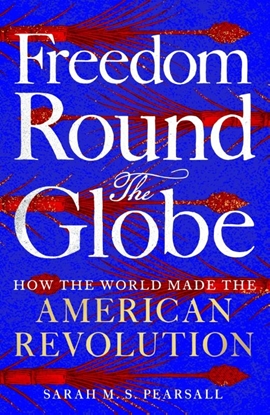
Freedom Round the Globe
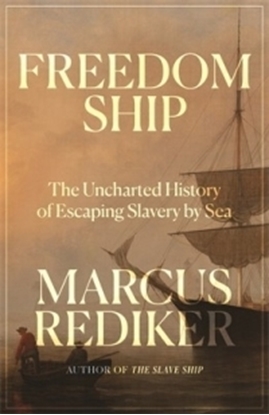
Freedom Ship
From the docks of Savannah and Charleston to Boston Harbor and beyond, Freedom Ship traces the seekers who turned their sights to the sea. Stowaways regularly arrived in Britain aboard cotton ships bound for Liverpool. Moses Roper, one of the most determined runaways in American history, travelled 350 miles through slave country before boarding the Napoleon and sailing for England. He became the first self-emancipated bondsman to lecture in the cause of abolition in Britain. Legendary abolitionists Frederick Douglass and Harriet Tubman both saw the shipping lanes as paths to freedom.
Marcus Rediker displays a prodigious command of archival research to embark on a thrilling journey along the Atlantic seaboard, following those who risked everything in a maritime pursuit of freedom. Lees meer
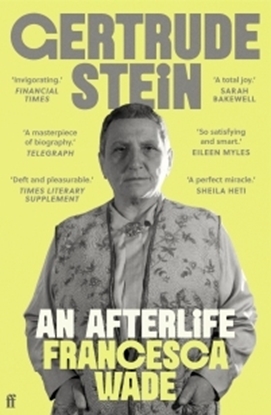
Gertrude Stein
SHORTLISTED FOR THE AMERICAN LIBRARY IN PARIS BOOK AWARD 2025
'Strikingly accomplished . . . utterly compelling.' SUNDAY TIMES
'A masterpiece of biography.' DAILY TELEGRAPH
'A total joy to read.' SARAH BAKEWELL
'I feel like I've been waiting for this book my whole life.' SHEILA HETI
Admirers called her a genius, sceptics a charlatan.
Gertrude Stein remains one of the most confounding – and contested – writers of the twentieth century. The host of glamorous salons at 27 rue de Fleurus, brushing shoulders with Picasso and Hemingway in her long brown robe, Stein never ceased plotting her own legacy. She would be known as the literary innovator of her time. And her enigmatic partner, Alice B. Toklas, would make sure of it.
A BOOK OF THE YEAR IN THE GUARDIAN THE SPECTATOR THE TELEGRAPH THE INDEPENDENT ARTFORUM WASHINGTON POST BOOK WORLD NPR'S FRESH AIR
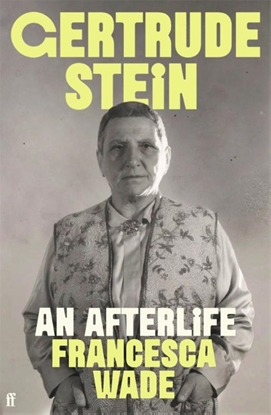
Gertrude Stein
SHORTLISTED FOR THE AMERICAN LIBRARY IN PARIS BOOK AWARD 2025
'Strikingly accomplished . . . utterly compelling.' SUNDAY TIMES
'A masterpiece of biography.' DAILY TELEGRAPH
'A total joy to read.' SARAH BAKEWELL
'I feel like I've been waiting for this book my whole life.' SHEILA HETI
Admirers called her a genius, sceptics a charlatan.
Gertrude Stein remains one of the most confounding – and contested – writers of the twentieth century. The host of glamorous salons at 27 rue de Fleurus, brushing shoulders with Picasso and Hemingway in her long brown robe, Stein never ceased plotting her own legacy. She would be known as the literary innovator of her time. And her enigmatic partner, Alice B. Toklas, would make sure of it.
A BOOK OF THE YEAR IN THE GUARDIAN THE SPECTATOR THE TELEGRAPH THE INDEPENDENT ARTFORUM WASHINGTON POST BOOK WORLD NPR'S FRESH AIR

Gothic

Guns, Germs and Steel
**WINNER OF THE PULITZER PRIZE**
'A book of big questions, and big answers' Yuval Noah Harari, bestselling author of Sapiens
Why has human history unfolded so differently across the globe? And what can it teach us about our current crisis?
Jared Diamond puts the case that geography and biogeography, not race, moulded the contrasting fates of Europeans, Asians, Native Americans, sub-Saharan Africans, and aboriginal Australians.
An ambitious synthesis of history, biology, ecology and linguistics, Guns, Germs and Steel is a ground-breaking and humane work of popular science that can provide expert insight into our modern world.
'The most absorbing account on offer of the emergence of a world divided between have and have-nots... Never before put together so coherently, with such a combination of expertise, charm and compassion' The Times
Lees meer

