
Theoretische geschiedenis

How to Change Your Mind
THE NO. 1 NEW YORK TIMES BESTSELLER, NOW A MAJOR NEW NETFLIX SERIES
'Reminds us that the mind is the greatest mystery in the universe' Yuval Noah Harari, Guardian, Books of the Year
Could psychedelic drugs change our worldview? Join Michael Pollan on a journey to the frontiers of the human mind.
Diving deep into an extraordinary world - from shamans and magic mushroom hunts to the pioneering labs mapping our brains - and putting himself forward as a guinea-pig, Michael Pollan has written a remarkable history of psychedelics and a compelling portrait of the new generation of scientists fascinated by the implications of these drugs. How to Change Your Mind is a report from what could very well be the future of consciousness.
'A sweeping and often thrilling chronicle of the history of psychedelics, all interwoven with Pollan's adventures as a psychedelic novice. This is a serious work of history and science, but also one in which the author, under the influence of toad venom, becomes convinced he's giving birth to himself' Oliver Burkeman, Guardian
'A mind-altering book ... full of transformations' Richard Godwin, Evening Standard
'An irresistible blend of history, research and personal experience. In terms of the psychedelic wave, the book is the big kahuna, the Big Bang moment for a movement that is gathering force' John McKenna, Irish Times
'Entertaining and engrossing' Paul Laity, Financial Times
'Deeply absorbing, wise and beautifully written' Mick Brown, Literary Review
'An astounding book' Andrew Sullivan, New York Magazine
Ignorance
Index, A History of the
*A TIME, New Yorker, Financial Times and History Today Book of the Year*
'Hilarious' Sam Leith
'I loved this book' Susie Dent'
'Witty and affectionate' Lynne Truss
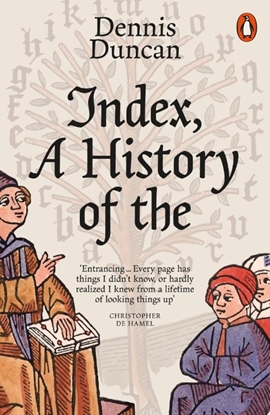
Perfect for book lovers, a delightful history of the wonders to be found in the humble book index
Most of us give little thought to the back of the book - it's just where you go to look things up. But here, hiding in plain sight, is an unlikely realm of ambition and obsession, sparring and politicking, pleasure and play. Here we might find Butchers, to be avoided, or Cows that sh-te Fire, or even catch Calvin in his chamber with a Nonne. This is the secret world of the index: an unsung but extraordinary everyday tool, with an illustrious but little-known past. Here, for the first time, its story is told.
Charting its curious path from the monasteries and universities of thirteenth-century Europe to Silicon Valley in the twenty-first, Dennis Duncan reveals how the index has saved heretics from the stake, kept politicians from high office and made us all into the readers we are today. We follow it through German print shops and Enlightenment coffee houses, novelists' living rooms and university laboratories, encountering emperors and popes, philosophers and prime ministers, poets, librarians and - of course - indexers along the way. Revealing its vast role in our evolving literary and intellectual culture, Duncan shows that, for all our anxieties about the Age of Search, we are all index-rakers at heart, and we have been for eight hundred years.
Iran and the Revolution

Israël, een wereld apart
Landmarks
SHORTLISTED FOR THE SAMUEL JOHNSON PRIZE
SHORTLISTED FOR THE WAINWRIGHT PRIZE
From the bestselling author of UNDERLAND, THE OLD WAYS and THE LOST WORDS
'Few books give such a sense of enchantment; it is a book to give to many, and to return to repeatedly' Independent
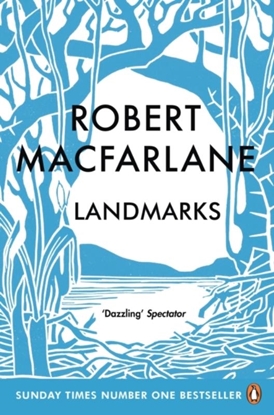
Words are grained into our landscapes, and landscapes are grained into our words. Landmarks is about the power of language to shape our sense of place. It is a field guide to the literature of nature, and a glossary containing thousands of remarkable words used in England, Scotland, Ireland and Wales to describe land, nature and weather.
Travelling from Cumbria to the Cairngorms, and exploring the landscapes of Roger Deakin, J. A. Baker, Nan Shepherd and others, Robert Macfarlane shows that language, well used, is a keen way of knowing landscape, and a vital means of coming to love it.
'Enormously pleasurable, deeply moving. A bid to save our rich hoard of landscape language, and a blow struck for the power of a deep creative relationship to place' Financial Times
'A book that ought to be read by policymakers, educators, armchair environmentalists and active conservationists the world over' Guardian
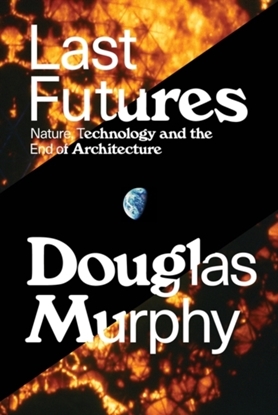
Last Futures
In this brilliant work of cultural history, architect Douglas Murphy traces the lost archeology of the present-day through the works of thinkers and designers such as Buckminster Fuller, the ecological pioneer Stewart Brand, the Archigram architects who envisioned the Plug-In City in the '60s, as well as co-operatives in Vienna, communes in the Californian desert, and protesters on the streets of Paris. In this mind-bending account of the last avant garde, we see not just the source of our current problems but also some powerful alternative futures. Lees meer

London: A Puzzle for Curious Wanderers
Piece together the streets of London and uncover curious historical details with bestselling author Jack Chesher, @livinglondonhistory.
- 1000-piece jigsaw puzzle with 20 shaped pieces: Reveal London's hidden stories as you piece together the puzzle.
- Uncover London's secrets with fun facts and deep dives from Jack Chesher, bestselling author of London: A Guide for Curious Wanderers.
- The perfect gift for history buffs, puzzle fans and Anglophiles, and an excellent souvenir for visitors to the big smoke.
- Box contains: 1000-piece puzzle, paper bag to keep the puzzle pieces safe (no single-use plastic), and a poster packed with historical details.
20 of the pieces in this 1000-piece puzzle are specially shaped and contain hidden London locations, from 13th-century ruins and mysterious signs to teeny tiny sculptures and lavish lavatories. But there's a catch – you won’t know where to find them until you slot them into place! You'll find an explanation for every secret item and location by tour guide and bestselling author Jack Chesher, founder of @livinglondonhistory, on the accompanying poster. The poster also features a reference image to help you complete the puzzle (with the hidden details obscured, of course!)
Finished puzzle measures 18 x 30 inches
Learn more about London's history with: London: A Guide for Curious Wanderers (A Sunday Times bestseller).
Manufacturer’s note: If you experience any issues with your puzzle, please contact the manufacturer directly (Quarto Publishing Group).
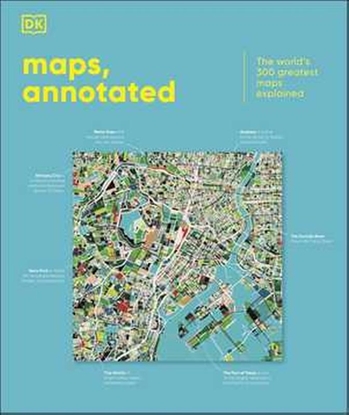
Maps, Annotated
This glorious guided tour of cartographic history features more than 300 of the most famous and important maps of all time.
Immerse yourself in ancient Chinese star charts, decipher medieval Mappae Mundi, and marvel at intricate surveys of the ocean floor and the lunar surface. Discover how Polynesian navigators used sticks to chart their way across the Pacific, what a rhumb line is, and where dragons were once said to lurk.
Organized chronologically, the book includes the most celebrated examples of maps spanning more than 5,000 years, explaining everything from scales and compasses to meteorological symbols, and exploring techniques from engraving and printing to cartographic projection. Entries also place the maps in their wider cultural and historical context, providing a complete overview of the subject.
Combining stunning reproductions with precise annotation, visual analysis, and pull-out details, Maps, Annotated brings an expertly curated selection of the world’s most celebrated maps right into your home, telling the fascinating stories behind each one.
Lees meer
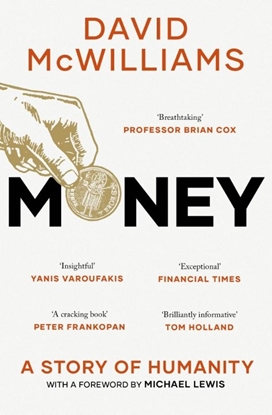
Money
*THE INTERNATIONAL #1 BESTSELLER*
AS HEARD ON RADIO 4 BOOK OF THE WEEK
SHORTLISTED FOR THE AN POST IRISH BOOK AWARDS 2024 NON-FICTION BOOK OF THE YEAR
A WATERSTONES NON-FICTION BOOK OF THE YEAR 2024
A 2024 BOOK OF THE YEAR IN THE OBSERVER, ECONOMIST, FINANCIAL TIMES AND PROSPECT
‘A breathtaking, expansive and imaginative ride through the history and future of money from an author who truly understands it’ PROFESSOR BRIAN COX
‘Exceptional’ FINANCIAL TIMES
‘A cracking book that is as enjoyable as it is readable’ PETER FRANKOPAN
‘Equally entertaining and insightful’ YANIS VAROUFAKIS
_______________________________________________________
MONEY.
The object of our desires.
The engine of our genius.
Humanity’s greatest invention.
From clay tablets in Mesopotamia to today’s cryptocurrency, global economist David McWilliams takes us on an epic journey of innovation, disruption and transformation that is an astonishing new history of our species.
The question is, over 5,000 years, have we changed money – or has money changed us?
_______________________________________________________
‘A fun history of money told through the stories of the chancers, cheats, scoundrels and geniuses who made it happen’ KATIE MARTIN
‘An impressive journey that fizzes with facts’ ECONOMIST
‘An eye-opening history of what makes the world go round’ EVENING STANDARD
‘Compelling, funny and original’ KATJA HOYER
‘If, as David McWilliams complains, economists take the fun out of money, then he is the exception that proves the rule: a man who could not write a boring sentence if he tried’ TOM HOLLAND
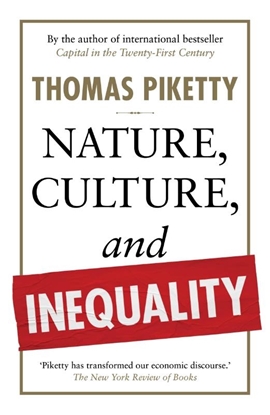
Nature, Culture, and Inequality
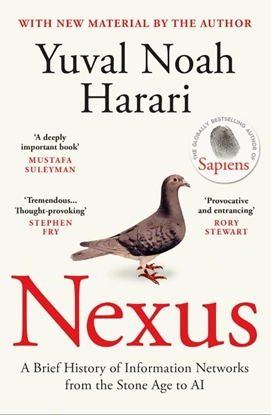
Nexus
‘If you read only one non-fiction book this year, consider this one’ TOM HANKS
‘If there’s one book that I would urge everyone to read – it is Nexus’ STEPHEN FRY
Discover the mind-blowing story of how information networks – from the stone age to AI - have shaped our world from the #1 Sunday Times bestselling author of Sapiens. The perfect Christmas gift for curious minds.
Stories brought us together.
Books spread our ideas – and our mythologies.
The internet promised infinite knowledge.
The algorithm learned our secrets – and then turned us against each other.
What will AI do?
Nexus is the thrilling account of how we arrived at this moment, and the urgent choices we must now make to survive – and to thrive.
**NOW FEATURING EXCLUSIVE NEW MATERIAL FOR PAPERBACK AND EBOOK**
'One of the most remarkable intellects of our generation' RORY STEWART
'A wake-up call in the gentlest, most urgent way' YOTAM OTTOLENGHI
'This deeply important book comes at a critical time as we all think through the implications of AI’ MUSTAFA SULEYMAN
'A super narrative writer' GUARDIAN
‘[Harari] sticks the world together in a gleaming shape that inspires and excites' TELEGRAPH
Lees meer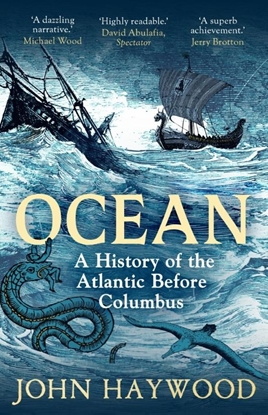
Ocean
'Eminently readable' – The TLS Books of the Year, 2024
Ocean is an ambitious history of the pre-Columbian Atlantic Ocean, a story that begins with the formation of the mid-Atlantic ridge some 200 million years ago and ends with the Castilian conquest of the Canary Islands in the fifteenth century, which provided a template for the methods used by the Spanish in their colonisation of the New World.
John Haywood argues that the perception that Atlantic history begins with the first voyage of the celebrated Genoese navigator is a mistaken one, and that the seafaring and shipbuilding skills that enabled European global exploration and expansion did not arrive fully formed in the fifteenth century, but were learned over centuries and millennia in the Atlantic and its marginal seas. The pre-Columbian history of the Atlantic is the story of how Europeans learned to master the oceans. It is, therefore, key to understanding why it was Europeans, and not any of the world’s other seafaring peoples, who ‘discovered’ the world.
Ocean is informed by the author’s extensive travels in and around the Atlantic Ocean, crossing Newfoundland’s Grand Banks, the Sea of Darkness and the weed-covered Sargasso Sea to make landfall at locations as diverse as Vinland, Greenland, the Faroes and the Cape Verde Islands. Populated by a heterogeneous and multi-ethnic cast of seafarers, fishermen, monks, merchants and dreamers, this is an in-depth history of a neglected subject, fusing geology, geography, mythology, cosmology, developing maritime technologies and the early history of exploration to narrate an enthralling and intriguing story that lies at the very heart of Europe’s modern history and its relationship with the rest of the world. A history on a grand scale, Ocean offers the reader a feast of historical storytelling that will appeal to readers of David Abulafia, Simon Winchester and Michael Pye.
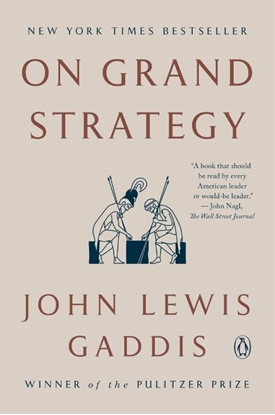
On Grand Strategy
A master class in strategic thinking, distilled from the legendary program the author has co-taught at Yale for decades
For almost two decades, Yale students have competed for admission each year to the "Studies in Grand Strategy" seminar taught by John Lewis Gaddis, Paul Kennedy, and Charles Hill. Its purpose has been to prepare future leaders for responsibilities they will face, through lessons drawn from history and the classics. Now Gaddis has distilled that teaching into a succinct, sharp and potentially transformational book, surveying statecraft from the ancient Greeks to Franklin D. Roosevelt and beyond. An unforgettable guide to the art of leadership, On Grand Strategy is, in every way, its own master class.
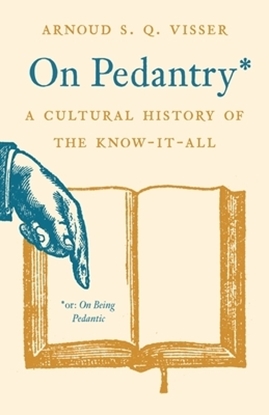
On Pedantry
A lively and entertaining cultural history of a supremely annoying intellectual vice
Intellectuals have long provoked scorn and irritation, even downright aggression. Many learned individuals have cast such hostility as a badge of honor, a sign of envy, or a form of resistance to inconvenient truths. On Pedantry offers an altogether different perspective, revealing how the excessive use of learning has been a vice in Western culture since the days of Socrates.
Taking readers from the academies of ancient Greece to today’s culture wars, Arnoud Visser explains why pretentious and punctilious learning has always annoyed us, painting vibrant portraits of some of the most intensely irritating intellectuals ever known, from devious sophists and bossy savantes to hypercritical theologians, dry-as-dust antiquarians, and know-it-all professors. He shows how criticisms of pedantry have typically been more about conduct than ideas, and he demonstrates how pedantry served as a weapon in the perennial struggle over ideas, social status, political authority, and belief. Shifting attention away from the self-proclaimed virtues of the learned to their less-than-flattering vice, Visser makes a bold and provocative contribution to the history of Western thought.
Drawing on a wealth of sources ranging from satire and comedy to essays, sermons, and film, On Pedantry sheds critical light on why anti-intellectual views have gained renewed prominence today and serves as essential reading in an age of rising populism across the globe.
Opkomst en ondergang van beschavingen
Oudheidkunde is een wetenschap
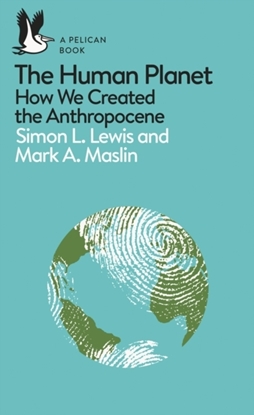
Pelican Books The Human Planet
An engrossing exploration of the science, history and politics of the Anthropocene, one of the most important scientific ideas of our time, from two world-renowned experts
Meteorites, methane, mega-volcanoes and now human beings; the old forces of nature that transformed Earth many millions of years ago are joined by another: us. Our actions have driven Earth into a new geological epoch, the Anthropocene. For the first time in our home planet's 4.5-billion year history a single species is dictating Earth's future.
To some the Anthropocene symbolises a future of superlative control of our environment. To others it is the height of hubris, the illusion of our mastery over nature. Whatever your view, just below the surface of this odd-sounding scientific word, the Anthropocene, is a heady mix of science, philosophy, religion and politics linked to our deepest fears and utopian visions.
Tracing our environmental impact through time to reveal when humans began to dominate Earth, scientists Simon Lewis and Mark Maslin masterfully show what the new epoch means for all of us. Lees meer
