Overige boeken
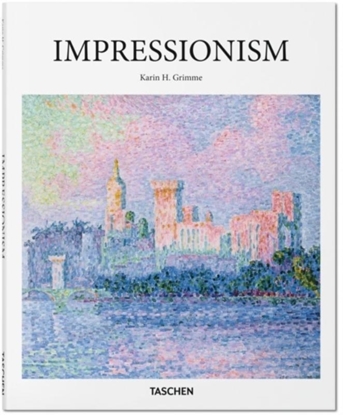
Impressionism
Discover how scenes of daily life and delicate dabs of color shocked the art world establishment.
In this TASCHEN Basic Art introduction to Impressionism, we explore the artists, subjects, and techniques that first brought the easel out of the studio and shifted artistic attention from history, religion, or portraiture to the evanescent ebb and flow of modern life.
As we tour the theaters, bars, and parks of Paris and beyond, we take in the movement’s radical innovations in style and subject, from the principle of plein air painting to the rapid, broken brushwork that allowed the Impressionists to emphasize spontaneity, movement, and the changing qualities of light. We take a close look at their unusual new perspectives and their fresh palette of pure, unblended colors, including many vividly bright shades that brought a whole new level of chromatic intensity to the canvas.
Along the way, we recognize Impressionism’s established greats, such as Edgar Degas, Claude Monet, Berthe Morisot, and Camille Pissarro, as well as many associated artists worthy of closer attention, including Marie Bracquemond, Medardo Rosso, and Fritz von Uhde.
Impressionism

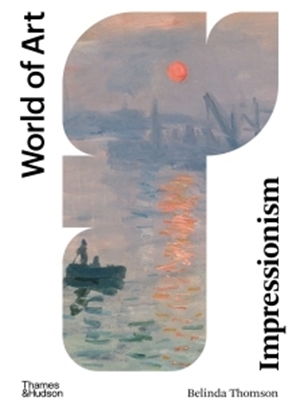
Impressionism
One of the art world’s most recognizable and popular styles, Impressionism is also one of the most complex.
In this sumptuous overview Norbert Wolf lends his attention to all aspects of Impressionism: its historical precursors, contemporary rivals, and the movements it inspired. Over 200 reproductions of entire works and highlighted details introduce readers to the Impressionists’ aesthetics and techniques. Wolf draws insightful parallels between these paintings and other contemporary works of music, photography, and literature. Charting the movement’s expansion from France to the rest of Europe and North America, this volume shines a spotlight on the main protagonists who were key in the development of Impressionism. It highlights not only the French pioneers — Claude Monet, Gustave Caillebotte, Édouard Manet, Pierre- Auguste Renoir, Camille Pissarro, and others—but also Max Liebermann, Lovis Corinth, John Singer Sargent, Mary Cassatt, William Merritt Chase, and James McNeill Whistler.
Authoritative and illuminating, this wide-ranging exploration of Impressionism’s astounding impact on art history will surprise even the most seasoned aficionado. Lees meer
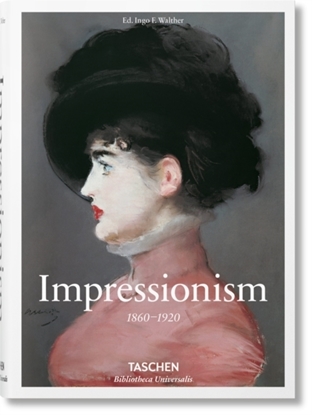
Impressionism
It was a dappled and daubed harbor scene that gave Impressionism its name. When Impression, Sunrise by Claude Monet was exhibited in April 1874, critics seized upon the work’s title and its loose stylistic rendering of light and motion upon water to deride this new, impressionistic tendency in art.
As with many seminal art movements, the critics got their comeuppance. Today, Impressionism is a close contender for the world’s favorite period of painting. With blockbuster exhibitions, record-breaking auction prices, and packed museums, the works once dismissed as unfinished or imprecise are now beloved for their atmospheric evocation of time and place, as well as the stylistic flair of rapid brushstrokes upon canvas.
Despite its popularity and a whole host of publications, many areas and artists of Impressionism remain inadequately researched. This TASCHEN book fills the gap, raising the profile of unjustly neglected pioneers such as Berthe Morisot, Lucien Pissarro, and Gustave Caillebotte, while exploring the characteristics of Impressionism, from painting en plein air to vivid color contrasts, not only in the movement’s native France but also across the rest of Europe and North America.
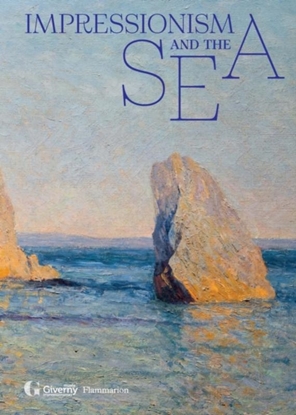
Impressionism and the Sea
The impressionists were forever inspired by the sea, which Claude Monet considered “a wonderful teacher for landscape artists.” The movement’s penchant for plein air painting and its characteristic style, with delicate brushstrokes and incomparable color palettes, was perfectly suited to portrayals of the sea and its perpetual movement, from gently rippling waves to raging storms.
Capturing the natural beauty of coastal landscapes and the delicate play of light on water, this volume illuminates the works of Claude Monet, Édouard Manet, Pierre-Auguste Renoir, Camille Pissarro, Berthe Morisot, Gustave Courbet, Paul Gauguin, Eugène Boudin, Johan Barthold Jongkind, and more, taking readers on a journey along shorelines and beaches—from the coasts of Normandy and Brittany, to the Mediterranean Sea, to Tahiti—to discover all aspects of nautical and seaside life in the nineteenth century.
Portraits of children playing in the sand or strolling vacationers at seaside resorts contrast with scenes of the maritime industry, which depict the hustle and bustle of ports with their dockers, the to-and-fro of passing ships, and fishermen at work in boats. Atmospheric marine landscapes abound, from rugged cliffs and jagged rocks emerging from the waves to serene sunsets or sunrises along the horizon.
Published in collaboration with the Musée des Impressionnismes Giverny, this volume includes 110 paintings and drawings, presented alongside photographs by masters such as Gustave Le Gray, which transport readers to the very coastlines interpreted by the impressionists. Lees meer
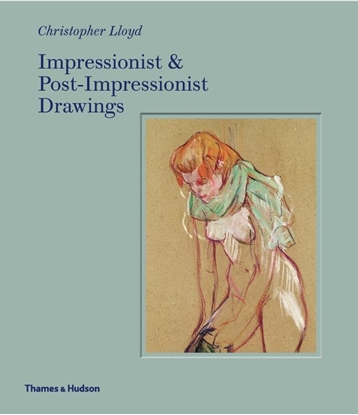
Impressionist & Post-Impressionist Drawings
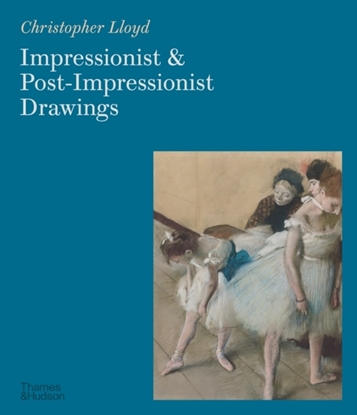
Impressionist and Post-Impressionist Drawings

Impressionist Paris – A Panoramic View of Paris in French Impressionism
Magnificent publication on the depiction of Paris by the French impressionists such as Monet, Cassatt, Renoir and Degas
Lees meer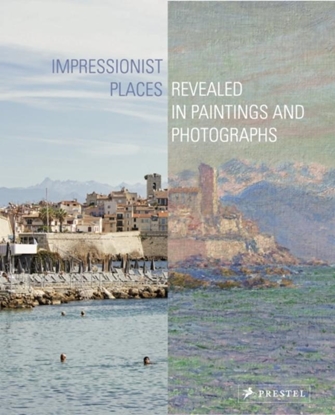
Impressionist Places
In their light-filled landscapes, Impressionist artists created a new way of seeing nature, but what do the places they painted look like one hundred and fifty years on? Inspired by the Barberini Museum’s collection of Impressionist masterpieces, photographer Christoph Irrgang traveled to dozens of European places immortalized in paintings to document the effects of time and modernization on the landscape.
Here his photographs are placed side-by-side with gorgeous reproductions of the original paintings—and the results are, in turn, astonishing and illuminating. Readers will discover how artists imbued their settings with a certain aura and how their magic flows into the reality of the present. At Le Havre, where Monet painted the busy port, the efforts of rebuilding after World War II led UNESCO to inscribe it a World Heritage Site. They will travel to the town of Louveciennes, outside Paris, where Renoir painted his gently shaded pathway.
Readers will revisit the home of novelist Octave Mirbeau, whose garden Pissarro painted as a riot of color. And they will inspect the concrete and iron railroad bridge in the town of Argenteuil on the Seine, which Caillebotte depicted as a modern landscape where nature mingled harmoniously with industry. In addition to informative texts about each painting and each location, this book features precise GPS coordinates of each site. This fascinating study in the juxtaposition of art and photography of past and present will have readers desperate to travel in the footsteps of the Impressionists. Lees meer