
Algemene economie


The Big Con
There is an entrenched relationship between the consulting industry and the way business and government are managed today which must change.
Mariana Mazzucato and Rosie Collington show that our economies' reliance on companies such as McKinsey, Boston Consulting Group, Bain & Company, PwC, Deloitte, KPMG and EY stunts innovation, obfuscates corporate and political accountability and impedes our collective mission of halting climate breakdown.
The 'Big Con' describes the confidence trick the consulting industry performs in contracts with hollowed-out and risk-averse governments and shareholder value-maximizing firms. It grew from the 1980s and 1990s in the wake of reforms by both the neoliberal right and Third Way progressives, and it thrives on the ills of modern capitalism, from financialization and privatization to the climate crisis. It is possible because of the unique power that big consultancies wield through extensive contracts and networks - as advisors, legitimators and outsourcers - and the illusion that they are objective sources of expertise and capacity. To make matters worse, our best and brightest graduates are often redirected away from public service into consulting. In all these ways, the Big Con weakens our businesses, infantilizes our governments and warps our economies.
Mazzucato and Collington expertly debunk the myth that consultancies always add value to the economy. With a wealth of original research, they argue brilliantly for investment and collective intelligence within all organizations and communities, and for a new system in which public and private sectors work innovatively for the common good. We must recalibrate the role of consultants and rebuild economies and governments that are fit for purpose.

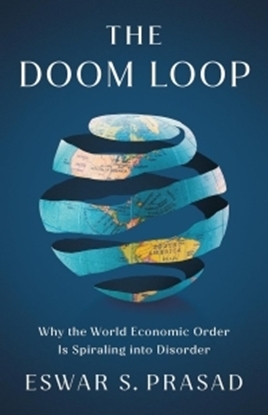
The Doom Loop
‘Compelling.’ – Financial Times, ‘Best Summer Books of 2026: Economics’
‘Erudite and expansive.’ — Publishers Weekly
‘A riveting and depressing argument.’ — The Economist
‘A sweeping read of world events.’ ―Bloomberg
Global institutions have failed to adapt to today's political-economic realities. What went wrong, and how can we reverse our descent into chaos?
The United States is no longer the world's undisputed superpower. China and India increasingly flex their economic muscle, as the West's share of global GDP steadily declines--and America's rules-based system risks becoming irrelevant. In business, competition brings efficiency, balance, and innovation. But not in the marketplace for global power.
Acclaimed economist Eswar S. Prasad argues that the very forces expected to stabilize the world order are fueling disarray. Globalization has deepened inequality in many countries, stoked political backlash and triggered trade wars. Economic institutions like the IMF and WTO are no longer fit for purpose. The rise of "middle powers" like South Africa, Brazil, and Indonesia once suggested multipolar stability; but today, such economies are forced to pick sides in the intensifying US-China struggle for hegemony.
Prasad's clear-eyed, bracing prose contends that we are caught in a destructive feedback loop between economics, domestic politics, and geopolitics. With instability the new status quo, we need radical solutions to reinvigorate the world economy, prioritize common aspirations--and halt the downward spiral.
- By the internationally acclaimed economist and author of The Future of Money, a ‘Book of the Year’ from The Economist and FT
- Argues that the forces meant to stabilize the world’s economy are in fact driving global instability
- Takes a hard look at tariffs, trade wars, international institutions such as the WTO, and the rise of ‘middle power’ countries
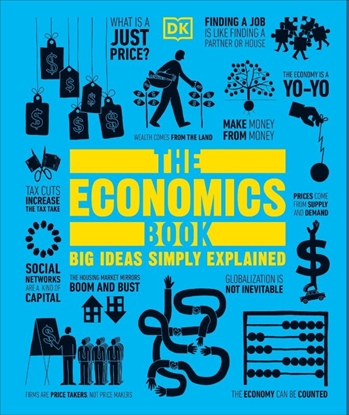
The Economics Book
Explore the key milestones in the field of economics broken down clearly and simply with The Economics Book.
Learn about economics in this overview guide to the subject, which is brilliant for novices looking to learn more and experts wishing to refresh their knowledge.
Part of the fascinating Big Ideas series, this book tackles tricky topics and themes in a simple and easy-to-follow format. The Economics Book brings a fresh, vibrant take on the topic, breaking it down in a visual way through images and diagrams.
This book will broaden your understanding of Economics with:
- Some of the greatest ideas in economics
- Facts, charts, timelines and graphs to help explain core concepts
- A visual approach to big subjects with illustrations and graphics throughout
- Easy-to-follow text making topics accessible for people at any level of understanding
The Economics Book is a captivating introduction to historically important and emerging ideas in a field of science that often confuses newcomers, aimed at adults interested in the subject and students wanting to gain more of an overview. Discover some of the greatest ideas, from the earliest development of private property to the cutting-edge development of modern game theory.


The Entrepreneurial State
10TH ANNIVERSARY EDITION: UPDATED WITH A NEW PREFACE
'Superb ... At a time when government action of any kind is ideologically suspect, and entrepreneurship is unquestioningly lionized, the book's importance cannot be understated' Guardian
According to conventional wisdom, innovation is best left to the dynamic entrepreneurs of the private sector, and government should get out of the way. But what if all this was wrong? What if, from Silicon Valley to medical breakthroughs, the public sector has been the boldest and most valuable risk-taker of all?
'A brilliant book' Martin Wolf, Financial Times
'One of the most incisive economic books in years' Jeff Madrick, New York Review of Books
'Mazzucato is right to argue that the state has played a central role in producing game-changing breakthroughs' Economist
'Read her book. It will challenge your thinking' Forbes
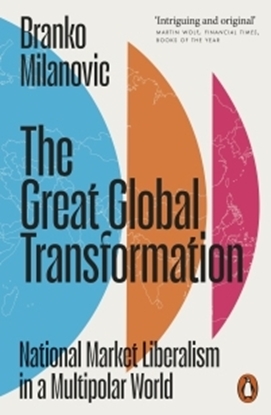
The Great Global Transformation
A Financial Times Book of the Year
'Simultaneously panoramic and telescopic' Daniel Markovitz
'A penetrating analysis from the world’s foremost authority on economic inequality’ Peter Turchin
'More than anyone alive, Branko Milanovic was likely to propound a grand theory of our perplexing global moment... With brilliance, panache, and reliability, he has done it' Samuel Moyn
Global neoliberalism is on its last legs, while a new international economic order is taking hold. Trade blocs, tariff wars, economic sanctions, and national champions are in; nationalism, anti-immigration movements and the far-right are on the rise. Liberalism is being rejected by the civic realm, as the status quo of the past fifty years crumbles. What remains in its wake?
Drawing on original research, leading economist Branko Milanovic reveals the seismic shifts that are shaping our world. He details the facts: how the rising economic power of Asia is creating a new global ‘middle class’ in the greatest reshuffle of incomes since the Industrial Revolution. He explores our fears: why are we becoming increasingly unhappy, when the world is becoming richer and more equal? And he shows us the fight ahead: as plutocracy returns, global war threatens, and a new system silently shapes our nations, driving malcontent to breaking point. In The Great Global Transformation, Milanovic provides an invaluable guide to the new 21st century.
'A must read for anyone concerned about the future of the world order' Gordon Brown
'Everyone who wants to understand these titanic changes must read this book' Martin Jacques
Lees meer
The New Geography of Innovation
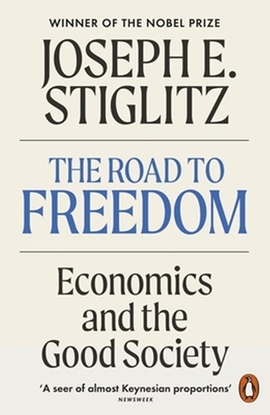
The Road to Freedom
A major reappraisal, by the Nobel-prizewinning economist, of the relationship between capitalism and freedom
Despite its manifest failures, the narrative of neoliberalism retains its grip on the public mind and the policies of governments all over the world. By this narrative, less regulation and more ‘animal spirits’ capitalism produces not only greater prosperity, but more freedom for individuals in society - and is therefore morally better.
But, in The Road to Freedom Stiglitz asks, whose freedom are we – should we be – thinking about? What happens when one person’s freedom comes at the expense of another’s? Should the freedoms of corporations be allowed to impinge upon those of individuals in the ways they now do?
Taking on giants of neoliberalism such as Hayek and Friedman and examining how public opinion is formed, Stiglitz reclaims the language of freedom from the right to show that far from ‘free’ – unregulated – markets promoting growth and enterprise, they in fact reduce it, lessening economic opportunities for majorities and siphoning wealth from the many to the few – both individuals and countries. He shows how neoliberal economics and its implied moral system have impacted our legal and social freedoms in surprising ways, from property and intellectual rights, to education and social media.
Stiglitz’s eye, as always, is on how we might create the true human flourishing which should be the great aim of our economic and social system, and offers an alternative to that prevailing today. The Road to Freedom offers a powerful re-evaluation of democracy, economics and what constitutes a good society—and provides a roadmap of how we might achieve it.

The Wolf of Investing


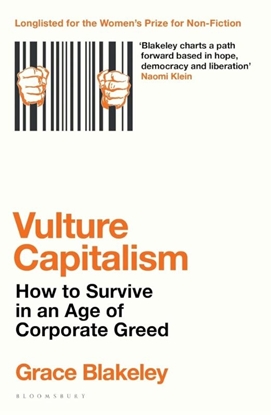
Vulture Capitalism
Longlisted for the Women's Prize for Non-Fiction
'A galvanising takedown of neoliberalism's "free market" logic, one rooted in as much history as it is in current events' NAOMI KLEIN
'A must-read for anyone keen to put the demos back in democracy' YANIS VAROUFAKIS
Everything you know about capitalism is wrong.
Free markets aren’t really free. Record corporate profits don’t trickle down to everyone else. And we aren’t empowered to make our own choices – they’re made for us every day.
In Vulture Capitalism, acclaimed journalist Grace Blakeley takes on the world’s most powerful corporations by showing how the causes of our modern crisis are the intended result of our capitalist system. It’s not broken, it’s working exactly as planned. From JPMorgan to Boeing, Henry Ford to Richard Nixon, Blakeley shows us exactly where late-stage capitalism has gone wrong.
Searing, explosive and timely, Vulture Capitalism is the book you need to understand what is happening in the world around you – and what you can do to change it.
'Read this book if you want to make fundamental changes to the world' HA-JOON CHANG
'If you've ever wondered why you (and everyone you know) feel so out of control of the world around you, this book will give you the answer' ASH SARKAR


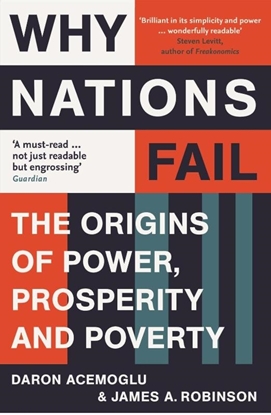
Why Nations Fail
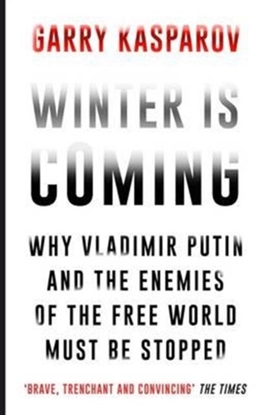
Winter Is Coming
For readers of Putin's People by Catherine Belton comes the stunning story of Russia's slide back into a dictatorship led by Vladimir Putin - and how the world is now paying the price.
'Brave, trenchant and convincing' Sunday Times
'Ferocious and unforgiving' Financial Times
The ascension of Vladimir Putin - a former lieutenant colonel of the KGB - to the presidency of Russia in 1999 was a strong signal that the country was headed away from democracy. Yet in the intervening years - as America and the world's other leading powers have continued to appease him - Putin has grown not only into a dictator but an international threat. With his vast resources and nuclear arsenal, Putin is at the centre of a worldwide assault on political liberty and the modern world order.
For Garry Kasparov, none of this is news. He has been a vocal critic of Putin for over a decade, even leading the pro-democracy opposition to him in the farcical 2008 presidential election. Yet years of seeing his Cassandra-like prophecies about Putin's intentions fulfilled have left Kasparov with a darker truth: Putin's Russia, like ISIS or Al Qaeda, defines itself in opposition to the free countries of the world.
As Putin has grown ever more powerful, the threat he poses has grown from local to regional and finally to global. In this urgent book, Kasparov shows that the collapse of the Soviet Union was not an endpoint - only a change of seasons, as the Cold War melted into a new spring. But now, after years of complacency and poor judgement, winter is once again upon us.
Argued with the force of Kasparov's world-class intelligence, conviction and hopes for his home country, Winter Is Coming reveals Putin for what he is: an existential danger hiding in plain sight.
Lees meer