
Winkelwagen
Zoek
Algemene sociale wetenschappen



The End of Gender
9781982132521
€20,95
Neuroscientist Debra Soh debunks gender myths, exploring if gender is innate or socially conditioned in "The End of Gender." Lees meer


The Great Displacement
9781982178260
€21,95
Shortlisted for the 2024 Carnegie Medal, "The Great Displacement" tells the compassionate, far-sighted story of climate migration in the U.S. Lees meer






The MIT Press Essential Knowledge series Artificial General Intelligence
9780262549349
€20,99
How to make AI capable of general intelligence, and what such technology would mean for society.
Artificial intelligence surrounds us. More and more of the systems and services you interact with every day are based on AI technology. Although some very recent AI systems are generalists to a degree, most AI is narrowly specific; that is, it can only do a single thing, in a single context. For example, your spellchecker can’t do mathematics, and the world's best chess-playing program can’t play Tetris. Human intelligence is different. We can solve a variety of tasks, including those we have not seen before. In Artificial General Intelligence, Julian Togelius explores technical approaches to developing more general artificial intelligence and asks what general AI would mean for human civilization.
Togelius starts by giving examples of narrow AI that have superhuman performance in some way. Interestingly, there have been AI systems that are superhuman in some sense for more than half a century. He then discusses what it would mean to have general intelligence, by looking at definitions from psychology, ethology, and computer science. Next, he explores the two main families of technical approaches to developing more general artificial intelligence: foundation models through self-supervised learning, and open-ended learning in virtual environments. The final chapters of the book investigate potential artificial general intelligence beyond the strictly technical aspects. The questions discussed here investigate whether such general AI would be conscious, whether it would pose a risk to humanity, and how it might alter society. Lees meer
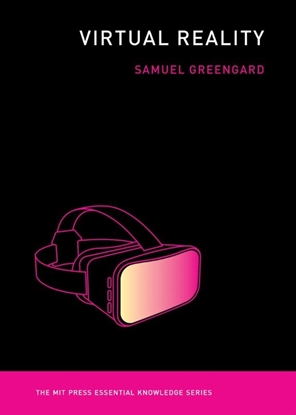
The MIT Press Essential Knowledge series Virtual Reality
9780262537520
€18,99
INSIDE EXTENDED REALITY: A comprehensive overview of the developments in augmented, mixed, and virutal reality technology—and their potential impact on our lives.
After years of hype, extended reality—augmented reality (AR), virtual reality (VR), and mixed reality (MR)—has entered the mainstream. Commercially available, relatively inexpensive VR headsets transport wearers to other realities—fantasy worlds, faraway countries, sporting events—in ways that even the most ultra-high-definition screen cannot. AR glasses receive data in visual and auditory forms that are more useful than any laptop or smartphone can deliver. Immersive MR environments blend physical and virtual reality to create a new reality. In this volume in the MIT Press Essential Knowledge series, technology writer Samuel Greengard offers an accessible overview of developments in extended reality, explaining the technology, considering the social and psychological ramifications, and discussing possible future directions.
Greengard describes the history and technological development of augmented and virtual realities, including the latest research in the field, and surveys the various shapes and forms of VR, AR, and MR, including head-mounted displays, mobile systems, and goggles. He examines the way these technologies are shaping and reshaping some professions and industries, and explores how extended reality affects psychology, morality, law, and social constructs. It's not a question of whether extended reality will become a standard part of our world, he argues, but how, when, and where these technologies will take hold. Will extended reality help create a better world? Will it benefit society as a whole? Or will it merely provide financial windfalls for a select few? Greengard's account equips us to ask the right questions about a transformative technology. Lees meer