Beeldende kunst
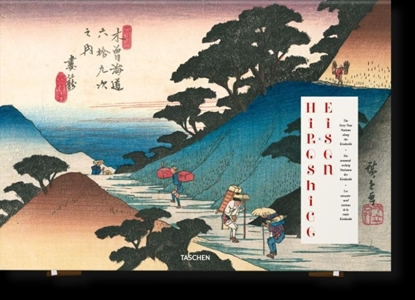
Hiroshige & Eisen
The KisokaidÅ route through Japan was ordained in the early 1600s by the country's then-ruler Tokugawa Ieyasu, who decreed that staging posts be installed along the length of the arduous passage between Edo (present-day Tokyo) and Kyoto. Inns, shops, and restaurants were established to provide sustenance and lodging to weary travelers. In 1835, renowned woodblock print artist Keisai Eisen was commissioned to create a series of works to chart the KisokaidÅ journey. After producing 24 prints, Eisen was replaced by Utagawa Hiroshige, who completed the series of 70 prints in 1838.
Both Eisen and Hiroshige were master print practitioners. In The Sixty-Nine Stations along the KisokaidÅ, we find the artists' distinct styles as much as their shared expertise. From the busy starting post of Nihonbashi to the castle town of Iwamurata, Eisen opts for a more muted palette but excels in figuration, particularly of glamorous women, and relishes snapshots of activity along the route, from shoeing a horse to winnowing rice. Hiroshige demonstrates his mastery of landscape with grandiose and evocative scenes, whether it's the peaceful banks of the Ota River, the forbidding Wada Pass, or a moonlit ascent between Yawata and Mochizuki.
Taken as a whole, The Sixty-Nine Stations collection represents not only a masterpiece of woodblock practice, including bold compositions and an experimental use of color, but also a charming tapestry of 19th-century Japan, long before the specter of industrialization. This TASCHEN edition revives the series with due scale and splendor. Sourced from the only-known set of a near-complete run of the first edition of the series, this legendary publication is reproduced in the finest quality, bound in the Japanese tradition and with uncut paper. A perfect companion piece to TASCHEN's One Hundred Famous Views of Edo, it is at once a visual delight and a major artifact from the bygone era of Imperial Japan.
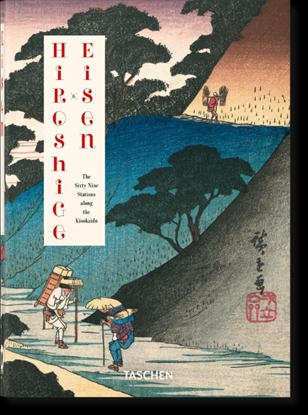
Hiroshige & Eisen
The Kisokaidō route through Japan was ordained in the early 1600s by the country’s then-ruler Tokugawa Ieyasu, who decreed that staging posts be installed along the length of the arduous passage between Edo (present-day Tokyo) and Kyoto. Inns, shops, and restaurants were established to provide sustenance and lodging to weary travelers. In 1835, renowned woodblock print artist Keisai Eisen was commissioned to create a series of works to chart the Kisokaidō journey. After producing 24 prints, Eisen was replaced by Utagawa Hiroshige, who completed the series of 70 prints in 1838.
Both Eisen and Hiroshige were master print practitioners. In The Sixty-Nine Stations along the Kisokaidō, we find the artists’ distinct styles as much as their shared expertise. From the busy starting post of Nihonbashi to the castle town of Iwamurata, Eisen opts for a more muted palette but excels in figuration, particularly of glamorous women, and relishes snapshots of activity along the route, from shoeing a horse to winnowing rice. Hiroshige demonstrates his mastery of landscape with grandiose and evocative scenes, whether it’s the peaceful banks of the Ota River, the forbidding Wada Pass, or a moonlit ascent between Yawata and Mochizuki.
Taken as a whole, The Sixty-Nine Stations collection represents not only a masterpiece of woodblock practice, including bold compositions and an experimental use of color, but also a charming tapestry of 19th-century Japan, long before the specter of industrialization. This TASCHEN volume is sourced from one of the finest surviving first editions and revives the series in our compact anniversary edition.
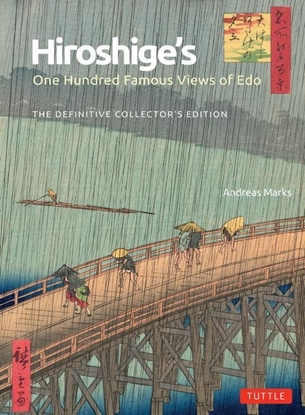
Hiroshige's One Hundred Famous Views of Edo
A landmark book presenting the early "deluxe" versions of Hiroshige's Edo prints for the first time!
Utagawa Hiroshige's unique landscape series One Hundred Famous Views of Edo (modern-day Tokyo), first published in the 1850s, is among the best-known collections of Japanese prints and was revolutionary in its day. Individual prints from this collection are regarded as among the finest works in all of Japanese art.
In this series, Hiroshige captures 118 locations in and around Edo, today's Tokyo, during all four seasons and often from hitherto unknown and unique perspectives. These views were first printed in exquisite luxury versions, incorporating innovative woodblock printing features like color gradation. No complete set of the early versions exists today and this is the first book to present a complete set of the deluxe early printings, sourced from 32 different museums and private collections.
Author Andreas Marks consulted 4,700 prints in order to compile this definitive guide to Hiroshige's One Hundred Famous Views of Edo. Marks presents the various printed versions along with reference images showing how and where Hiroshige sourced his ideas for each viewfrom previous books and illustrations. The result is a definitive guide to understanding the complexity of Hiroshige's great work as well as the dynamics of the Japanese print market during this period.
Marks' introduction discusses the genesis of the series in the context of Japanese landscape art as well as Hiroshige's personal biography. The book then presents all 118 prints together with their source materials and a map showing the locations of each view, followed by a detailed appendix discussing the great color variations found in subsequent printings of the series. Lees meer
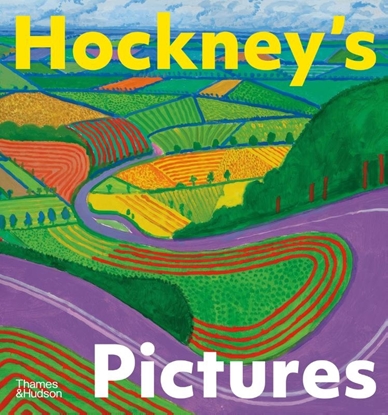
Hockney's Pictures
The story of David Hockney is one of passion: passion for seeing, passion for telling, passion for images. But to these should be added passion for life. Hockney’s art is a celebration of what it is to be alive. All his pictures—sometimes tender, as when he draws close friends and family; sometimes playful, as in his paintings of lazy, carefree days at the pool; sometimes awe-inspiring, as with his monumental images of the Grand Canyon—convey what it means to be in the world, to see it, to move in it, to love it.
This constant exploration of how to communicate such feelings through art emerges with particular clarity in this stunning, lively volume, featuring artworks personally selected by Hockney himself. This edition of Hockney’s Pictures also includes a new final chapter that focuses on the artist's prolific recent iPad paintings, and other work in various media. Charting almost sixty years of extraordinary creativity, the book is arranged thematically to show the evolution and diversity of Hockney's prolific output across paintings, drawings, watercolors, prints, and photography. It also features quotes from the artist that illuminate the passion and deep thought behind his work.
Hockney's Pictures celebrates the artist's lifelong experiments in ways of looking, seeing, and depicting.
Lees meer
Hoe Van Gogh naar Groningen kwam
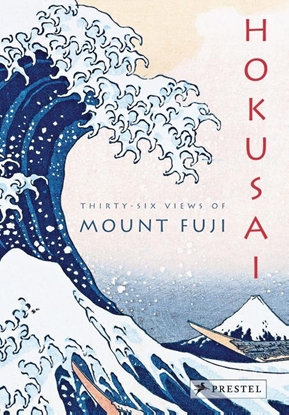
Hokusai
Hokusai’s series depicting Mount Fuji is widely considered to be the pinnacle of his career. This beautiful boxed accordion- fold edition comprises the full set of forty-six prints (the original thirty-six and ten more that were completed later) and features a luxurious silken binding along with a separate explanatory booklet. The book and booklet are packaged in an elegant slipcase. Devoted entirely to landscapes, Hokusai’s series shows Mount Fuji from various viewpoints, framed in different ways. An indefatigable traveler who was passionate about nature, Hokusai explored every vantage point and season at the volcano. He presented it both as a solitary and majestic snow-capped peak and as a smaller object on a distant horizon. Hokusai also portrayed the mountain as an element in Japanese daily life and as an imposing force of nature that can be peaceful and beneficent, or ferocious and unforgiving. These impeccably reproduced prints invite readers to examine Hokusai’s virtuosic use of color and composition, his talent for contrasting perspectives, and his interest in the dueling roles of man and nature. An exquisite objet d’art, this volume is the perfect vehicle for appreciating Hokusai’s crowning achievement in all its lasting and subtle beauty. Lees meer
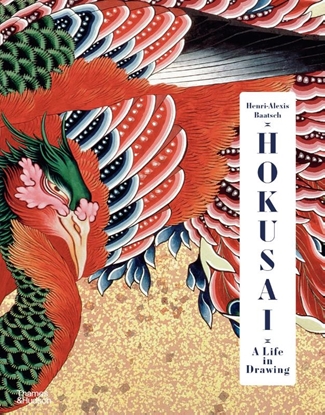
Hokusai: A Life in Drawing (Deluxe Edition)
Katsushika Hokusai (1760–1849) was the most prolific and diverse artist of Japan's Edo period, with a body of work reputed to include more than 30,000 drawings, paintings, and prints. Hokusai traces the career of this child from a working-class district of old Tokyo, then known as Edo, evoking the special atmosphere of this great city and of Japanese life at a time when Japan was closed to foreigners. Its urban centers enjoyed increasing wealth and stability, leading to a flourishing culture of art and pleasure-seeking. Woodblock prints of the genre known as ukiyo-e—"images of the floating world"—became defining images of the age.
Hokusai became one of the great masters of the woodcut. His works range from portraits of popular actors and courtesans to landscapes and seascapes, including his celebrated "Thirty-Six Views of Mount Fuji," and from cleverly observed scenes of everyday life to the erotic prints known as shunga. This "brush gone wild," as he called himself, was rediscovered by the Impressionists and aesthetes at the end of the nineteenth century. While his prints had a huge influence on the course of Western art, it is equally true that he himself was influenced by European painting, embracing techniques such as perspective and adapting them to suit Japanese tastes. He remains one of the greatest figures of world art.
Lees meer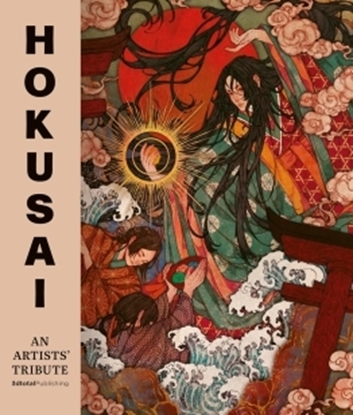
Hokusai: An Artists' Tribute
Hokusai, one of the greatest masters in the history of art and a huge influence on modern-day manga, is celebrated by current artists in this extraordinary book.
The featured artists, including the hugely popular Kelogsloops, Canadian artist Janice Sung, and Norwegian fantasy artist Mona Finden, have created thoughtful reimaginings of drawings from Hokusai's The Great Picture Book of Everything and share beautiful insights into the inspiration that Hokusai has provided them. Choosing works such as Palm tree and Myna bird and Daoist master Zhou Sheng ascends a cloud-ladder to the moon, the contributors explain their creative choices, show development images, and display the final exclusive piece in their individual project chapter. They apply their own style and approach, while staying true to the original narrative and composition of Hokusai's drawing.
Hokusai: An Artists' Tribute also includes written contributions from experts on the great artist, with discussions on the undeniable impact he made on the world of art, and manga in particular. For lifelong Hokusai admirers or those new to his influence, this book is an essential addition to any art-book collection.
Lees meer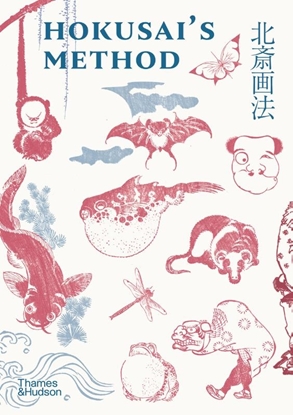
Hokusai's Method
Best known for woodblock prints such as The Great Wave off Kanagawa, the ninteenth-century artist Hokusai was prolific in other media. Of the three hundred or so printed books Hokusai created in his long lifetime, a huge proportion were dedicated drawing manuals, known as e-tehon. They display not only Hokusai's great proficiency as a draftsman, but also his wealth of ideas and his sense of humor.
Hokusai's Method collects fifteen volumes of Hokusai's e-tehon, featuring over eight hundred illustrations ranging from 1812 to 1848, faithfully reproducing every page. Showcasing his playful approach to drawing using songs and poems, pictures composed of letterforms (a forerunner to today's emoji), modern designs for craftsmen, and even dance moves, this volume illustrates the rich spectrum of his talents and achieves his aim to "preserve everything I've learned."
Lees meer

Housesketching
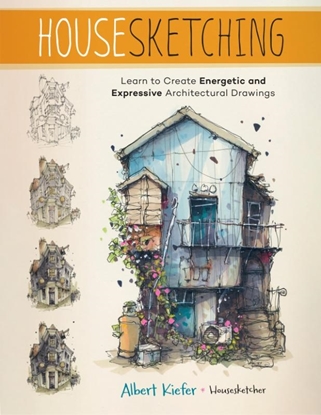
Learning to sketch can be intimidating, especially when drawing subjects like architecture that seem to rely on perfect perspective, straight lines, and complex forms. In Housesketching, artist and instructor Albert Kiefer (Housesketcher) shares his signature techniques that will enable and empower you to abandon perfectionism and learn to sketch and express yourself creatively, like his tens of thousands of students have done. Whether you work in pen and ink and alcohol markers like Albert, or use your favorite medium, you will learn how to create amazingly expressive drawings.
From his whimsical linework to his playful use of perspective to his energetic colorwork, Albert’s approach can be applied to any type or style of building—or any subject at all! Housesketching shows how to go beyond representation to create sketches that are evocative, vibrant, and completely unique.
With this encouraging guide, you will learn how to:
- Find inspiration and choose subjects to sketch—either en plein air or from photos
- Compose your sketch with placement, contrast, techniques for guiding the eye, and balance
- Use perspective—but only as much as you need to know!—to create a convincing sketch
- Make a sketch your own through editing, exaggeration, point of view, and creating a back story
- Use color and details to finish and embellish your sketches
- Share your sketches online
Fifteen step-by-step projects take you through Albert’s process in detail, so you can sketch alongside him and learn what makes his drawings so dynamic. QR codes link to videos that provide further insight into essential techniques.
Whether you’re completely new to sketching, interested in learning to sketch architecture, or looking to draw more expressively and creatively, Housesketching will give you all the tools, inspiration, and encouragement you need. Lees meer
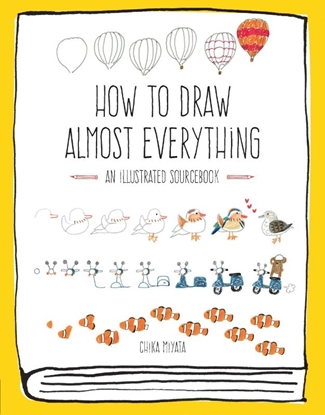
How to Draw Almost Everything
With over 2,000 images, this playful visual reference book offers illustrated step-by-step instructions for drawing almost anything you can imagine:
- Animals: a menagerie of terrestrial animals, aquatic animals & fish, birds, bugs & insects, dinosaurs, and even unidentified mysterious animals
- People: facial features, expressions, actions, people of different ages and genders, clothing, occupations, and famous faces
- Plants: all kinds of trees, shrubs, flowers, and other unique plants
- Foods: a wide variety of fruits, vegetables, main dishes, snacks, drinks, and packaged foods
- Things around the house: stuff found in the entryway, kitchen, living room, bedroom, study, bathroom, and patio as well as tools for home maintenance
- Architecture: structures found around the neighborhood, famous sites in Japan, and famous landmarks around the world
- Vehicles: on the road, on the tracks, in the air, on the water, and beyond
- Seasons: everyday events, holidays & special events, weather, Chinese zodiac, and astrological signs
Author and artist Chika Miyata’s whimsical, loose drawing style will encourage you to be spontaneous and creative as you try the wealth of different drawing subjects. At the end of each chapter, Chika challenges you to synthesize what you’ve learned by drawing a scene.
As you go, you will find not only that you can draw, but that you love to draw.
Each book in the Almost Everything series offers readers a fun, comprehensive, and charmingly illustrated visual directory of ideas to inspire skill building in their creative endeavors.
Lees meer
How to Draw Kawaii Cats
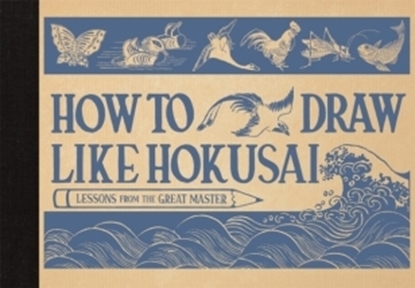
How to Draw Like Hokusai
Celebrated for his dramatic and beautiful Thirty-Six Views of Mount Fuji landscape woodblock prints, which included Under the Wave off Kanagawa and Fine Wind, Clear Morning, Hokusai also applied his phenomenal artistic skill to creating a series of drawing lessons. These lessons capture the beauty and style of his art, yet can easily be followed by beginners.
His first volume of these tutorials, originally called Quick Lessons in Simplified Drawing, has now been distilled into this easy-to-follow book. Now with additional step by step stages, it has never been simpler to emulate the artistic style of a great master.
Learn to draw over 60 different animals, figures and objects, including swooping cranes, cherry blossom trees, butterflies, people, birds and flowers. By breaking each subject down into simple lines and shapes, this drawing book for adults demonstrates with clear steps that even detailed drawings can be easily recreated. As you’ll soon discover, there is so much more to Hokusai than ocean waves.
Historically and culturally significant, How to Draw Like Hokusai celebrates this ever-popular Japanese artist’s iconic work and allows art fans the opportunity to recreate a little of his magic for themselves.
Also available in the series:
9781910552032 What to Draw and How to Draw It
9781910552711 What to Draw and How to Draw It for Kids
9781910552209 Drawing Made Easy
9781915751355 How To Draw Classic Cartoons
How to Read European Decorative Arts