
Beeldende kunst
Human Marks

Ice Cold

Ikat
In this richly illustrated book, stylist and designer Catherine Legrand explores her enduring fascination with ikat, a distinctive type of fabric woven from resist-dyed thread. Rooted in centuries-old tradition, it remains strikingly contemporary in its visual power.
From rare antique French flammé textiles to the regions where ikat is still practiced today—including Indonesia, India, Japan, Thailand, Turkey, Nigeria, Chile, Mexico, and Scandinavia—the book traces the places, processes, and people that sustain this demanding technique. It highlights not only the cloth itself but also the expertise behind it: the weavers, dyers, and collaborative networks of makers whose knowledge, patience, and precision make each piece possible.
Informed by the latest textile scholarship and guided by the author’s own encounters and eye, this book is both homage and investigation—a celebration of ikat and the skills that keep its thread unbroken.
Lees meer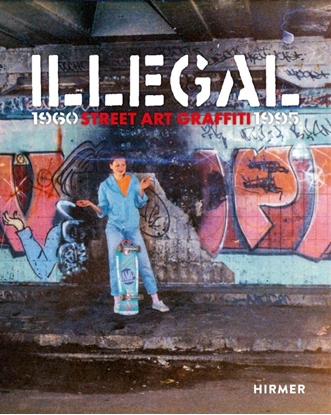
Illegal (Bilingual edition)
Graffiti has always been a wild, free, and ephemeral art formfrom its origins in the 1960s through the photographs of Brassaï, who transformed graffiti into art, to the Sprayer of Zurich in the 1970s and the appearance of the first works by Banksy in England. This book studies the illegal roots of the art form with over 120 vandals from more than a dozen countries, tracing its journey to the dawn of the new millennium.
Where do the origins of street art and graffiti lie? In the far-flung region between Paris, Düsseldorf, and Zurich, European graffiti developed not in the gallery but outdoors, for the general public. Who were the pioneers of street art and concept artists who left their signatures in the rue Visconti in Paris between 1962 and 1986? What are the links between pop music, graffiti photos, and records? And who was Rimbaud, the queer revolutionary nineteenth-century poet to whom countless street artists referred? Find the answers to these questions and many more in this compelling story of how graffiti began.
Lees meer

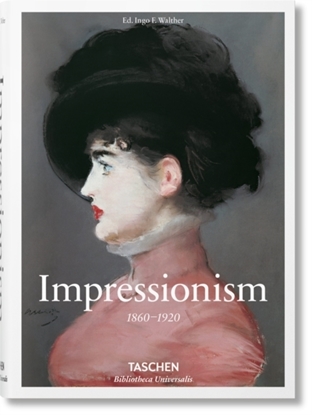
Impressionism
It was a dappled and daubed harbor scene that gave Impressionism its name. When Impression, Sunrise by Claude Monet was exhibited in April 1874, critics seized upon the work’s title and its loose stylistic rendering of light and motion upon water to deride this new, impressionistic tendency in art.
As with many seminal art movements, the critics got their comeuppance. Today, Impressionism is a close contender for the world’s favorite period of painting. With blockbuster exhibitions, record-breaking auction prices, and packed museums, the works once dismissed as unfinished or imprecise are now beloved for their atmospheric evocation of time and place, as well as the stylistic flair of rapid brushstrokes upon canvas.
Despite its popularity and a whole host of publications, many areas and artists of Impressionism remain inadequately researched. This TASCHEN book fills the gap, raising the profile of unjustly neglected pioneers such as Berthe Morisot, Lucien Pissarro, and Gustave Caillebotte, while exploring the characteristics of Impressionism, from painting en plein air to vivid color contrasts, not only in the movement’s native France but also across the rest of Europe and North America.

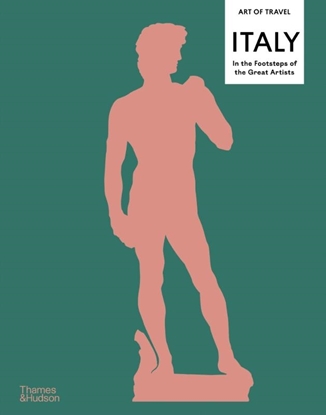
Italy: In the Footsteps of the Great Artists
Imagine navigating the backstreets of seventeenth-century Rome in the dazzling but dangerous company of Caravaggio. Who will you meet as you drop in at the fabulous Villa Borghese—its owner, Cardinal Scipione Borghese, nephew of the pope, or Fillide Melandroni, well-known courtesan and occasional artist’s model? Fast-forward to the eighteenth century, and explore the Venice of Canaletto, Casanova, and Carnevale.
With twelve chapters, each devoted to an artist or group of artists, and a dozen itineraries to choose from, you can immerse yourself in the world of the great and the not-so-good, wandering in and out of churches, palaces, and grand residences to admire their work "in situ"—all from the comfort of your armchair.
Each of the chapters begins with an illustrated map, featuring hand-drawn vignettes that bring to vivid life episodes from the artist's often turbulent existence, as well as key landmarks and local color. Set off on your own Grand Tour for the twenty-first century.
Lees meer
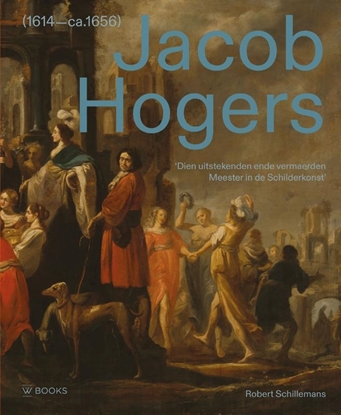
Jacob Hogers (1614-ca. 1656)


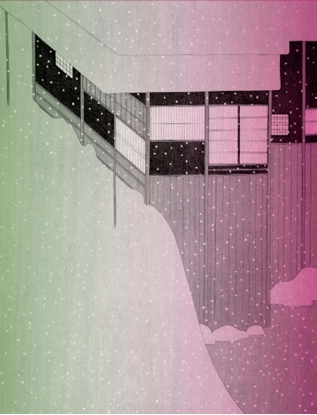
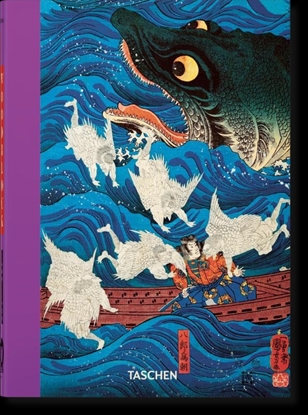
Japanese Woodblock Prints
From Edouard Manet’s portrait of naturalist writer Émile Zola sitting among his Japanese art finds to Van Gogh’s meticulous copies of the Hiroshige prints he devotedly collected, 19th-century pioneers of European modernism made no secret of their love of Japanese art. In all its sensuality, freedom, and effervescence, the woodblock print is single-handedly credited with the wave of japonaiserie that first enthralled France and, later, all of Europe—but often remains misunderstood as an “exotic” artifact that helped inspire Western creativity.
The fact is that the Japanese woodblock print is a phenomenon of which there exists no Western equivalent. Some of the most disruptive ideas in modern art—including, as Karl Marx put it, that “all that is solid melts into air”—were invented in Japan in the 1700s and expressed like never before in the designs of such masters as Hokusai, Utamaro, and Hiroshige in the early 19th century.
This volume, derived from the original XXL monograph, lifts the veil on a much-loved but little-understood art form by presenting the most exceptional Japanese woodblock prints in their historical context. Ranging from the 17th-century development of decadent ukiyo-e, or “pictures of the floating world,” to the decline and later resurgence of prints in the early 20th century, the images collected in this edition make up an unmatched record not only of a unique genre in art history, but also of the shifting mores and cultural development of Japan.
From mystical mountains to snowy passes, samurai swordsmen to sex workers in shop windows, each piece is explored as a work of art in its own right, revealing the stories and people behind the motifs. We discover the four pillars of the woodblock print—beauties, actors, landscapes, and bird-and-flower compositions—alongside depictions of sumo wrestlers, kabuki actors, or enticing courtesans—rock stars who populated the “floating world” and whose fan bases fueled the frenzied production of woodblock prints. We delve into the horrifying and the obscure in prints where demons, ghosts, man-eaters, and otherworldly creatures torment the living—stunning images that continue to influence Japanese manga, film, and video games to this day. We witness how, in their incredible breadth, from everyday scenes to erotica, the martial to the mythological, these works are united by the technical mastery and infallible eye of their creators and how, with tremendous ingenuity and tongue-in-cheek wit, publishers and artists alike fought to circumvent government censorship.
As part of our 40th anniversary series, this edition compiles the finest extant impressions from museums and private collections across the globe in a lightweight, accessible format, offering extensive descriptions to guide us through this frantic period in Japanese art history.
