
Beeldende kunst

Limited Art Books Dadara Here for the Art

Limited Art Books Sarah Maple - Your Opinion is Wrong
Linocut
Linocut
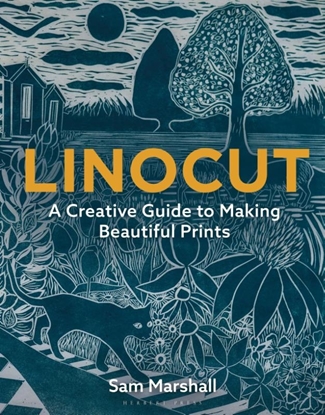
A step-by-step guide on how to create personal and contemporary linocut prints.
A linocut is a relief print created by carving a design into a printing block. It is the uncut surface, not the carved away areas, that gives you your image when you roll it with ink, lay paper on top then apply pressure to produce a print.
With 18 easy-to-follow projects that can be adapted to suit your own ideas, experienced printmaker Sam Marshall guides you through the whole process – from the drawing to the carving to the inking to the printing – of creating your own beautiful prints and handmade cards whether you are working from your kitchen table or a more advanced studio set-up.
By taking inspiration from everyday life, Sam helps you to build your confidence with observational drawing. Featuring step-by-step projects, the book demonstrates a range of skills with low-cost materials to produce simple linocuts, reduction linocuts and colourful multi-block prints. You will also learn more experimental techniques such as combining monoprint, chine collé, jigsaw linocuts and rainbow rolls and pick up handy tips on subjects such as ‘noise’ and editioning your prints.
Beautifully illustrated with photographs of Sam’s own drawings and linocuts, and featuring the work of 5 talented printmakers, Linocut is an essential guide to linocut printmaking. Packed with creative and practical advice to guide and encourage you, whether you’re just starting out, returning to the craft or looking to expand your printmaking skills.
Lees meer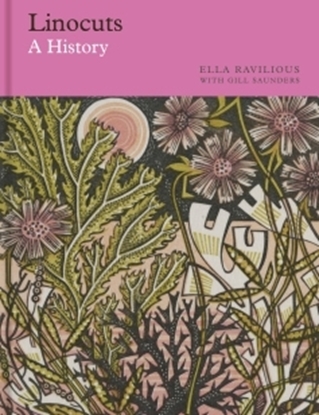
Linocuts
Easier to work with and cheaper than wood, linocut has long enabled artists to create affordable and versatile color prints. This beautifully illustrated book explores the origins of linocuts and presents key proponents of the printmaking technique, from Claude Flight, Sybil Andrews, Edward Bawden, and Cyril Power to modern and contemporary artists such as Pablo Picasso, Leopoldo Méndez, Tayo Quaye, and Grayson Perry, among others. An accessible and eye-catching introduction to the distinctive aesthetics of linocut, it will appeal to those with a love of modern and contemporary art as well as practicing artists everywhere.
Following Screenprints, this second volume in the V&A's printmaking series offers a comprehensive history of linocut, from its emergence in the first decade of the twentieth century and its adoption by experimental modernist artists through to its establishment as a distinct and adaptable contemporary medium. The book celebrates high points of the practice, including the artists associated with the Grosvenor School during the 1920s and 1930s, the Great Bardfield community and, later, the Osogbo School in Nigeria. It also considers the global spread of linocut, and the evolution of new techniques and conversations in the current century, as exemplified by works from artists such as Khaleb Brooks and Thomas Kilpper. Examples are drawn from the extensive collections of the Victoria and Albert Museum, with a contextual and historical introduction followed by a series of thematic chapters.
Lees meer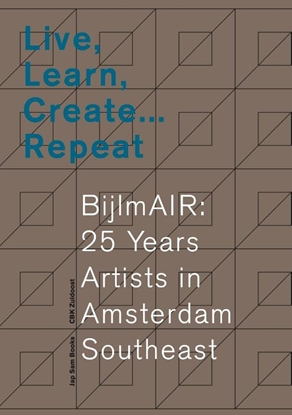
Live, Learn, Create … Repeat. BijlmAIR: 25 Years Artists in Amsterdam Southeast


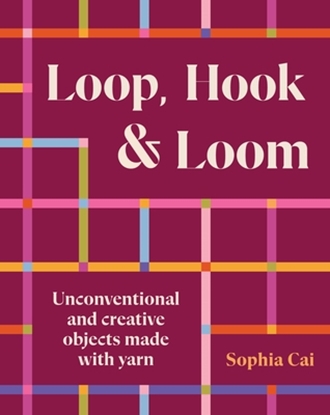
Loop, Hook, Loom
From artists knitting giant sweaters to those creating rooms bursting with imagined sea creatures, artist, curator, and writer Sophia Cai brings together some of today’s most creative textile practices in a celebration of contemporary exploration and play.
Broken down into three chapters—Weaving, Crochet, and Knitting—this book dips into the history of these art forms and the creative ways they’re currently being expanded.
An accessible entry point into the world of textile-based art, Loop, Hook, Loom features both working artists and hobbyists, highlighting the endless possibilities and worth of fiber art. Lees meer
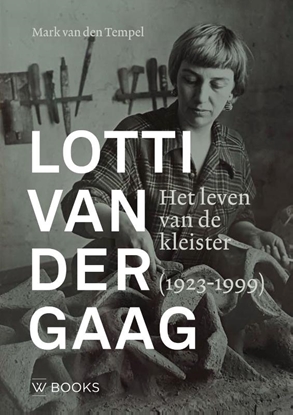
Lotti van der Gaag

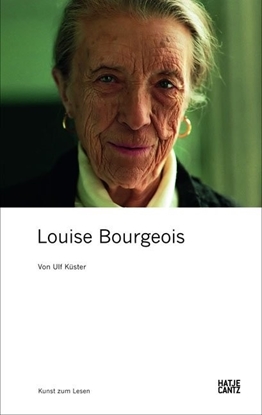
Louise Bourgeois
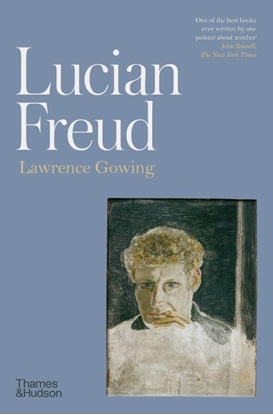
Lucian Freud
First published in 1982, Lawrence Gowing's Lucian Freud is an intimate portrayal of one of the twentieth century's most exceptional artists. At once a pivotal narrative, a furtive autobiography, and a profound exploration of what it means to think through paint, this book represents a historically significant collaboration between two of modern art's brightest minds.
Drawing on forty years of friendship—as well as his own painterly intuition—Gowing's commentary pushes language to the very edge of meaning, evoking the richness of Freud's art with poetic incisiveness as he locates, within the paint itself, "a coiled vigilance and . . . a serpentine litheness in the ready, rapid way in which an object was confronted."
Freud's deep involvement in the original book offers rare insight into the artist as he was in the 1980s. The conversations and questions that shape Gowing's text produced some of Freud's most memorable and widely quoted reflections, while Freud's choice and grouping of paintings and drawings reveal unexpected connections across his works, as seen through his eyes.
Completely redesigned and reissued after many years out of print, this book remains a landmark publication on Lucian Freud.
Lees meer
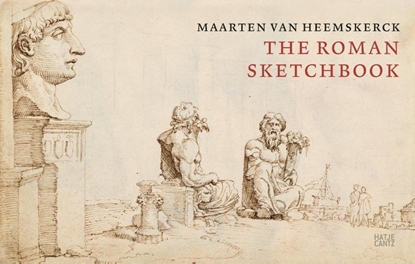
Maarten van Heemskerck
The first facsimile of Heemskercks magnificent sketches of Rome
Between 1532 and 1537, Dutch artist Maarten van Heemskerck (14981574) traveled to Rome and filled his sketchbook with drawings demonstrating his knack for composition. Although the original binding has been lost, the present facsimile reconstructs the original sequence of the books pages.
Lees meer
Maarten van Heemskerck 1498-1574

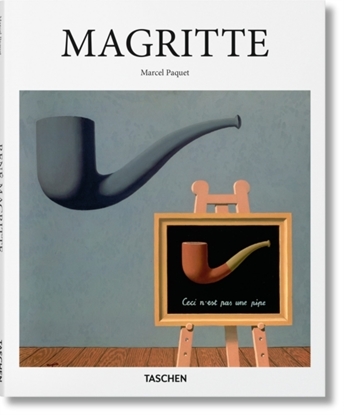
Magritte
From men in bowler hats, floating in the sky, to a painting of a pipe above the caption "this is not a pipe", René Magritte (1898–1967) created an echo chamber of object and image, name and thing, reality and representation.
Like other Surrealist works, Magritte’s paintings combine a precise, mimetic technique with abnormal, alienating configurations which defy the laws of scale, logic, and science: a comb the size of a wardrobe, rocks that float in the sky, clouds that drift through an open door. The result is a direct yet disorientating realm, often witty, often unsettling, and always prompting us to look beyond the visible, to “what is hidden by what we see.”
This introductory book explores Magritte's vast repertoire of visual humor, paradox, and surprise which to this day makes us look and look again, not only at the painting, but at our sense of self and the world.
