Bouwkunst, architectuur
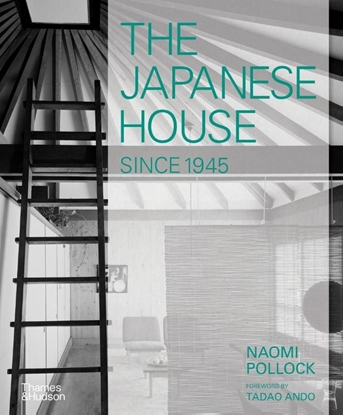
The Japanese House Since 1945
Imagine a rowhouse whose courtyard separates the kitchen from the bedroom. Or a tiny, triangular tower of rooms stacked one above another. Quirky, experimental, and utterly fascinating, the houses produced in Japan since the end of World War II are among the most exceptional in the world, and they are also family homes. The Japanese House Since 1945 is a cohesive chronology of iconic Japanese houses, presenting the most compelling architect-designed homes to show developments in form, material, architectural expression, and family living over almost eight decades.
Unparalleled in their conceptual purity, many Japanese houses have become icons at home as well as abroad. Presented with clear prose and accompanied by photographs and drawings, the book features ninety-seven houses, divided among nine chapters and organized by decade. In addition to acquainting the reader with individual homes, the book illuminates the social, technological, geographic, and historical factors behind these epoch-making houses. Developments over the period are underscored by the visual presentation, as it evolves from monochrome to color and from hand-drawn to digital. Decade lead-ins set the historical context for each chapter, while “Spotlight” segments draw attention to the separate components of the Japanese house. “At Home” sections, most authored by architects and their family members, bring to life the experience of living in these unique houses.
Lees meer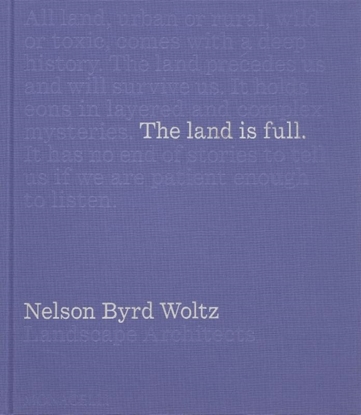
The Land Is Full
A celebration of parks and public gardens by renowned landscape architecture firm Nelson Byrd Woltz, whose designs reflect the histories that are held in the land
Lees meer
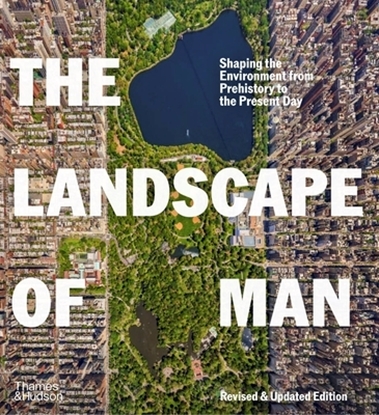
The Landscape of Man
Now available in a new, updated edition, The Landscape of Man is a formative study on the history of landscape architecture. From small gardens to megacities, humans have always molded their environment to express or symbolize ideas—power, order, comfort, harmony, pleasure, and mystery, to name a few. In 1975, authors Geoffrey and Susan Jellicoe linked these ideas together to demonstrate that they are manifestations of a single, innate process.
The authors examined human-created spaces from ancient Mesopotamia, Greece, Rome, the Muslim world, medieval Europe, India, China, Japan, pre- Columbian America, and the post-Renaissance West in all its phases, as well as planning and landscape architecture from the mid- to late twentieth century.
With a new introduction and final chapter by internationally respected landscape critic Tim Richardson, this edition explores modernism to postmodernism, post-industrialism to large-scale urban planning in China and elsewhere, before ending with small-scale healing and community gardens.
Redesigned throughout with a contemporary look and feel, and illustrated in full color, this valuable resource to landscape architecture is made available to a new generation of readers interested in uncovering the history of our built environments.
Lees meer
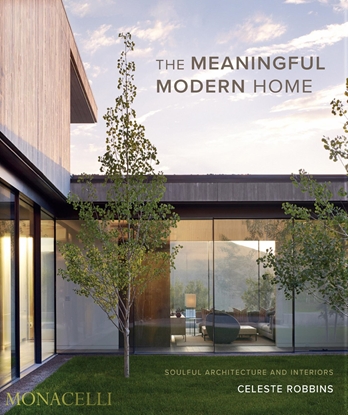
The Meaningful Modern Home
An inspiring collection of contemporary homes by architect Celeste Robbins, principal of Robbins Architecture, whose modern designs are imbued with warmth, comfort, and a deep sense of place
Lees meer