Fotoboeken

Dustin Pitman Walk Wild Side
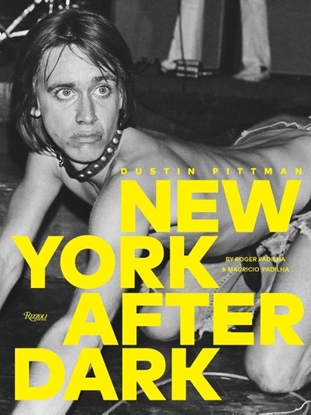
Pittman was not just an observer but was an active participant in the places and events that shaped pop culture as we know it—the goings- on at Andy Warhol’s Factory, the women’s liberation movements of the 1970s, the VIP room at Studio 54, and the nascent punk scene at CBGB and The Mudd Club. Through Pittman’s lens, readers are provided an intimate glimpse into the intersecting worlds of fashion and celebrity, music, art, and politics—from the glam rock underground and the golden age of disco to the ateliers of the world’s most famous fashion designers such as Halston, Yves Saint Laurent, and Calvin Klein. Pittman was witness to such rising stars as Blondie, Lou Reed, Iggy Pop and the Stooges, The New York Dolls, and Roxy Music, as well as seminal cultural figures including Raquel Welch, Truman Capote, Diana Ross, Tina Chow, Brooke Shields, Jerry Hall, Divine, and Liza Minnelli—all caught in spontaneous, unguarded New York moments.
A vast majority are previously unpublished images of some of the most iconic and revered figures of the late 20th century, accompanied by firsthand observations and remembrances by Pittman. The book features an introductory essay offering an objective view of Pittman’s work and importance as a chronicle of the music, art, and fashion scenes. Lees meer
Edward S. Curtis
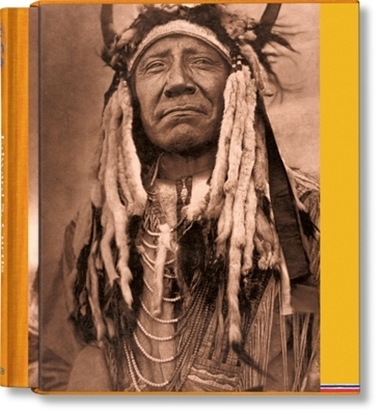
Edward Sheriff Curtis (1868–1952) dedicated his entire life to a project all his own, to use a camera to preserve the cultural heritage of the indigenous peoples of North America. For three decades, he traveled in every region of the continent, through every kind of terrain and weather, via land or water, in the 50°C heat of the Mojave Desert or the -20°C chill of the Arctic; moving on foot, by horse, wagon, donkey, boat or train, or later by automobile. More than 40,000 photos were produced during those years.
During his lifetime, the finest of these photographs entitled The North American Indian, were presented in twenty elaborate, large-scale portfolios with which Curtis raised a monument to commemorate the disappearing culture of North America’s indigenous peoples and to bring it fully back to life. In addition, the book holds a selection of photographs from the text volumes.
Without Edward S. Curtis we would hardly know a thing about the rites of the Hopi in America’s southwest, nor be able to picture the Qagyuhl winter dancers, or have any idea of the ceremonies on Nunivak Island. The basic humanistic message that shines from his pictures is highly relevant, namely peaceful coexistence in which you can overcome hatred and prejudice if you are always willing, on meeting a stranger, to seek some idea in common.

Eliot Elisofon
What did Hollywood stars do when the cameras stopped rolling? They went home—and they did it in style.
First published in 1969, The Hollywood Style was the first book devoted to the homes of Hollywood celebrities. Now it returns in a revised edition, with new historical material and additional vintage photography, much of it previously unpublished. It invites readers inside 27 remarkable Los Angeles residences belonging to the actors, directors, producers, and studio executives who shaped Hollywood’s Golden Age.
Shot by LIFE magazine photographer Eliot Elisofon in 1967, this is an intimate record of five decades of Hollywood glamour and excess. The homes featured span two distinct generations, from those of pioneers such as Mary Pickford, Harold Lloyd, and Cecil B. DeMille to those of later stars such as Steve McQueen, Natalie Wood, Charlton Heston, and Rock Hudson. Many were designed by leading architects and designers, including Paul R. Williams, Cliff May, James Dolena, William Haines, and Tony Duquette.
Alongside Elisofon’s photos is Arthur Knight’s original text, in which the acclaimed film critic considers what the homes reveal about their owners: “You can walk into them and know, in the fullest sense, who lives there.” Additional material by architectural historian David Silverman reveals the stories behind the houses and their owners. Drawing on archival research, new captions and introductions to each house have been added to add depth and detail to the book’s portrait of Hollywood life at home.
Together, the photographs and text form a vivid time capsule of 50 years of architecture, design, and film history—and of the private worlds Hollywood made possible.