
Fotoboeken


Paolo Roversi
Arriving in Paris from Ravenna in 1973, Paolo Roversi produced his first series of photographs in 1977, which were immediately picked up by the fashion press. From then on, he devoted himself to fashion photography, working for the greatest designers and for the most prestigious magazines, simultaneously occupying a position both at the heart of the fashion world and far from its ephemeral trends.
Ultimately in search of pure beauty, Roversi creates timeless and mysterious work, which is shaped by his choice of studio and use of large format and Polaroid cameras. At the heart of his photography are his close relationships with fashion designers and models, most famously with Yohji Yamamoto, as well as Romeo Gigli, Rei Kawakubo, and Dior. These fruitful collaborations have allowed Roversi to continuously challenge and renew his practice.
Lees meer



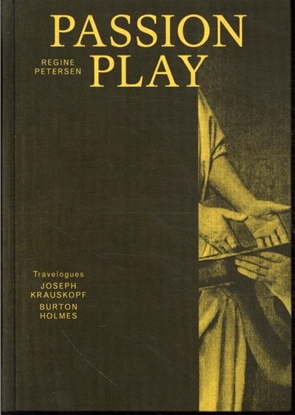
Passion Play
Patti Smith
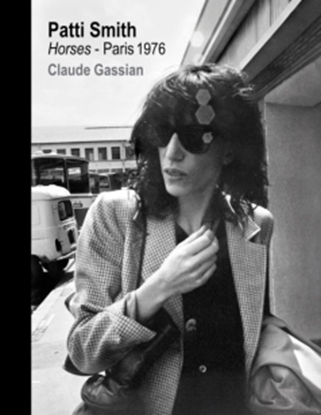
Patti Smith: Horses, Paris 1976 is a gorgeous collection of never-before-published photographs of music legend Patti Smith, taken by rock-n-roll photographer Claude Gassian during the release of her iconic album Horses. “A big and beautiful gift-worthy holiday art book” (New York Times)
In 1975, Patti Smith released Horses, a seminal album in punk and rock music history. Lauded by critics, and often cited as the first punk rock album, Horses has influenced artists like U2, Madonna, and R.E.M.
Over the following year, she and her band visited Paris multiple times to perform, to accept awards, and to absorb the city’s culture. Gassian beautifully captures this moment in time.
As Patti writes, Claude Gassian’s photography is “a glimpse of the highly charged atmosphere of 1976 and the joyful hubris of a rock n’ roll band.”
These are previously unpublished images that show a young artist on the cusp of world stardom, and they will be catnip for her fans and for music historians.
Lees meer
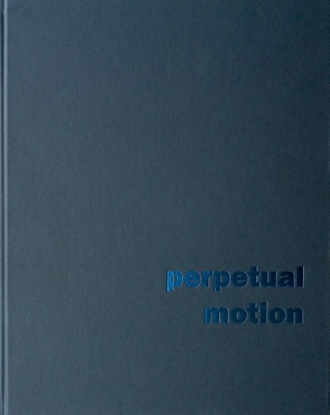
Perpetual Motion

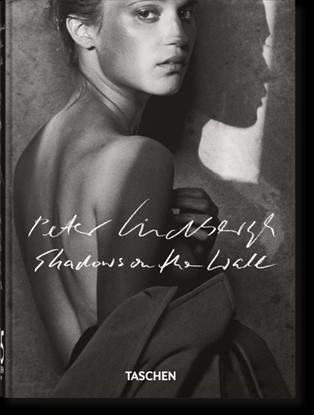
Peter Lindbergh
“What is merely beautiful has always bored me. I’m interested in what is powerful and real.” —Peter Lindbergh
With such credits as shooting the first American Vogue cover under Editor-in-Chief Anna Wintour, bringing together for the first time a group of young women who would become the ’90s supermodels, and numerous solo exhibitions at world-renowned institutions including the Pushkin Museum in Moscow, the Ullens Center for Contemporary Art in Beijing, and the Gagosian in London, Peter Lindbergh (1944–2019) was a master of his craft who made his mark in the halls of photography history.
The industry quickly became enamored with his almost anti-fashion photography, capturing the zeitgeist and the spirit of his subjects rather than pursuing today’s search for perfection, which he considered inhuman.
Handpicked from 37,000 unreleased photos from his groundbreaking 2017 Pirelli calendar shoot, Shadows on the Wall offers an intimate insight into a pool of extraordinary talent: Nicole Kidman, Julianne Moore, Alicia Vikander, Charlotte Rampling, Dame Helen Mirren, Jessica Chastain, Kate Winslet, Léa Seydoux, Lupita Nyong’o, Penélope Cruz, Robin Wright, Rooney Mara, Uma Thurman, and Zhang Ziyi.
Lindbergh’s message is simple. These intimate images represent a different kind of beauty, far away from society’s obsession with youth and perfection; one which is concerned with individuality, the courage to be yourself, and your very own sensibility.
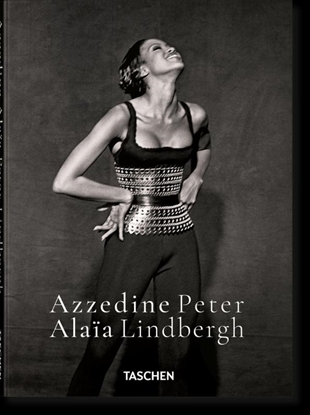
Peter Lindbergh
Peter Lindbergh and Azzedine Alaïa, the photographer and the couturier, were united by their love of black, a love that they would cultivate alike in silver print and solid color garments. Lindbergh ceaselessly turned to black and white to signify his search for authenticity in the faces he brought to light. Alaïa drew on the monochrome of timeless clothes to create veritable sculptures for the body.
In this book, the unique dialogue between the two artists is immortalized in print. Illustrating their community of spirit, its images are a celebration of their artistic partnership and testament to their history-making achievements in photography and fashion.
Despite their geographically opposed origins, Lindbergh and Alaïa pursued similar horizons. At the same time as Lindbergh’s reputation in Germany was growing thanks to his work in Stern magazine, and he set up his studio in Paris in 1978, Alaïa was the couturier shrouded in discretion whose sophisticated techniques were a treasured secret amongst the most important clients of Haute Couture.
Alaïa became the architect of bodies, revealing and unveiling them, while Lindbergh distinguished them by shining a light on their soul and personality. Step by step, they became the creators that dominated their respective disciplines. Both rejected any artifice that distracted from their true subject, and it is with great ease that they came together for a number of powerful collaborations.
Shared inspirations and aesthetic values are visible throughout their work. A beach in Le Touquet and the streets of old Paris reference a mutual love of black and white cinema and vast panoramas. The backdrop of an engine room illustrates the memory of an industrial German landscape for one and references the inordinate passion for functional design and architecture held by the other. Alaïa’s clothes act as pedestals for the smiles and eyes of the women who wear them: Nadja Auermann, Mariacarla Boscono, Naomi Campbell, Anna Cleveland, Dilone, Lucy Dixon, Vanessa Duve, Helene Fischer, Pia Frithiof, Jade Jagger, Maria Johnson, Milla Jovovich, Lynne Koester, Ariane Koizumi, Yasmin Le Bon, Madonna, Kristen McMenamy, Tatjana Patitz, Linda Spierings, Tina Turner, Marie-Sophie Wilson, Lindsey Wixson. For Lindbergh, who built his notoriety on the images of these supermodels, the authenticity of their traits is all that matters. The result is a potent black and white catalogue that reverberates with truthfulness and beauty.
With contritutions by Fabrice Hergott, director of the Musée d’Art Moderne de la Ville de Paris, Paolo Roversi, photographer, and Olivier Saillard, fashion historian and director of the Fondation Azzedine Alaïa, Paris.

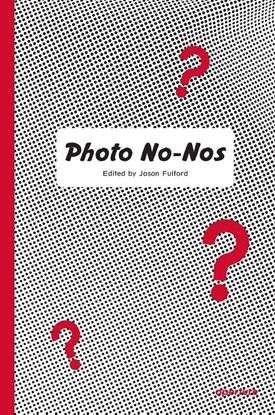
Photo No-Nos
Photographers often have unwritten lists of subjects they tell themselves not to shoot—things that are cliché, exploitative, derivative, sometimes even arbitrary. Photo No-Nos features ideas, stories, and anecdotes from many of the world’s most talented photographers and photography professionals, along with an encyclopedic list of more than a thousand taboo subjects compiled from and with pictures by contributors.
Not a strict guide, but a series of meditations on “bad” pictures, Photo No-Nos covers a wide range of topics, from sunsets and roses to issues of colonialism, stereotypes, and social responsibility. At a time when societies are reckoning with what and how to communicate through media and who has the right to do so, this book is a timely and thoughtful resource on what photographers consider to be off-limits, and how they have contended with their own self-imposed rules without being paralyzed by them. Lees meer
