Fotoboeken

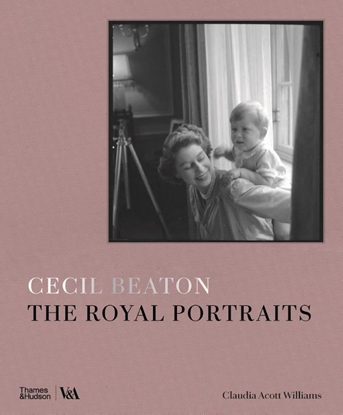
Cecil Beaton: The Royal Portraits
Cecil Beaton: The Royal Portraits looks back in time to tell a very modern tale: the creation of a public image. Offering a fresh appraisal of Beaton’s portraits of the British royal family, the book explores not only the finished images but also the sittings in which they were created, revealing Beaton’s central role in shaping the public face of the House of Windsor and the ways in which he collaborated with his subjects.
Organized chronologically, from the 1930s to the 1970s, each of the book’s four chapters comprises an introductory essay, plates with extended captions, and one or two in-depth analyses of a particular sitting. Throughout, a variety of contextual material—contact sheets, test shots, outtakes, sketches, letters, journals, tear sheets—helps build a detailed picture of Beaton’s methods, the relationships he developed with his sitters, and how the portraits were received.
Drawing on the Victoria and Albert Museum’s unparalleled collection of Beaton’s photographs, this volume will appeal not only to those interested in the photographer and his work, but also to anyone for whom the distinction between the private world and the public face of the royal family remains a source of fascination.
Lees meer

Chris Killip
A highly anticipated retrospective of the life and work of Chris Killip, one of the leading and most influential photographers to emerge from the United Kingdom over the last century. Known for his urgent, unvarnished, and empathetic images of British working-class communities in the 1970s and 1980s, Killip eventually moved to the United States, where he taught photography at Harvard University for more than twenty-five years.
Published in connection with a major exhibition opening in October 2022 at The Photographers’ Gallery, London, prior to an international tour, this volume includes the most important images from throughout Killip’s extraordinary career. Including previously unpublished illustrations and ephemera as well as photographs spanning Killip’s entire life with texts by Ken Grant, Amanda Maddox, Gregory Halpern, and Lynsey Hanley, and a foreword by Brett Rogers, director of the Photographers’ Gallery, this exquisite collection sheds new light on an astonishing talent.
Lees meer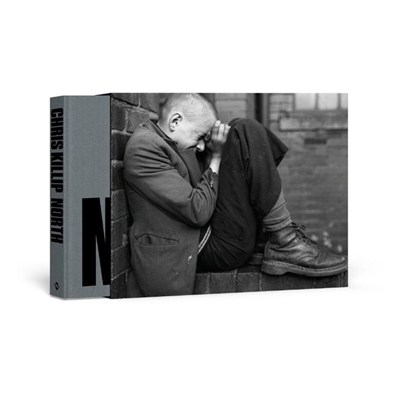
Chris Killip: North
From the town of Huddersfield to fishing communities on the North Yorkshire coast and the miners’ strike, Chris Killip’s lens captures the divisions and communities that define England. Edited by Mark Holborn and produced with exclusive access to Killip’s archive, this is an essential publication not only for Killip’s fans, but for all those interested in the social power of photography.
Born in the Isle of Man in 1946, Killip spent much of his career documenting life in the North of England, shining a light on the economic and social difficulties that haunted these communities.
While operating in the documentary tradition, Killip’s work is marked by tenderness, by a refusal to cast his subjects as easily dismissible stereotypes. As Killip himself stated: “I wanted to record people’s lives because I valued them. I wanted them to be remembered.”
It is precisely this approach that lends Killip’s work its timelessness, with his images reflecting the divisions that still exist in Great Britain. As Holborn notes, “We live in a world as fractured as that Killip witnessed forty or fifty years ago. Our consciousness is stalked by the fury of our divisions.” This publication is an evocative guide to Killip’s work across Northeastern England, alongside a selection of images from Ireland and the Isle of Man. With nearly half the images published here for the first time, Chris Killip: North is a moving tribute to some of his most essential work.
Lees meer

Cimarron
All across the Americas, from the sixteenth century onwards, enslaved Africans escaped their captors and struck out on their own. These runaways established their own communities or joined with indigenous peoples to forge new identities. Cimarrón, borrowing a Spanish-American term for these fugitive former slaves, is a new series of photographic portraits of their descendants by acclaimed photographer Charles Fréger, whose work is defining a new genre of documentary photography. From Brazil, Colombia, the Caribbean islands, Central America, and as far as the southern United States, elaborate masquerades are staged that celebrate and keep alive the history and memory of African slaves and their creole or mixed-race descendants.
Unique photographs of people in dynamic costumes from remote regions of the world will enthrall followers of social history, ethnic folklore, and unusual fashion experimentation. Vividly colored silks and cottons combine with woven fibers, leaves, feathers, and body paint; props include emblems of slavery and slave masters— ropes, sticks, guns, and machetes. These photographs, supplemented with texts by specialists in social anthropology to provide ethnographic and historical context, record real people whose collective sense of memory, folk history, and imagination dramatically challenge our expectations.
Lees meer


Clark Winter: Here to There
Claude Cahun
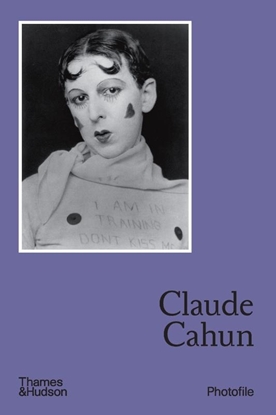
Claude Cahun (1894–1954), the chosen name of the artist Lucy Schwob, was best known in her lifetime as a writer but built up a remarkable body of photographic work that only came to prominence after her death.
Politically active and involved with a wide circle of artists and intellectuals, including the surrealists, Cahun followed her own rules in both life and art. She is best known for her strikingly staged self-portraits, in which she used costumes, makeup, and technical effects to tackle themes of identity and self-representation. Her love of symmetry, mirroring, repurposing, and retouching was also reflected in her approach to other styles of photography, including portraiture, photomontage, and still-life tableaux.
Whether working alone or in collaboration with her life partner, Marcel Moore (born Suzanne Malherbe), Claude Cahun was a pioneering figure in the aesthetics of modernity who never stopped crossing boundaries of gender and genre.
Lees meer

Control Refresh

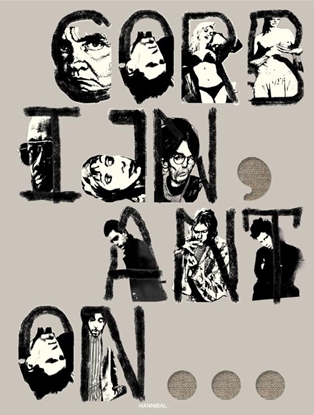
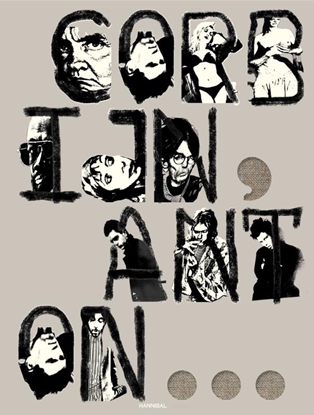
Corbijn, Anton