
Geschiedenis van de filosofie

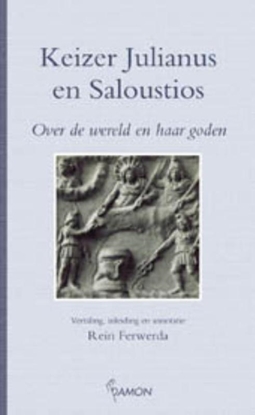
De wereld vóór God

Discourses and Selected Writings
Despite being born into slavery, Greco-Roman philosopher Epictetus became one of the most influential thinkers of his time. Discourses and Selected Writings is a transcribed collection of informal lectures given by the philosopher around AD 108. A gateway into the life and mind of a great intellectual, it is also an important example of the usage of Koine or “common” Greek, an ancestor to Standard Modern Greek. Lees meer


Epicureanism and Scientific Debates. Epicurean Tradition and its Ancient Reception

European Philosophy

Europese wijsbegeerte
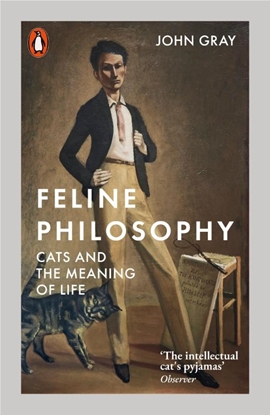
Feline Philosophy
'Why can't a human be more like a cat? That is the question threaded through this vivid patchwork of philosophy, fiction, history and memoir ... a wonderful mixture of flippancy and profundity, astringency and tenderness, wit and lament' Jane O'Grady, Daily Telegraph
'When I play with my cat, how do I know she is not passing time with me rather than I with her?' Montaigne
There is no real evidence that humans ever 'domesticated' cats. Rather, it seems that at some point cats saw the potential value to themselves of humans. John Gray's wonderful new book is an attempt to get to grips with the philosophical and moral issues around the uniquely strange relationship between ourselves and these remarkable animals.
Feline Philosophy draws on centuries of philosophy, from Montaigne to Schopenhauer, to explore the complex and intimate links that have defined how we react to and behave with this most unlikely 'pet'.
At the heart of the book is a sense of gratitude towards cats as perhaps the species that more than any other - in the essential loneliness of our position in the world - gives us a sense of our own animal nature.


Geletterde geesten


HarperCollins American Classics Walden American Classics Edition
One of the Library of Congress’s “Books That Shaped America”
One of The Guardian's 100 Best Nonfiction Books
“Walden...is arguably the most important work of literary nonfiction in the American canon.”―New York Times
In celebration of the 250th anniversary of the United States, HarperCollins is proud to present this library of American classics drawn from our storied catalog. Walden is a foundational transcendentalist treatise from Henry David Thoreau on self-reliance, simplicity, and how to escape the corruption and consumerism of modern society.
I went to the woods because I wished to live deliberately.
On July 4, 1845, Henry David Thoreau began a two-year experiment: Living alone in a self-built hut on the edge of Walden Pond outside of Concord, Massachusetts, "to front only the essential facts of life, and see if I could not learn what it had to teach, and not, when I came to die, discover that I had not lived.” Having observed and condemned changes in 19th century society -- increasing materialism, urbanism, and injustice from the state -- Thoreau endeavored to adopt a lifestyle in opposition to these modern vices. Walden is the account of how and why Thoreau lived during this time, and his conclusions about the natural world and humanity's place in it.
Rich with detailed observations on New England's woods and the "bottomless" Walden pond, layered with analysis of the philosophers that inspired Thoreau's unusual project, and framed by the passage of the four seasons, Walden became a foundational text of the transcendentalist movement and is now accepted as one of the most important works of American literature, changing the course of Western psychology, political philosophy, and the tradition of nature writing.
- A BEAUTIFUL PACKAGE WITH FLAPS: Featuring French flaps and a unique vivid cover design, each book in the collection is published as a deluxe trade paperback that is a part of a stunning series look.
- HARPER COLLINS AMERICAN CLASSICS: This series includes timeless novels, poetry, children’s books, and groundbreaking nonfiction that has shaped American thought, literature, and identity across generations.
- AMERICA’S PUBLISHER: Since its founding in 1817, no American publisher has been so entwined in the history of American letters. Our books enrich, challenge, and defined the American spirit.
- AMERICA 250: The HarperCollins American Classics arrive in time for America’s 250th anniversary celebrations.

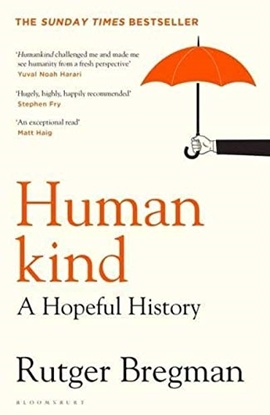
Humankind
THE INTERNATIONAL BESTSELLER – FROM THE 2025 BBC REITH LECTURER
A Guardian, Daily Telegraph, New Statesman and Daily Express Book of the Year
‘Hugely, highly and happily recommended’ Stephen Fry
‘You should read Humankind. You’ll learn a lot (I did) and you’ll have good reason to feel better about the human race’ Tim Harford
'Made me see humanity from a fresh perspective' Yuval Noah Harari
It’s a belief that unites the left and right, psychologists and philosophers, writers and historians. It drives the headlines that surround us and the laws that touch our lives. From Machiavelli to Hobbes, Freud to Dawkins, the roots of this belief have sunk deep into Western thought. Human beings, we’re taught, are by nature selfish and governed by self-interest.
Humankind makes a new argument: that it is realistic, as well as revolutionary, to assume that people are good. By thinking the worst of others, we bring out the worst in our politics and economics too.
In this major book, internationally bestselling author Rutger Bregman takes some of the world’s most famous studies and events and reframes them, providing a new perspective on the last 200,000 years of human history. From the real-life Lord of the Flies to the Blitz, a Siberian fox farm to an infamous New York murder, Stanley Milgram’s Yale shock machine to the Stanford prison experiment, Bregman shows how believing in human kindness and altruism can be a new way to think – and act as the foundation for achieving true change in our society.
It is time for a new view of human nature.
As the 2025 BBC Reith Lecturer, Rutger Bregman presented ‘Moral Revolution’, a four part series:
-A Time of Monsters
-How To Start a Moral Revolution
-A Realist’s Utopia
-Fighting for Humanity in the Age of the Machine
Available to listen on BBC Sounds
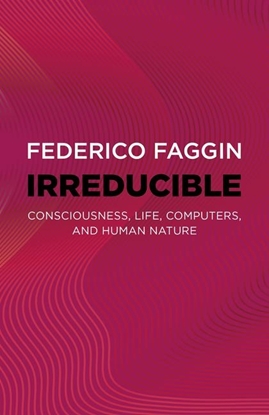
Irreducible
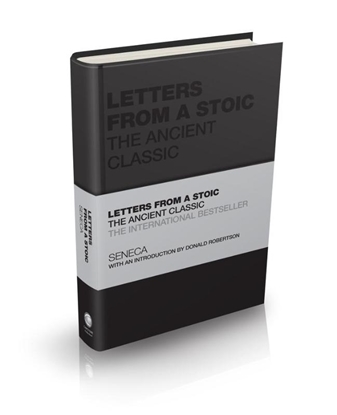
Letters from a Stoic
DISCOVER THE ENDURING LEGACY OF ANCIENT STOICISM
Since Roman antiquity, Lucius Annaeus Seneca’s Letters have been one of the greatest expressions of Stoic philosophy. In a highly accessible and timeless way, Seneca reveals the importance of cultivating virtue and the fleeting nature of time, and how being clear sighted about death allows us to live a life of meaning and contentment.
Letters from a Stoic continues to fascinate and inspire new generations of readers, including those interested in mindfulness and psychological techniques for well-being.
This deluxe hardback selected edition includes Seneca’s first 65 letters from the Richard M. Gummere translation. An insightful introduction by Donald Robertson traces Seneca’s busy life at the centre of Roman power, explores how he reconciled his Stoic outlook with vast personal wealth, and highlights Seneca’s relevance for the modern reader.
Lees meer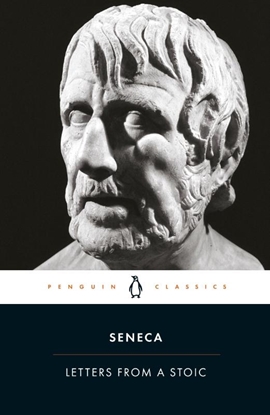
Letters from a Stoic
Illuminating writings by Stoicism's most eloquent advocate, now with a new introduction
'It is philosophy that has the duty of protecting us... without it no one can lead a life free of fear or worry'
For several years of his turbulent life, in which he was dogged by ill health, exile and danger, Seneca was the guiding hand of the Roman Empire. This selection of Seneca's letters shows him upholding the ideals of Stoicism - the wisdom of the self-possessed person immune to life's setbacks - while valuing friendship and courage, and criticizing the harsh treatment of slaves and the cruelties in the gladiatorial arena. The humanity and wit revealed in Seneca's interpretation of Stoicism is a moving and inspiring declaration of the dignity of the individual mind.
