Geschiedenis van de filosofie

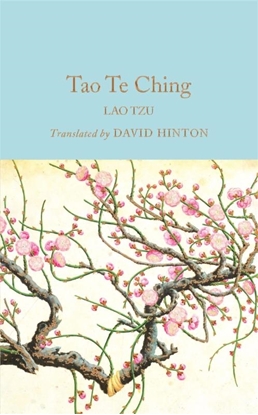
Macmillan Collector's Library Tao Te Ching

Macmillan Collector's Library The Book of Tea
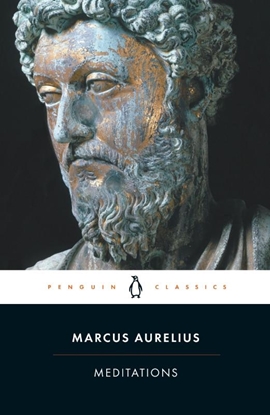
Meditations
Written in Greek by an intellectual Roman emperor without any intention of publication, the Meditations of Marcus Aurelius offer a wide range of fascinating spiritual reflections and exercises developed as the leader struggled to understand himself and make sense of the universe. Spanning from doubt and despair to conviction and exaltation, they cover such diverse topics as the question of virtue, human rationality, the nature of the gods and the values of leadership. But while the Meditations were composed to provide personal consolation, in developing his beliefs Marcus also created one of the greatest of all works of philosophy: a series of wise and practical aphorisms that have been consulted and admired by statesmen, thinkers and ordinary readers for almost two thousand years.
To provide a full understanding of Aurelius's seminal work, this edition includes explanatory notes, a general index, an index of quotations, an index of names, and an introduction by Diskin Clay putting the work in its biographical, historical, and literary context, a chronology of Marcus Aurelius's life and career.
Penguin Classics is the leading publisher of classic literature in the English-speaking world, representing a global bookshelf of the best works throughout history and across genres and disciplines. Readers trust the series to provide authoritative texts enhanced by introductions and notes by distinguished scholars and contemporary authors, as well as up-to-date translations by award-winning translators. Lees meer

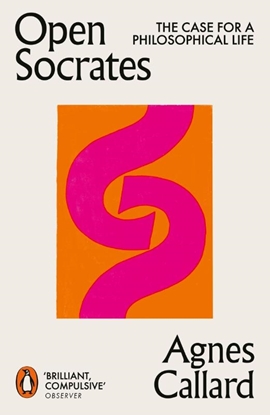
Open Socrates
'A gem of a book, serious and clever yet funny and playful' Financial Times
'Professor of philosophy and a public intellectual for the internet age, Callard shows how Socrates can inform the way we live our lives – from romance to politics' Guardian
Socrates has been hiding in plain sight. We call him the father of Western philosophy, but what exactly are his philosophical views? He is famous for his humility, but readers often find him arrogant and condescending. We parrot his claim that 'the unexamined life is not worth living,' yet take no steps to live examined ones. We know that he was tried, convicted, and executed for 'corrupting the youth,' but freely assign Socratic dialogues to today’s youths, to introduce them to philosophy. We’ve lost sight of what made him so dangerous. In Open Socrates, acclaimed philosopher Agnes Callard recovers the radical energy at the centre of Socrates’ thought and shows why it is still the way to a good life.
Callard draws our attention to Socrates’ startling discovery that we don’t know how to ask ourselves the most important questions— about how we should live, and how we might change. Before a person even has a chance to reflect, their bodily desires or the forces of social conformity have already answered on their behalf. To ask the most important questions, we need help. Callard argues that the true ambition of the famous “Socratic method” is to reveal what one human being can be to another. You can use another person in many ways—for survival, for pleasure, for comfort— but you are engaging them to the fullest when you call on them to help answer your questions and challenge your answers.
Here Callard shows that Socrates’ method allows us to make progress in thinking about how to manage romantic love, how to confront one’s own death, and how to approach politics. In the process, she gives us nothing less than a new ethics to live by.
Lees meer
Oriëntatie in de filosofie
Penguin Archive Whatever is Rational is Tolerable
‘I must die. But must I die bawling?’
What does it mean to live a virtuous life? How can we rise above pain and anguish? In these teachings from Book 1 of his Discourses, ancient philosopher Epictetus outlines a practical approach to Stoicism that has inspired thinkers for centuries, from Marcus Aurelius to Theodore Roosevelt, offering enduring wisdom on resilience, virtue and the pursuit of meaning.
Lees meer
Penguin Archive Why I am a Stoic
Plagued by ill-health, violently sick at sea, irritated by renovation costs: Seneca is never less than sympathetically human. In these letters written 2000 years ago, the ancient philosopher speaks to the reader today with lucidity and warmth. Whether advising on how to live a good life, spend time alone or free oneself from fears of death, Seneca is the wise and compassionate friend we all need now. Lees meer
Penguin Great Ideas How To Be a Stoic
How can we cope when life's events seem beyond our control? These words of consolation and inspiration from the three great Stoic philosophers - Epictetus, Seneca and Marcus Aurelius - offer ancient wisdom on how to face life's adversities and live well in the world.
Throughout history, some books have changed the world. They have transformed the way we see ourselves - and each other. They have inspired debate, dissent, war and revolution. They have enlightened, outraged, provoked and comforted. They have enriched lives--and upended them. Now Penguin brings you a new set of the acclaimed Great Ideas, a curated library of selections from the works of the great thinkers, pioneers, radicals and visionaries whose ideas shook civilization and helped make us who we are. Lees meer
Penguin Great Ideas On Liberty
GREAT IDEAS. Throughout history, some books have changed the world. They have transformed the way we see ourselves - and each other. They have inspired debate, dissent, war and revolution. They have enlightened, outraged, provoked and comforted. They have enriched lives - and destroyed them. Now Penguin brings you the works of the great thinkers, pioneers, radicals and visionaries whose ideas shook civilization and helped make us who we are. Lees meer
Penguin Great Ideas On the Shortness of Life
The writings of the ancient Roman philosopher Seneca offer powerful insights into stoicism, morality and the importance of reason, and continue to provide profound guidance to many through their eloquence, lucidity and wisdom.
Throughout history, some books have changed the world. They have transformed the way we see ourselves - and each other. They have inspired debate, dissent, war and revolution. They have enlightened, outraged, provoked and comforted. They have enriched lives - and destroyed them. The Penguin Great Ideas series brings you the works of the great thinkers, pioneers, radicals and visionaries whose ideas shook civilization, and helped make us who we are. Lees meer

Penguin Great Ideas The Myth of Sisyphus
Inspired by the myth of a man condemned to ceaselessly push a rock up a mountain and watch it roll back to the valley below, The Myth of Sisyphus transformed twentieth-century philosophy with its impassioned argument for the value of life in a world without religious meaning. Lees meer

Penguin Great Ideas The Social Contract
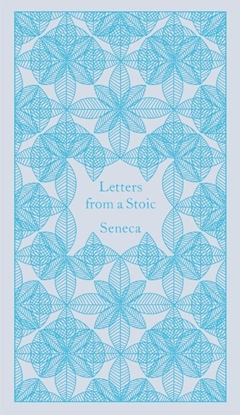
Penguin Pocket Hardbacks Letters from a Stoic
World-changing ideas meet eye-catching design: the best titles of the extraordinarily successful Great Ideas series are now packaged in Coralie Bickford-Smith’s distinctive, award-winning covers. Whether on a well-curated shelf or in your back pocket, these timeless works of philosophical, political, and psychological thought are absolute must-haves for book collectors as well as design enthusiasts.
A philosophy that saw self-possession as the key to an existence lived "in accordance with nature," Stoicism called for the restraint of animal instincts and the severing of emotional ties. These beliefs were formulated by the Athenian followers of Zeno in the fourth century BC, but it was in Seneca that the Stoics found their most eloquent advocate. Stoicism, as expressed in the Letters, helped ease pagan Rome's transition to Christianity, for it upholds upright ethical ideals and extols virtuous living, as well as expressing disgust for the harsh treatment of slaves and the inhumane slaughter witnessed in the Roman arenas. Seneca's major contribution to a seemingly unsympathetic creed was to transform it into a powerfully moving and inspiring declaration of the dignity of the individual mind. Robin Campbell's distinguished translation captures Seneca's humour and concise, memorable aphorisms and his introduction discusses the tensions between Seneca's philosophy and his turbulent career as adviser to the tyrannical emperor Nero.
For more than sixty-five years, Penguin has been the leading publisher of classic literature in the English-speaking world. With more than 1,500 titles, Penguin Classics represents a global bookshelf of the best works throughout history and across genres and disciplines. Readers trust the series to provide authoritative texts enhanced by introductions and notes by distinguished scholars and contemporary authors, as well as up-to-date translations by award-winning translators. Lees meer
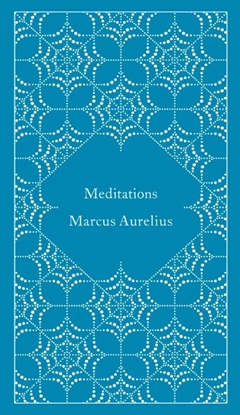
Penguin Pocket Hardbacks Meditations
World-changing ideas meet eye-catching design: the best titles of the extraordinarily successful Great Ideas series are now packaged in Coralie Bickford-Smith’s distinctive, award-winning covers. Whether on a well-curated shelf or in your back pocket, these timeless works of philosophical, political, and psychological thought are absolute must-haves for book collectors as well as design enthusiasts.
Written in Greek by an intellectual Roman emperor without any intention of publication, the Meditations of Marcus Aurelius offer a wide range of fascinating spiritual reflections and exercises developed as the leader struggled to understand himself and make sense of the universe. Spanning from doubt and despair to conviction and exaltation, they cover such diverse topics as the question of virtue, human rationality, the nature of the gods and the values of leadership. But while the Meditations were composed to provide personal consolation, in developing his beliefs Marcus also created one of the greatest of all works of philosophy: a series of wise and practical aphorisms that have been consulted and admired by statesmen, thinkers and ordinary readers for almost two thousand years.
To provide a full understanding of Aurelius's seminal work, this edition includes explanatory notes, a general index, an index of quotations, an index of names, and an introduction by Diskin Clay putting the work in its biographical, historical, and literary context, a chronology of Marcus Aurelius's life and career.
For more than seventy years, Penguin has been the leading publisher of classic literature in the English-speaking world. With more than 1,700 titles, Penguin Classics represents a global bookshelf of the best works throughout history and across genres and disciplines. Readers trust the series to provide authoritative texts enhanced by introductions and notes by distinguished scholars and contemporary authors, as well as up-to-date translations by award-winning translators. Lees meer

Penguin Pocket Hardbacks The Art of War
For more than 2,000 years, Sun Tzu's The Art of War has provided leaders with essential advice on battlefield tactics, managing troops and terrain, and employing cunning and deception. An elemental part of Chinese culture, it has also become a touchstone for the Western struggle for survival and success, whether in battle, in business or in relationships. Now, in this crisp, accessible new translation, John Minford brings this seminal work to life for today's readers. A lively, learned introduction, chronologies and suggested further reading are among the valuable apparatus included in this authoritative volume. Even those readers familiar with The Art of War will experience it anew, finding it more fascinating - and more chilling - than ever.
Little is known about Sun Tzu (544-496 B.C.) and his life during the Warring States period after the decline of the Zhou dysnasty, but his classic, The Art of War, has been one of the central works of Chinese literature for 2500 years.
John Minford studied Chinese at Oxford and at the Australian National University and has taught in China, Hong Kong, and New Zealand. He edited (with Geremie Barme) Seeds of Fire: Chinese Voices of Conscience and (with Joseph S. M. Lau) Chinese Classical Literature: An Anthology of Translations. He has translated numerous works from the Chinese, including the last two volumes of the Penguin Classics edition of Cao Xueqin's eighteenth-century novel The Story of the Stone and the martial-arts fiction of the contemporary Hong Kong novelist Louis Cha.

Plutarchea Hypomnemata Plutarch and Rhetoric
Plutarchea Hypomnemata Plutarch’s 'Politikos'
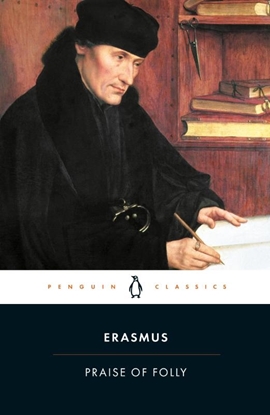
Praise of Folly
For more than seventy years, Penguin has been the leading publisher of classic literature in the English-speaking world. With more than 1,700 titles, Penguin Classics represents a global bookshelf of the best works throughout history and across genres and disciplines. Readers trust the series to provide authoritative texts enhanced by introductions and notes by distinguished scholars and contemporary authors, as well as up-to-date translations by award-winning translators. Lees meer
