Kunstgeschiedenis
Advice for the Soul


Anarchy of the Body

Animal Modernities

Anselm Kiefer
Equal parts eloquent tribute and respected monograph, Anselm Kiefer is organized both chronologically and to reflect the artist’s recurrent motifs, including Nordic and Germanic mythologies, Jewish mysticism, the cosmos, the legends of the ancient world, and many more. Approximately 250 full-color images reproduce his art at the highest possible quality, to trace Kiefer’s creative evolution and reveal as fully as possible his works’ scope and power. Lees meer


Arcimboldo, Bassano, Bruegel
Unique publication accompanying the astonishing exhibition on nature in the works of Arcimboldo, Bruegel, and Bassano
Lees meer
Art and Myth in Ancient Greece
The ancient Greeks recorded their mythology on vase paintings, engraved gems, and bronze and stone sculptures, offering depictions that often predate any references to the myths in literature or recount alternative, unfamiliar versions of these tales. In some cases, visual art provides our only evidence of these myths, as there are no surviving accounts in ancient Greek literature of stories such as the Fall of Troy or Theseus and the Minotaur.
Art and Myth in Ancient Greece is a comprehensive survey of myth as it appears in Greek art. This classic volume has been updated with text and full-color images of more than three hundred scenes from Greek sculptures, vases, and gems. Aiding in the identification of mythological scenes and explaining chronological developments in style and subject matter, this book is an essential reference for anyone interested in the art, drama, poetry, or religion of ancient Greece.
Lees meer
Art Deco Collectibles
The objects in this thematically structured book encompass Deco style at its most alluring, as well as the modernity, excitement, and social revolution of the Jazz Age. These items were the height of fashion then and are highly prized collectibles today. They remind us of an era of closer cooperation between designers and manufacturers, who aimed to produce goods that were not only useful but also beautiful and well made. This showcase of portable Art Deco classics from Britain, Europe (particularly France), and the United States will appeal not just to collectors but to anyone with an interest in Deco style and the history of fashion, design, and small, beautiful things.s. Lees meer
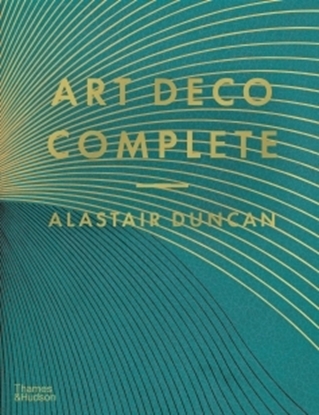
Art Deco Complete
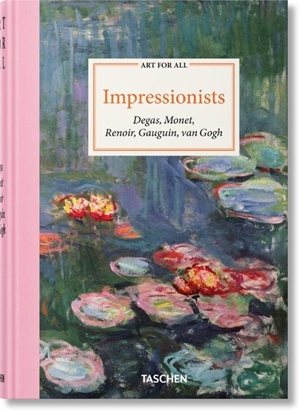
Art for All
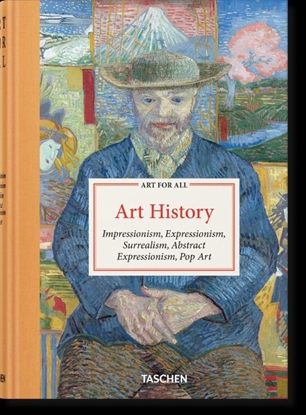
Art for All
A comprehensive volume covering five seminal genres that shaped art, from the late 19th century and well into the 20th: Impressionism, Expressionism, Surrealism, Abstract Expressionism and Pop Art. Each approach was distinct in aesthetic and philosophy, but all had immediate impact and enduring influence. Many great names were indelibly associated with one, some explored several during their careers.
Impressionism, led by Monet and Renoir, focused on light and color, capturing fleeting moments and challenging academic art's rigidity. Expressionism was driven by artists like Edvard Munch and Wassily Kandinsky to convey raw emotion, distorting reality to reflect the angst of human experience. Surrealists, like Salvador Dalí and René Magritte, explored the subconscious, dreams, and the irrational, blending reality with fantasy across art, literature, and film. With Jackson Pollock and Mark Rothko leading the charge, Abstract Expressionism emphasized spontaneity and emotion through bold, gestural brushstrokes, and established New York as the post-war art world’s new Mecca. Finally, artists like Roy Lichtenstein and Andy Warhol gained fame and dominated the zeitgeist by synthesizing advertising, pop culture, and high art into Pop Art.
Though diverse, these movements collectively pushed the boundaries of creativity, redefined artistic expression, and altered the trajectory of contemporary art. This lavish edition celebrates their stories, featuring more than 250 high-quality reproductions and texts, exploring how each movement's ideas and innovations transformed art forever.


Art in Hungary, 1956–1980
Hungary is a fascinating example in the study of art and politics. Artists of the neo-avant-garde found themselves in an increasingly isolated position, caught between the ruling communist authorities, who condemned their art as a product of capitalist cultural imperialism, and a predominantly conservative public, which rejected it as a foreign creation alien to the spirit of national culture. Interestingly, the international significance of the art produced in Hungary from the Revolution through the late twentieth century has come to the fore in recent years, noticeably through acquisitions and displays by the world’s leading galleries.
This in-depth volume, the product of a major international research effort, commits to understanding Hungarian contemporary art of the 1960s and 1970s— a time of oppressive communist rule in the aftermath of the failed revolution of 1956— in the context of the conditions in which it was created.
Lees meer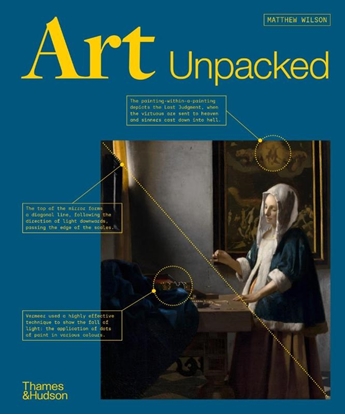
Art Unpacked
For beginners, art history might seem a daunting subject with complex rules and impenetrable technical language. Even for more seasoned art lovers the question of how to think about art is a perennial riddle. Art Uncovered is the perfect resource for both audiences: an engaging, visual primer for the general reader and educators. Designed like an instruction manual, fifty key artworks from around the world are deconstructed with explanations, diagrams, and close-ups in order to reveal the elements that comprise a masterpiece.
Dating from the earliest times to the present, the artworks under analysis are drawn from many cultures and cover all forms of visual media, including drawing, illustration, photography, prints, and sculpture. Matthew Wilson’s simple approach, using established art historical methods, enables the reader to discover the fundamentals of art history, from considerations of function, historical context, iconography, and artists’ experience to broader issues of identity, including feminism, gender, and postcolonialism. Whether it’s the mask of Tutankhamun or Dorothea Lange’s photograph Migrant Mother, Katsushika Hokusai’s Great Wave or Kara Walker’s Gone, each image is dissected on the page in a no-nonsense style, with explanatory notes detailing artists’ sources of inspiration, associated styles and movements, plus any relevant quotes, related visuals, and other contextual and issue-led information with keywords for handy cross-referencing. The resulting book is a dynamic visual resource that will inspire and spark enjoyment of art in all its forms.
Lees meer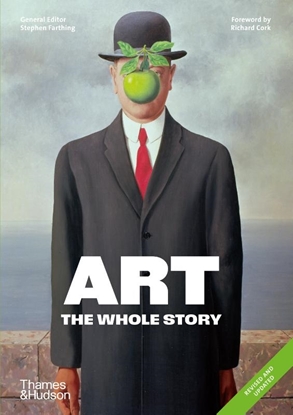
Art: The Whole Story
Written by an international team of artists, art historians, and curators, this absorbing and beautiful book gives readers unparalleled insights into the world’s most iconic artworks. Now available in an updated edition, Art: The Whole Story traces the development of art period by period, with informative and highly illustrated text covering every genre, from painting and sculpture to conceptual art and performance art. Cultural timelines are included as well, in order to help readers place each movement in its historical context.
Masterpieces that epitomize each period or movement are highlighted and analyzed in detail. Everything from use of color and visual metaphors to technical innovations are explained, giving readers the tools to interpret the meanings of world-famous masterpieces. Highlights include Mughal miniatures; Japanese prints from the nineteenth century; the color theories behind Seurat’s remarkable La Grande Jatte; and why Picasso’s Les Demoiselles d’Avignon was so shocking in its day.
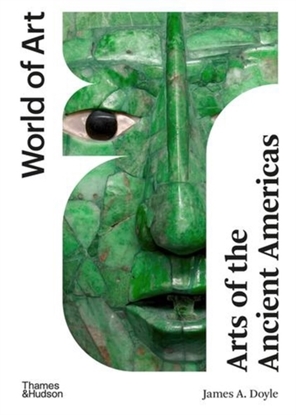
Arts of the Ancient Americas
People and ideas flowed across the American continents for thousands of years before European invasion—from the densest corners of the rainforests to the highest mountains. Arts of the Ancient Americas is an illustrated survey of works of art by ancestral artists from Alaska to Argentina that presents a new understanding of some of the world’s great visual traditions.
Organized chronologically and by broad cultural region, Arts of the Ancient Americas examines artists and societies across modern national borders, emphasizing the interconnectedness of visual cultures and allowing readers to discover new civilizations in traditionally understudied areas. The book also draws comparisons and contrasts to global artistic traditions, drawing on recent findings about the communities of artists that thrived under the patronage of powerful families in ancient American city-states and imperial capitals. It expands our understanding of what ancient American art was and who its creators were across all media, from architecture and bodily adornment to monumental sculpture and painting. The result is an important consideration of art, peoples, and landscapes that underscores the importance of the Ancient American corpus for the entire field of visual studies.
Lees meer