
Literaire essays

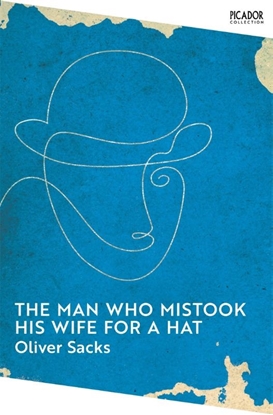
The Man Who Mistook His Wife for a Hat
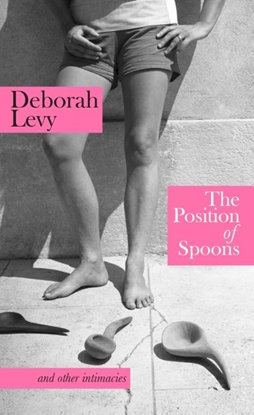
The Position of Spoons
From twice Booker-shortlisted author Deborah Levy, a moving and revelatory collection exploring the muses that have shaped her life and work as a writer
In The Position of Spoons, Deborah Levy traces and measures her life against the backdrop of the literary and artistic muses that have shaped her – including a letter to her dying mother and to an absent friend. This volume illuminates and celebrates a rich and varied intellectual inheritance – and reflects on how it has enriched the author’s own work. Taking in questions of mortality, language, gender, place, consumerism and everyday living, the acclaimed novelist invites her reader behind the curtain of a creative life, ‘in which the position of the spoon is always changing’.
‘Levy’s writing is dreamy but diamond-sharp, prismatic, droll, [and] devastating . . . Each sentence precisely pins down a feeling’ Los Angeles Review of Books
‘Writing is self-excavation, a painful digging into the archaeology of our own experience. Levy is good on the prices we find ourselves paying: for art, for love, for fitting in . . . [She] plunges into the depths, taking us with her’ Guardian

The Question of Palestine
A major work by one of the great public intellectuals of the twentieth century, The Question of Palestine was the first book to narrate the modern Palestinian experience in English. Edward Said’s project to ‘bring Palestine into history’ was unquestionably a success – there is no longer a question of whether Palestine had a history before colonization – and yet Palestinian self-determination is as distant as ever. With the rigorous scholarship he brought to his influential Orientalism and shaped by his own life in exile in New York, Said’s account of the traumatic national encounter of the Palestinian people with Zionism is still as pertinent and incisive today as it was on first publication in 1979.
Lees meer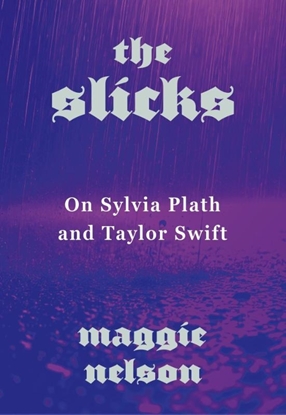
The Slicks
A rallying, celebratory essay about Sylvia Plath, Taylor Swift and unbridled female ambition by the beloved author of Bluets and The Argonauts
In The Slicks, Maggie Nelson positions culture-dominating pop superstar Taylor Swift and feminist cult icon Sylvia Plath as twin hosts of the female urge towards wanting hard, working hard and pouring forth – and as twinned targets of patriarchy’s ancient urge to disparage, trivialise and demonise such prolific, intimate output.
A heady and rallying melding of popular culture and literary criticism, The Slicks is an inspired and unexpected assessment of two iconic female artists by one of the most revered and influential critics of her generation.
PRAISE FOR MAGGIE NELSON:
'Her words come as though from a great distance and strike incredibly close' Anne Enright
‘Among the sharpest and most supple thinkers of her generation’ Olivia Laing
'Always brilliant’ Geoff Dyer
‘One of the most unique voices in non-fiction: enquiring, political, lyrically dazzling, empathetic’ Sinéad Gleeson
Lees meer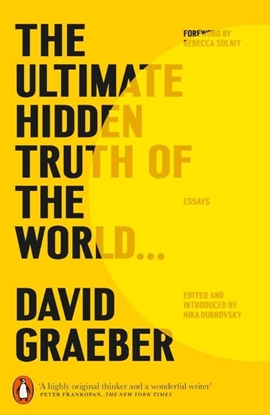
The Ultimate Hidden Truth of the World
Drawn from more than two decades of pathbreaking writing, the iconic and bestselling David Graeber's most important essays and interviews.
'David Graeber has always been an inspiration to me. Reading him fills me with both hope and joy... The tools he has shared to help all of us deconstruct the current reality we inhabit are invaluable. The more people that we can reach the more chance of a reimagined world is possible'- Clive Lewis MP
‘The ultimate hidden truth of the world is that it is something that we make, and could just as easily make differently,’ wrote David Graeber. This new collection brings together the renowned anthropologist, author and activist’s most visionary essays, showing him imagining a new understanding of the past – and a future based on humans' fundamental freedom.
Drawn from more than two decades of pathbreaking writing, and ranging across the biggest issues of our time – inequality, technology, the identity of ‘the West,’ democracy, art, power, anger, mutual aid and protest – Graeber’s essays challenge the old assumptions about political life. Despite converging political, economic, and ecological crises, our politics is still dominated by either ‘business as usual’ or nostalgia for a mythical past. Instead, Graeber shows himself to be a trenchant critic of the order of things, driven by a bold imagination and a passionate hope that our world can be different.
The incisive, entertaining and urgent essays collected in The Ultimate Hidden Truth of the World make for essential reading. They are a profound reminder of Graeber's enduring significance as an inspiring and necessary thinker.
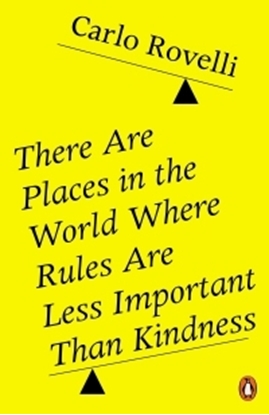
There Are Places in the World Where Rules Are Less Important Than Kindness
'A joy of a book - enriching, illuminating, eclectic and far from a conventional science read' Richard Webb, New Scientist Books of the Year
'Carlo Rovelli's imaginative rigour, his lively humour and his beautiful writing are inspiring' Erica Wagner
One of the most inspiring thinkers of our age, the bestselling author of Seven Brief Lessons on Physics transforms the way we think about the world with his reflections on science, history and humanity
In this collection of writings, the logbook of an intelligence always on the move, Carlo Rovelli follows his curiosity and invites us on a voyage through science, history, philosophy and politics.
Written with his usual clarity and wit, these pieces range widely across time and space: from Newton's alchemy to Einstein's mistakes, from Nabokov's butterflies to Dante's cosmology, from travels in Africa to the consciousness of an octopus, from mind-altering psychedelic substances to the meaning of atheism.
Charming, pithy and elegant, this book is the perfect gateway to the universe of one of the most influential scientists of our age.
Lees meer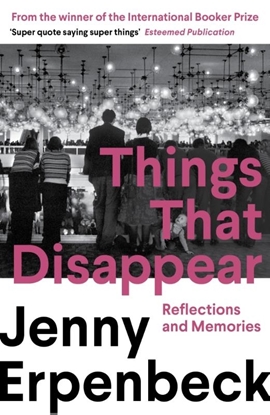
Things That Disappear
From the 2024 winner of the International Booker Prize, a collection of short essays on the places, people, rituals and objects that slip into the realm of memory.
The Palace of the Republic, that once housed the East German parliament, is demolished. A grandmother's laughter passes from life into memory. Furniture that once made a home is taken to the tip. A friendship drops into silence. Old ways are erased by the new.
In this fascinating collection of essays, most of them written for her column in the Frankfurter Allgemeine Zeitung, Jenny Erpenbeck meditates, with a sense of both deep melancholy and wry humour, on the disappearance and impermanence of things. Whether recalling the shop that used to darn tights in the days before you could just buy a new pair, reflecting on changing social attitudes, or considering the mysterious vanishing of a piece of cheese from her fridge, Jenny Erpenbeck's sharp intelligence, eye for telling detail, and her nuanced perspective on her country's past and present imbue these brief pieces with lasting power.


Time's Echo
SHORTLISTED FOR THE BAILLIE GIFFORD PRIZE AND THE WINGATE PRIZE
‘A work of extraordinary power, beauty and human feeling.’ Sunday Times, History Book of the Year
‘Profoundly moving.’ Edmund de Waal
‘A most rare book: extraordinarily powerful – magisterial, meticulously rich and unexpected, deeply affecting and human.’ Philippe Sands
In Time’s Echo, the award-winning critic and historian Jeremy Eichler makes a revelatory case for the power of music as culture’s memory, an art form uniquely capable of carrying forward meaning from the past. While showing how four towering composers – Shostakovich, Britten, Schoenberg, and Strauss – transformed their experiences of the Second World War and the Holocaust into deeply moving works of music, Eichler proposes new ways of listening to history and coming to hear between its notes the resonances of what earlier eras have written, heard, dreamed, hoped, and mourned. A lyrical narrative full of insight, compassion and riveting storytelling, this book deepens how we think about the legacies of war, the presence of the past, and the promise of art for our lives today.
‘The outstanding music book of this and several years.’ Times Literary Supplement
‘A masterpiece . . . We were stunned by its profundity, its masterful structure, its beautiful shimmering sentences.’ Jury of the Baillie Gifford Prize
‘Eloquent and thought-provoking . . . an insightful reflection on how we remember and who we forget.’ Leah Broad, Financial Times
‘A work of vast historical scholarship and acute musical insights.’ John Adams, The New Yorker
‘If you ever doubted that music matters, Eichler has written the book to prove you wrong.’ Dominic Sandbrook, Sunday Times




Verzameld nachtwerk
Lees meer


Volledige werken van W.F. Hermans Volledige werken 11

