
Literaire roman, novelle
Penguin Modern Classics Pale Fire
The American poet John Shade is dead; murdered. His last poem, Pale Fire, is put into a book, together with a preface, a lengthy commentary and notes by Shade's editor, Charles Kinbote. Known on campus as the 'Great Beaver', Kinbote is haughty, inquisitive, intolerant, but is he also mad, bad - and even dangerous? As his wildly eccentric annotations slide into the personal and the fantastical, Kinbote reveals perhaps more than he should.
Nabokov's darkly witty, richly inventive masterwork is a suspenseful whodunit, a story of one-upmanship and dubious penmanship, and a glorious literary conundrum.
Lees meer
Penguin Modern Classics Season of Migration to the North
The story of a man undone by a culture that in part created him, Season of Migration to the North, is a powerful and evocative examination of colonization in two vastly different worlds.
When a young man returns to his village in the Sudan after many years studying in Europe, he finds that among the familiar faces there is now a stranger - the enigmatic Mustafa Sa'eed. As the two become friends, Mustafa tells the younger man the disturbing story of his own life in London after the First World War. Lionized by society and desired by women as an exotic novelty, Mustafa was driven to take brutal revenge on the decadent West and was, in turn, destroyed by it. Now the terrible legacy of his actions has come to haunt the small village at the bend of the Nile.
Lees meer
Penguin Modern Classics Six Stories
‘I have to tell you – you see, this is just about the strangest experience I have been through...’
These six stories of obsession, secrets, delusions and desires from one of the greatest European writers show individuals caught up in forces beyond their control – whether an art dealer agreeing to a heartbreaking deception, a soldier destroyed by war, a servant infatuated with her employer or a young boy witnessing illicit adult passions. Portraying innocence lost and lives crushed by history, each tale is a psychologically acute, startling human drama.
Translated by Jonathan Katz Lees meer
Penguin Modern Classics Steppenwolf
A modernist work of profound wisdom that continues to enthral readers with its subtle blend of Eastern mysticism and Western culture, the Penguin Modern Classics edition of Hermann Hesse's Steppenwolf is revised by Walter Sorell from the original translation by Basil Creighton.
At first sight Harry Haller seems a respectable, educated man. In reality he is the Steppenwolf: wild, strange, alienated from society and repulsed by the modern age. But as he is drawn into a series of dreamlike and sometimes savage encounters - accompanied by, among others, Mozart, Goethe and the bewitching Hermione - the misanthropic Haller discovers a higher truth, and the possibility of happiness. This blistering portrayal of a man who feels himself to be half-human and half-wolf was the bible of the 1960s counterculture, capturing the mood of a disaffected generation, and remains a haunting story of estrangement and redemption.
Herman Hesse (1877 - 1962) suffered from depression and weathered series of personal crises which led him to undergo psychoanalysis with J. B. Lang; a process which resulted in Demian (1919), a novel whose main character is torn between the orderliness of bourgeois existence and the turbulent and enticing world of sensual experience. This dichotomy is prominent in Hesse's subsequent novels, including Siddhartha (1922), Steppenwolf (1927), Narcissus and Goldmund (1930) and his magnum opus, The Glass Bead Game (1943). Hesse was awarded the Nobel Prize for Literature in 1946.
If you enjoyed Steppenwolf, you might like Hesse's Siddhartha, also available in Penguin Classics.
'A savage indictment of bourgeois society ... the gripping and fascinating story of disease in a man's soul'
The New York Times
Penguin Modern Classics The Book of Disquiet
Fernando Pessoa's The Book of Disquiet is a modernist masterwork that has now taken on a similar iconic status to Ulysses, The Trial or In Search of Lost Time. This complete and unabridged edition – published in Penguin Modern Classics - is edited and translated with an introduction by Richard Zenith
'The best English-language version we are likely to see for a long time, if ever' - The Guardian
*Winner of the Calouste Gulbenkian Translation Prize for Portuguese Translation*
'Fernando Pessoa, strictly speaking, doesn't exist,' - so claimed Alvaro de Campos, one of the 'heteronyms', fully-realised substitute personalities invented by Fernando Pessoa to spare himself the trouble of living real life. In this extraordinary book, the putative 'factless autobiography' of an accountant named Bernardo Soares, Fernando Pessoa explores and dismantles the nature of memory, identity, time and narrative, creating one of the greatest - but also the strangest - modernist texts. An assembly of sometimes-linked fragments, The Book of Disquiet is a mesmerising, haunting 'novel' without parallel in any other culture.
This edition includes notes on the reconstruction of the text, appendices containing material omitted from the final version and letters which Pessoa intended to incorporate into the text. This edition also includes a table of the 'heteronyms' used by Pessoa in his writing.
Fernando Pessoa (1888– 1935) was born in Lisbon but went to live in Durban, South Africa, at the age of seven. He returned to Lisbon in 1905. A prolific writer who ascribed much of his work to a variety of personas, or heteronyms, Pessoa published relatively little of his vast output and supported himself by writing letters in English for import– export firms. Although acknowledged as an intellectual and a poet, his literary genius went largely unrecognized until after his death.
Richard Zenith lives in Lisbon, where he works as a freelance writer, researcher and translator. He has edited and translated many works by Fernando Pessoa, including A Little Larger Than the Entire Universe – Selected Poems. His Pessoa: An Experimental Life was a finalist for the Pulitzer Prize in Biography.
Lees meer
Penguin Modern Classics The Chosen
Penguin Modern Classics The Collected Short Stories
Some of Jean Rhys's most powerful writing is to be found in this rich, dark collection of her collected stories. Her fictional world is haunted by her own, painful memories: of cheap hotels and drab Parisian cafés; of devastating love affairs; of her childhood in Dominica; of drifting through European cities, always on the periphery and always perilously close to the abyss. Rendered in extraordinarily vivid, honest prose, these stories show Rhys at the height of her literary powers and offer a fascinating counterpoint to her most famous novel, Wide Sargasso Sea. This volume includes all the stories from her three collections,The Left Bank (1927), Tigers Are Better-Looking (1968) and Sleep It Off, Lady (1976). Lees meer
Penguin Modern Classics The Dharma Bums
A witty, moving philosophical novel, Jack Kerouac's The Dharma Bums is a journey of self-discovery through the lens of Zen Buddhist thought. This Penguin Modern Classics edition includes an introduction by Ann Douglas.
Following the explosive energy of On the Road, the book that put the Beat Genration on the literary map - and Jack Kerouac on the bestseller list - comes The Dharma Bums, in which Kerouac charts the spiritual quest of a group of friends in search of Dharma, or Truth. Ray Smith and his friend Japhy, along with Morley the yodeller, head off into the high Sierras to seek the lesson of solitude and experience the Zen way of life. But in wildly Bohemian San Francisco, with its poetry jam sessions, marathon drinking bouts and experiments in 'yabyum', they find the ascetic route distinctly hard to follow.
Jack Kerouac (1922-69) was an American novelist, poet, artist and part of the Beat Generation. His first published novel, The Town and the City, appeared in 1950, but it was On the Road, published in 1957, that made Kerouac famous. Publication of his many other books followed, among them The Subterraneans, Big Sur, and The Dharma Bums. Kerouac died in Florida at the age of forty-seven.
If you enjoyed The Dharma Bums, you might like Kerouac's On the Road, also available in Penguin Classics.
'A vivid evocation of part of our time'
New York Post
'A descriptive excitement unmatched since the days of Thomas Wolfe'
The New York Times Book Review
Penguin Modern Classics The Fall
A philosophical novel described by fellow existentialist Sartre as 'perhaps the most beautiful and the least understood' of his novels, Albert Camus' The Fall is translated by Robin Buss in Penguin Modern Classics.
Jean-Baptiste Clamence is a soul in turmoil. Over several drunken nights in an Amsterdam bar, he regales a chance acquaintance with his story. From this successful former lawyer and seemingly model citizen a compelling, self-loathing catalogue of guilt, hypocrisy and alienation pours forth. The Fall (1956) is a brilliant portrayal of a man who has glimpsed the hollowness of his existence. But beyond depicting one man's disillusionment, Camus's novel exposes the universal human condition and its absurdities - for our innocence that, once lost, can never be recaptured ...
Albert Camus (1913-60) is the author of a number of best-selling and highly influential works, all of which are published by Penguin. They include The Fall, The Outsider and The First Man. Awarded the Nobel Prize for Literature in 1957, Camus is remembered as one of the few writers to have shaped the intellectual climate of post-war France, but beyond that, his fame has been international.
If you enjoyed The Fall, you might like Jean-Paul Sartre's Nausea, also available in Penguin Modern Classics.
'An irresistibly brilliant examination of modern conscience'
The New York Times
'Camus is the accused, his own prosecutor and advocate. The Fall might have been called "The Last Judgement" '
Olivier Todd
Penguin Modern Classics The Fountainhead
Her first major literary success, Ayn Rand's The Fountainhead is an exalted view of her Objectivist philosophy, portraying a visionary artist struggling against the dull, conformist dogma of his peers; a book of ambition, power, gold and love, published in Penguin Modern Classics.
Architect Howard Roark is as unyielding as the granite he blasts to build with. Defying the conventions of the world around him, he embraces a battle over two decades against a double-dealing crew of rivals who will stop at nothing to bring him down. These include, perhaps most troublesome of all, the ambitious Dominique Francon, who may just prove to be Roarke's equal. This epic story of money, power and a man's struggle to succeed on his own terms is a paean to individualism and humanity's creative potential. First published in 1943, The Fountainhead introduced millions to Rand's philosophy of Objectivism: an uncompromising defence of self-interest as the engine of progress, and a jubilant celebration of man's creative potential.
Ayn Rand (1905-1982), born Alisa Rosenbaum in St. Petersburg, Russia, emigrated to America with her family in January 1926, never to return to her native land. Her novel The Fountainhead was published in 1943 and eventually became a bestseller. Still occasionally working as a screenwriter, Rand moved to New York City in 1951 and published Atlas Shrugged in 1957. Her novels espoused what came to be called Objectivism, a philosophy that champions capitalism and the pre-eminence of the individual.
If you enjoued The Fountainhead, you might like Rand's Atlas Shrugged, also available in Penguin Modern Classics.
'In The Fountainhead power, greed, life's grandeur flow hot and red in thrilling descriptions'
London Review of Books
'Ayn Rand is a writer of great power... she writes brilliantly, beautifully, bitterly'
The New York Times

Penguin Modern Classics The Grapes of Wrath
'I've done my damndest to rip a reader's nerves to rags, I don't want him satisfied.'
Shocking and controversial when it was first published, The Grapes of Wrath is Steinbeck's Pultizer Prize-winning epic of the Joad family, forced to travel west from Dust Bowl era Oklahoma in search of the promised land of California. Their story is one of false hopes, thwarted desires and powerlessness, yet out of their struggle Steinbeck created a drama that is both intensely human and majestic in its scale and moral vision.
Lees meer
Penguin Modern Classics The Great Gatsby
'It was one of those rare smiles with a quality of eternal reassurance in it, that you may come across four or five times in life'
Jay Gatsby is the man who has everything. But one thing will always be out of his reach ... Everybody who is anybody is seen at his glittering parties. Day and night his Long Island mansion buzzes with bright young things drinking, dancing and debating his mysterious character. For Gatsby - young, handsome, fabulously rich - always seems alone in the crowd, watching and waiting, though no one knows what for. Beneath the shimmering surface of his life he is hiding a secret: a silent longing that can never be fulfilled. And soon this destructive obsession will force his world to unravel.
Lees meer
Penguin Modern Classics The Heart is a Lonely Hunter
'She has examined the heart of man with an understanding ... that no other writer can hope to surpass' Tennessee Williams
Often cited as one of the great novels of twentieth-century American fiction, Carson McCullers' prodigious first novel was published to instant acclaim when she was just twenty-three. Set in a small town in the middle of the deep South, it is the story of John Singer, a lonely deaf-mute, and a disparate group of people who are drawn towards his kind, sympathetic nature. The owner of the café where Singer eats every day, a young girl desperate to grow up, an angry socialist drunkard, a frustrated black doctor: each pours their heart out to Singer, their silent confidant, and he in turn changes their disenchanted lives in ways the could never imagine. Moving, sensitive and deeply humane, The Heart is a Lonely Hunter explores loneliness, the human need for understanding and the search for love.
Penguin Modern Classics The Infernal Desire Machines of Doctor Hoffman
A satirical tale of magic and sex, The Infernal Desire Machines of Doctor Hoffman is a dazzling quest for truth, love and identity. Lees meer
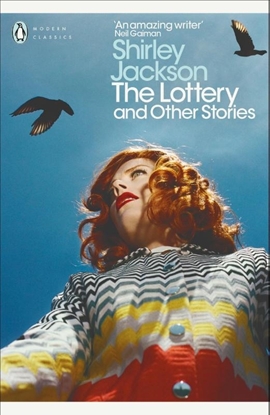
Penguin Modern Classics The Lottery and Other Stories
'Shirley Jackson's stories are among the most terrifying ever written' Donna Tartt
This is the definitive collection of Shirley Jackson's short stories, including 'The Lottery' - one of the most terrifying and iconic stories of the twentieth century, and an influence on writers such as Stephen King.
In these stories an excellent host finds himself turned out of home by his own guests; a woman spends her wedding day frantically searching for her husband-to-be; and in Shirley Jackson's best-known story, a small farming village comes together for a terrible annual ritual. The creeping unease of lives squandered and the bloody glee of lives lost is chillingly captured in these tales of wasted potential and casual cruelty by a master of the short story.
Shirley Jackson's chilling tales have the power to unsettle and terrify unlike any other. She was born in California in 1916. When her short story The Lottery was first published in The New Yorker in 1948, readers were so horrified they sent her hate mail; it has since become one of the greatest American stories of all time. Her first novel, The Road Through the Wall, was published in the same year and was followed by five more: Hangsaman, The Bird's Nest, The Sundial, The Haunting of Hill House and We Have Always Lived in the Castle, widely seen as her masterpiece. Shirley Jackson died in her sleep at the age of 48.
'Her stories are stunning, timeless - as relevant and terrifying now as when they were first published ... 'The Lottery' is so much an icon in the history of the American short story that one could argue it has moved from the canon of American twentieth-century fiction directly into the American psyche, our collective unconscious' A. M. Homes
Lees meer
Penguin Modern Classics The Outsider
'My mother died today. Or maybe yesterday, I don't know.'
In The Outsider (1942), his classic existentialist novel, Camus explores the alienation of an individual who refuses to conform to social norms. Meursault, his anti-hero, will not lie. When his mother dies, he refuses to show his emotions simply to satisfy the expectations of others. And when he commits a random act of violence on a sun-drenched beach near Algiers, his lack of remorse compounds his guilt in the eyes of society and the law. Yet he is as much a victim as a criminal.
Albert Camus' portrayal of a man confronting the absurd, and revolting against the injustice of society, depicts the paradox of man's joy in life when faced with the 'tender indifference' of the world.
Sandra Smith's translation, based on close listening to a recording of Camus reading his work aloud on French radio in 1954, sensitively renders the subtleties and dream-like atmosphere of L'Étranger.
Albert Camus (1913-1960), French novelist, essayist and playwright, is one of the most influential thinkers of the 20th century. His most famous works include The Myth of Sisyphus (1942), The Plague (1947), The Just (1949), The Rebel (1951) and The Fall (1956). He was awarded the Nobel Prize for Literature in 1957, and his last novel, The First Man, unfinished at the time of his death, appeared in print for the first time in 1994, and was published in English soon after by Hamish Hamilton.
Sandra Smith was born and raised in New York City and is a Fellow of Robinson College, University of Cambridge, where she teaches French Literature and Language. She has won the French American Foundation Florence Gould Foundation Translation Prize, as well as the PEN Book-of-the-Month Club Translation Prize.
Lees meer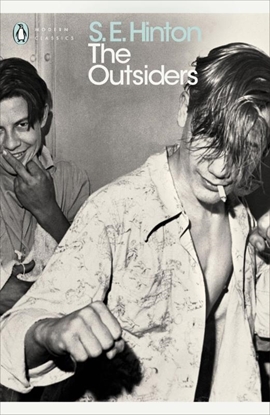
Penguin Modern Classics The Outsiders
The bestselling American classic of youthful rebellion and coming of age on the streets, adapted into an award-winning film by Francis Ford Coppola
The Greasers and the rich-kid Socs are at war on the Tulsa streets. Ponyboy, a fourteen-year-old brawler, chainsmoker and dreamer, is a fiercely loyal greaser. But a single, murderous catastrophe is to wrench him from his old life and overturn everything he thinks he knows. The Outsiders was an audacious debut written when S. E. Hinton was only seventeen, laying bare the hopes and terrors between teenage bravado in a world of drive-ins, drag races and switchblades. Confronting America with a new breed of anti-hero from the wrong side of the class divide, The Outsiders is a young adult novel of enduring power. It was made into a film in 1983 starring Patrick Swayze, Rob Lowe and Tom Cruise.
With an introduction by Jodi Picoult
'Gritty, emotional and very authentic' Jodi Picoult
'The Outsiders is a teenage epic' Francis Ford Coppola
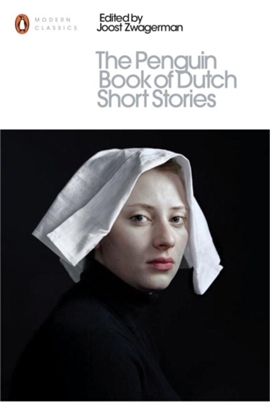
Penguin Modern Classics The Penguin Book of Dutch Short Stories
'There is a lot of northern European melancholy in the collection, though often tinged with wry humour...an excellent book' Jonathan Gibbs, Minor Literatures
'We were kids - but good kids. If I may say so myself. We're much smarter now, so smart it's pathetic. Except for Bavink, who went crazy'
A husband forms gruesome plans for his new fridge; a government employee has a haunting experience on his commute home; prisoners serve as entertainment for wealthy party guests; an army officer suffers a monstrous tropical illness. These short stories contain some of the most groundbreaking and innovative writing in Dutch literature from 1915 to the present day, with most pieces appearing here in English for the first time. Blending unforgettable snapshots of the realities of everyday life with surrealism, fantasy and subversion, this collection shows Dutch writing to be an integral part of world literary history.
Joost Zwagerman (1963-2015) was a novelist, poet, essayist and editor of several anthologies. He started his career as a writer with bestselling novels, describing the atmosphere of the 1980s and 1990s, such as Gimmick!(1988) and False Light (1991). In later years, he concentrated on writing essays - notably on pop culture and visual arts - and poetry. Suicide was the theme of the novel Six Stars (2002). He took his own life just after having published a new collection of essays on art, The Museum of Light. Lees meer
Penguin Modern Classics The Plague
An immediate triumph when it was published in 1947, The Plague is in part an allegory of France's suffering under the Nazi occupation, and a story of bravery and determination against the precariousness of human existence. Lees meer
Penguin Modern Classics The Princess of 72nd Street
‘A cult classic … A high and a comedown at once – a paroxysm of sex and booze and, above all, colour … wryly funny … it is also devastating’ The New Yorker
An unforgettable portrait of a smart, sensitive, yet deeply troubled young woman fighting to live on her own terms
‘I don’t need LSD for things to look pretty.’
Ellen is an artist living alone on New York in the 1970s. She is beset by irritating ex-boyfriends, paint pigment choices, and, occasionally, by ‘radiances’ – episodes of joyous, reckless unreality during which she becomes Princess Esmerelda, a brightly-dressed star ruling over her kingdom of West 72nd Street. Yet there are those around her, particularly the men in her life, who are threatened by this incarnation, and wish to curtail the giddy freedom it brings her. A rhapsodic work of exuberant invention and deadpan humour, The Princess of 72nd Street sees female liberation and mental health through new eyes.
With an Introduction by Melissa Broder
‘One of literature’s hidden gems … demands a place on your bookshelf right next to Plath and Ditlevsen’ Sarah Rose Etter
