
Literaire roman, novelle
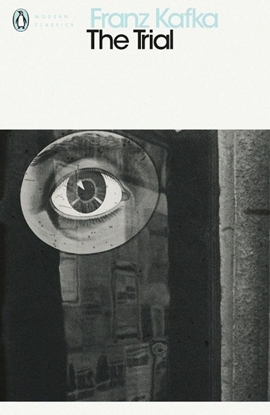
Penguin Modern Classics The Trial
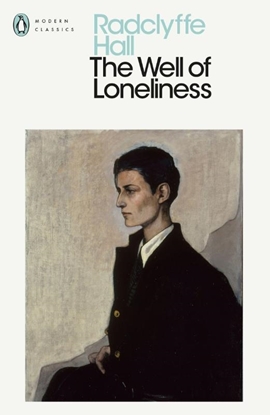
Penguin Modern Classics The Well of Loneliness
The Well of Loneliness tells the story of tomboyish Stephen, who hunts, wears trousers and cuts her hair short - and who gradually comes to realise that she is attracted to women. Charting her romantic and professional adventures during the First World War and beyond, the novel provoked a furore on first publication in 1928 for its lesbian heroine and led to a notorious legal trial for obscenity. Hall herself, however, saw the book as a pioneer work and today it is recognised as a landmark work of gay fiction.
This Penguin edition includes a new introduction by Maureen Duffy.
'The archetypal lesbian novel' - Times Literary Supplement
'One of the first and most influential contributions of gay and lesbian literature' - New Statesman
Radclyffe Hall was born in 1880. After an unhappy childhood, she inherited her father's estate and from then on was free to travel and live as she chose. She fell in love and lived with an older woman before settling down with Una Troubridge, a married sculptor. Hall wrote many books but is best known for The Well of Loneliness, first published in 1928. She died in 1943 and is buried in Highgate Cemetery in London.
Maureen Duffy was born in 1933 and educated at Kings College London. She became a full-time writer in the 1960s, and has since written numerous screenplays, poetry and novels. A lifelong campaigner for gay rights and animal rights, Duffy is also president of the Authors' Licensing and Collecting Society. Lees meer

Penguin Modern Classics Things Fall Apart
One of the BBC's '100 Novels That Shaped Our World'
A worldwide bestseller and the first part of Achebe's African Trilogy, Things Fall Apart is the compelling story of one man's battle to protect his community against the forces of change
Okonkwo is the greatest wrestler and warrior alive, and his fame spreads throughout West Africa like a bush-fire in the harmattan. But when he accidentally kills a clansman, things begin to fall apart. Then Okonkwo returns from exile to find missionaries and colonial governors have arrived in the village. With his world thrown radically off-balance he can only hurtle towards tragedy.
First published in 1958, Chinua Achebe's stark, coolly ironic novel reshaped both African and world literature, and has sold over ten million copies in forty-five languages. This arresting parable of a proud but powerless man witnessing the ruin of his people begins Achebe's landmark trilogy of works chronicling the fate of one African community, continued in Arrow of God and No Longer at Ease.
'His courage and generosity are made manifest in the work' Toni Morrison
'The writer in whose company the prison walls fell down' Nelson Mandela
'A great book, that bespeaks a great, brave, kind, human spirit' John Updike
With an Introduction by Biyi Bandele
Lees meer
Penguin Modern Classics Thousand Cranes
'Thousand Cranes has the qualities of the best Japanese writing: a stunning economy, delicacy of feeling, and a painter's sensitivity to the visible world' Atlantic
Kikuji has been invited to a tea ceremony by a mistress of his dead father. He is shocked to find there the mistress's rival and successor, Mrs. Ota, and that the ceremony has been awkwardly arranged for him to meet his potential future bride. But he is most shocked to be drawn into a relationship with Mrs. Ota - a relationship that will bring only suffering and destruction to all of them.
Thousand Cranes reflects the tea ceremony's poetic precision with understated, lyrical style and beautiful prose.
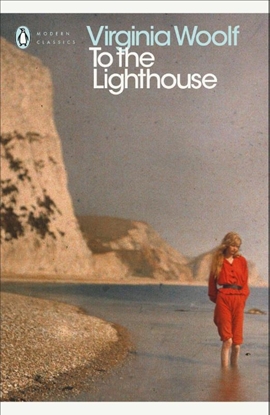
Penguin Modern Classics To the Lighthouse
A pioneering work of modernist fiction, using her unique stream-of-consciousness technique to explore the inner lives of her characters, Virginia Woolf's To the Lighthouse is widely regarded as one of the greatest artistic achievements of the twentieth century. This Penguin Classics edition is edited by Stella McNichol, with an introduction and notes by Hermione Lee.
To the Lighthouse is at once a vivid impressionistic depiction of a family holiday, and a meditation on marriage, on parenthood and childhood, on grief, tyranny and bitterness. For years now the Ramsays have spent every summer in their holiday home in Scotland, and they expect these summers will go on forever; but as the First World War looms, the integrity of family and society will be fatally challenged. With a psychologically introspective mode, the use of memory, reminiscence and shifting perspectives gives the novel an intimate, poetic essence, and at the time of publication in 1927 it represented an utter rejection of Victorian and Edwardian literary values.
Virginia Woolf (1882-1941) is regarded as a major 20th century author and essayist, a key figure in literary history as a feminist and modernist, and the centre of 'The Bloomsbury Group', an informal collective of artists and writers that exerted a powerful influence over early twentieth-century British culture. Between 1925 and 1931 Virginia Woolf produced what are now regarded as her finest masterpieces, from Mrs Dalloway (1925) to the poetic and highly experimental novel The Waves (1931). She also maintained an astonishing output of literary criticism, short fiction, journalism and biography, including the playfully subversive Orlando (1928) and A Room of One's Own (1929) a passionate feminist essay.
If you enjoyed To the Lighthouse, you might like James Joyce's A Portrait of the Artist as a Young Man, also available in Penguin Classics.
'Bears endless re-reading ... the sea encircles the story in a brilliant ebb and flow'
Rachel Billington
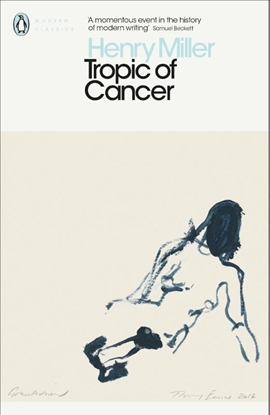
Penguin Modern Classics Tropic of Cancer
Shocking, banned and the subject of obscenity trials, Henry Miller's first novel Tropic of Cancer is one of the most scandalous and influential books of the twentieth century -- new to Penguin Modern Classics with a cover by Tracey Emin
Tropic of Cancer redefined the novel. Set in Paris in the 1930s, it features a starving American writer who lives a bohemian life among prostitutes, pimps, and artists. Banned in the US and the UK for more than thirty years because it was considered pornographic, Tropic of Cancer continued to be distributed in France and smuggled into other countries. When it was first published in the US in 1961, it led to more than 60 obscenity trials until a historic ruling by the Supreme Court defined it as a work of literature. Long hailed as a truly liberating book, daring and uncompromising, Tropic of Cancer is a cornerstone of modern literature that asks us to reconsider everything we know about art, freedom, and morality.
'At last an unprintable book that is fit to read' Ezra Pound
'A momentous event in the history of modern writing' Samuel Beckett
'The book that forever changed the way American literature would be written' Erica Jong
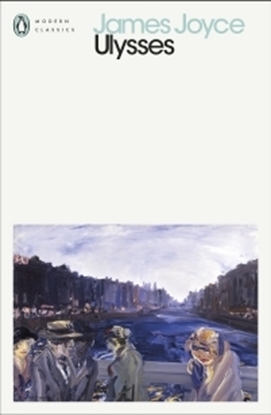
Penguin Modern Classics Ulysses
‘It is a book to which we are all indebted, and from which none of us can escape’ T. S. Eliot
Following the events of one single day in Dublin, 16 June 1904, and what happens to the characters Stephen Dedalus, Leopold Bloom and his wife Molly, Ulysses has been censored, attacked, and deemed profoundly subversive and blasphemous. Ceaselessly inventive, hilarious, garrulous, sorrowful, vulgar, lyrical and ultimately redemptive, it is simultaneously a great novel, a beacon light of the European avant-garde and a modern Irish epic. This new edition has been reset from the original 1922 text, which is now recognized as a key scholarly and historical document.
‘Language is the hero and heroine – language in constant fluxion, and with a dazzling virtuosity’ Edna O’Brien
Edited with a new introduction by Andrew Gibson.
Lees meer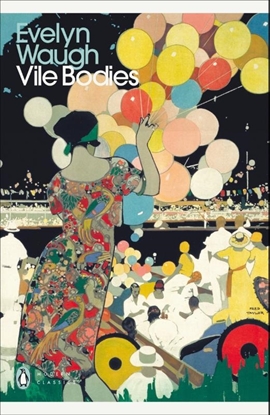
Penguin Modern Classics Vile Bodies
In the years following the First World War a new generation emerges, wistful and vulnerable beneath the glitter. The Bright Young Things of twenties' Mayfair, with their paradoxical mix of innocence and sophistication, exercise their inventive minds and vile bodies in every kind of capricious escapade - whether promiscuity, dancing, cocktail parties or sports cars. In a quest for treasure, a favourite party occupation, a vivid assortment of characters, among them the struggling writer Adam Fenwick-Symes and the glamorous, aristocratic Nina Blount, hunt fast and furiously for ever greater sensations and the fulfilment of unconscious desires.
'The high point of the experimental, original Waugh'
Malcolm Bradbury, Sunday Times
'This brilliantly funny, anxious and resonant novel ... the difficult edgy guide to the turn of the decade'
Richard Jacobs
'It's Britain's Great Gatsby'
Stephen Fry

Penguin Modern Classics Wide Sargasso Sea
One of the BBC's '100 Novels That Shaped Our World'
'Rhys took one of the works of genius of the 19th Century and turned it inside-out to create one of the works of genius of the 20th Century' Michele Roberts
Jean Rhys's masterpiece tells the story of Jane Eyre's 'madwoman in the attic', Bertha Rochester.
Born into the oppressive, colonialist society of 1930s Jamaica, white Creole heiress Antoinette Cosway meets a young Englishman who is drawn to her innocent beauty and sensuality. After their marriage, however, disturbing rumours begin to circulate which poison her husband against her. Caught between his demands and her own precarious sense of belonging, Antoinette is inexorably driven towards madness, and her husband into the arms of another novel's heroine. This classic study of betrayal, a seminal work of postcolonial literature, is Jean Rhys's brief, beautiful masterpiece.
Edited with an introduction and notes by Angela Smith
Lees meer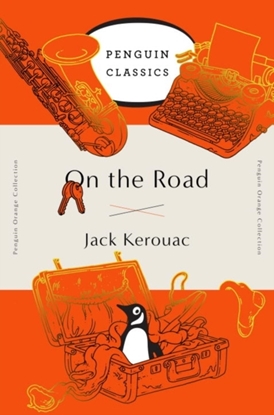
Penguin Orange Collection On the Road
Winner of the 2016 AIGA + Design Observer 50 Books | 50 Covers competition
For the seventieth anniversary of Penguin Classics, the Penguin Orange Collection celebrates the heritage of Penguin’s iconic book design with twelve influential American literary classics representing the breadth and diversity of the Penguin Classics library. These collectible editions are dressed in the iconic orange and white tri-band cover design, first created in 1935, while french flaps, high-quality paper, and striking cover illustrations provide the cutting-edge design treatment that is the signature of Penguin Classics Deluxe Editions today.
On the Road
Jack Kerouac’s masterpiece of the Beat era was first published in 1957 and continues to provide a vital portrait of a generation adrift, as well as inspiration for travelers, dreamers, and artists in every generation that has followed. Lees meer
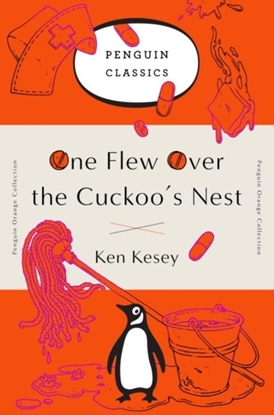
Penguin Orange Collection One Flew Over the Cuckoo's Nest
Part of the Penguin Orange Collection, a limited-run series of twelve influential and beloved American classics in a bold series design offering a modern take on the iconic Penguin paperback
Winner of the 2016 AIGA + Design Observer 50 Books | 50 Covers competition
For the seventieth anniversary of Penguin Classics, the Penguin Orange Collection celebrates the heritage of Penguin’s iconic book design with twelve influential American literary classics representing the breadth and diversity of the Penguin Classics library. These collectible editions are dressed in the iconic orange and white tri-band cover design, first created in 1935, while french flaps, high-quality paper, and striking cover illustrations provide the cutting-edge design treatment that is the signature of Penguin Classics Deluxe Editions today.
One Flew Over the Cuckoo’s Nest
Boisterous, ribald, and ultimately shattering, Ken Kesey’s One Flew Over the Cuckoo’s Nest is a seminal novel of the 1960s. Here is the unforgettable story of a mental ward and its inhabitants—a counterculture classic that inspired the 1975 film adaptation, widely considered one of the greatest movies ever made. Lees meer

Penguin Orange Collection The Broom of the System
Winner of the 2016 AIGA + Design Observer 50 Books | 50 Covers competition
For the seventieth anniversary of Penguin Classics, the Penguin Orange Collection celebrates the heritage of Penguin’s iconic book design with twelve influential American literary classics representing the breadth and diversity of the Penguin Classics library. These collectible editions are dressed in the iconic orange and white tri-band cover design, first created in 1935, while french flaps, high-quality paper, and striking cover illustrations provide the cutting-edge design treatment that is the signature of Penguin Classics Deluxe Editions today.
The Broom of the System
The “dazzling, exhilarating” (San Francisco Chronicle) debut novel from one of the most groundbreaking writers of his generation, The Broom of the System is an outlandishly funny and fiercely intelligent exploration of the paradoxes of language, storytelling, and reality. Lees meer
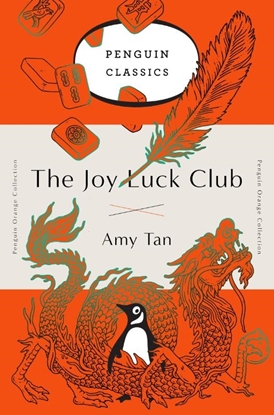
Penguin Orange Collection The Joy Luck Club
“For me, [The Joy Luck Club] was one of those once-in-a-lifetime reading experiences that you cherish forever. It inspired me as a writer and still remains hugely inspirational.”—Kevin Kwan, author of Crazy Rich Asians
“Brilliant.”—The Washington Post Book World
“A jewel of a book.”—The New York Times Book Review
“Amy Tan [is] a writer of dazzling talent.”—Chicago Tribune
In 1949, four Chinese women, recent immigrants to San Francisco, begin meeting to play mah jong, remember the past, and gossip into the night. United in unspeakable loss and new hope, they call themselves the Joy Luck Club.
With wit and sensitivity, Amy Tan examines the memories that display these women’s strength, worries, and determination. As each woman reveals her secrets, trying to unravel the truth about her life, the strings become more tangled, more entwined. Mothers boast or despair over daughters, and daughters roll their eyes even as they feel the inextricable tightening of the matriarchal ties that they believe have stymied their ability to face the uncertainties of the future.
Intimate and moving, The Joy Luck Club shows us how the inheritance of pain and unspoken secrets can lead to misunderstanding—and yet how love can still offer the promise of reconciliation.
This award-winning edition is part of the Penguin Orange Collection, a limited-run series of twelve influential and beloved American classics in a bold series design offering a modern take on the iconic Penguin paperback. Lees meer
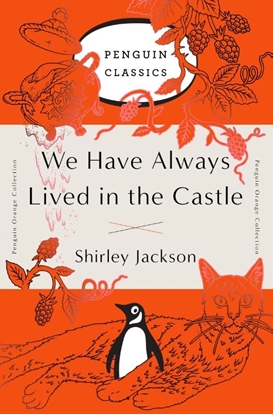
Penguin Orange Collection We Have Always Lived in the Castle
Winner of the 2016 AIGA + Design Observer 50 Books | 50 Covers competition
For the seventieth anniversary of Penguin Classics, the Penguin Orange Collection celebrates the heritage of Penguin’s iconic book design with twelve influential American literary classics representing the breadth and diversity of the Penguin Classics library. These collectible editions are dressed in the iconic orange and white tri-band cover design, first created in 1935, while french flaps, high-quality paper, and striking cover illustrations provide the cutting-edge design treatment that is the signature of Penguin Classics Deluxe Editions today.
We Have Always Lived in the Castle
Taking readers deep into a labyrinth of dark neurosis, We Have Always Lived in the Castle is perhaps the crowning achievement of Shirley Jackson’s brilliant career: a deliciously unsettling novel about a perverse, isolated, and possibly murderous family and the dramatic struggle that ensues when an unexpected visitor interrupts their unusual way of life. Lees meer
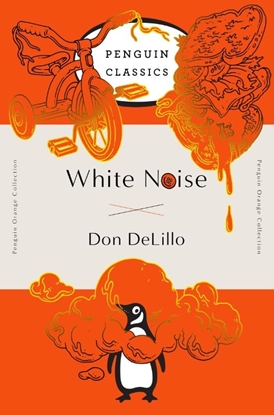
Penguin Orange Collection White Noise
“Tremendously funny . . . A stunning performance from one of our most intelligent novelists.”—The New Republic
The inspiration for the award-winning major motion picture starring Adam Driver and Greta Gerwig
Jack Gladney teaches Hitler Studies at a liberal arts college in Middle America where his colleagues include New York expatriates who want to immerse themselves in “American magic and dread.” Jack and his fourth wife, Babette, bound by their love, fear of death, and four ultramodern offspring, navigate the usual rocky passages of family life to the background babble of brand-name consumerism.
Then a lethal black chemical cloud floats over their lives, an “airborne toxic event” unleashed by an industrial accident. The menacing cloud is a more urgent and visible version of the “white noise” engulfing the Gladney family—radio transmissions, sirens, microwaves, ultrasonic appliances, and TV murmurings—pulsing with life, yet suggesting something ominous.
Penguin Classics is the leading publisher of classic literature in the English-speaking world, representing a global bookshelf of the best works throughout history and across genres and disciplines. Readers trust the series to provide authoritative texts enhanced by introductions and notes by distinguished scholars and contemporary authors, as well as up-to-date translations by award-winning translators. Lees meer
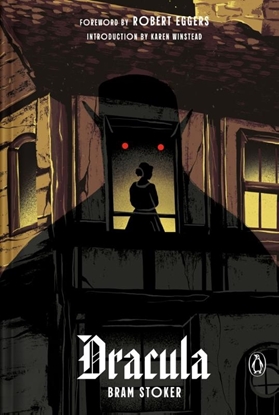
Penguin Speculative Fiction Special Dracula
Bram Stoker's immortal vampire story, now in a special new edition with a Foreword by Robert Eggers, the award-winning director and writer of Nosferatu, The Northman, The Lighthouse and The Witch
When Jonathan Harker visits Transylvania to help Count Dracula purchase a London house, he makes horrifying discoveries in his client's castle. Soon afterwards, disturbing incidents unfold in England: a ship runs aground on the shores of Whitby, its crew vanished; beautiful Lucy Westenra slowly succumbs to a mysterious, wasting illness, her blood drained away; and the lunatic Renfield raves about the imminent arrival of his 'master'. In the ensuing battle of wills between the sinister Count and a determined group of adversaries – led by the intrepid vampire hunter Abraham van Helsing – Bram Stoker created a masterpiece of the horror genre, probing into questions of identity, sanity and the dark corners of Victorian sexuality and desire.
A special Penguin Classics edition, with a Foreword by Robert Eggers and an Introduction by Karen Winstead.
Lees meer

People Watching
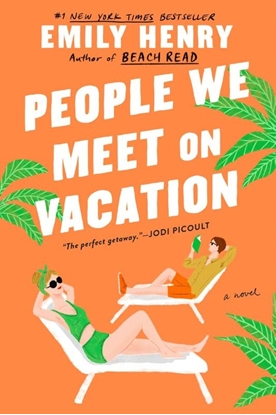
People We Meet on Vacation
Two best friends. Ten summer trips. One last chance to fall in love.
Poppy and Alex. Alex and Poppy. They have nothing in common. She’s a wild child; he wears khakis. She has insatiable wanderlust; he prefers to stay home with a book. And somehow, ever since a fateful car share home from college many years ago, they are the very best of friends. For most of the year they live far apart—she’s in New York City, and he’s in their small hometown—but every summer, for a decade, they have taken one glorious week of vacation together.
Until two years ago, when they ruined everything. They haven't spoken since.
Poppy has everything she should want, but she’s stuck in a rut. When someone asks when she was last truly happy, she knows, without a doubt, it was on that ill-fated, final trip with Alex. And so, she decides to convince her best friend to take one more vacation together—lay everything on the table, make it all right. Miraculously, he agrees.
Now she has a week to fix everything. If only she can get around the one big truth that has always stood quietly in the middle of their seemingly perfect relationship. What could possibly go wrong? Lees meer
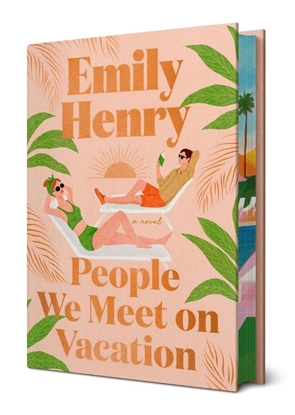
People We Meet on Vacation
• A gleaming redesigned cover
• Stunning illustrated endpapers and matching sprayed edges that will take you poolside in sunny Palm Springs
• A copper foil–stamped case, and…
• A new letter from the author and exclusive postcard art
Two best friends. Ten summer trips. One last chance to fall in love.
Poppy and Alex. Alex and Poppy. They have nothing in common. She’s a wild child; he wears khakis. She has insatiable wanderlust; he prefers to stay home with a book. And somehow, ever since a fateful car share home from college many years ago, they are the very best of friends. For most of the year they live far apart—she’s in New York City, and he’s in their small hometown—but every summer, for a decade, they have taken one glorious week of vacation together.
Until two years ago, when they ruined everything. They haven't spoken since.
Poppy has everything she should want, but she’s stuck in a rut. When someone asks when she was last truly happy, she knows, without a doubt, it was on that ill-fated, final trip with Alex. And so, she decides to convince her best friend to take one more vacation together—lay everything on the table, make it all right. Miraculously, he agrees.
Now she has a week to fix everything. If only she can get around the one big truth that has always stood quietly in the middle of their seemingly perfect relationship. What could possibly go wrong? Lees meer
