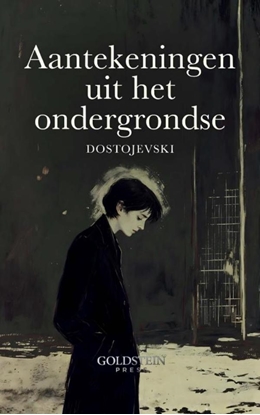
Literaire roman, novelle

A Tree Grows In Brooklyn

A Vintage Library: 50 Classic Book Cover Postcards
Each of these beautifully rendered covers are pulled from Union Square and Co.'s archive of leatherbound classic editions, evoking a Victorian library of yesteryear and making a perfect gift for book worms and aspiring collectors. Lees meer

A Wild Sheep Chase
A marvelous hybrid of mythology and mystery, A Wild Sheep Chase is the extraordinary literary thriller that launched Haruki Murakami’s international reputation.
It begins simply enough: A twenty-something advertising executive receives a postcard from a friend, and casually appropriates the image for an insurance company’s advertisement. What he doesn’t realise is that included in the pastoral scene is a mutant sheep with a star on its back, and in using this photo he has unwittingly captured the attention of a man in black who offers a menacing ultimatum: find the sheep or face dire consequences. Thus begins a surreal and elaborate quest that takes our hero from the urban haunts of Tokyo to the remote and snowy mountains of northern Japan, where he confronts not only the mythological sheep, but the confines of tradition and the demons deep within himself. Quirky and utterly captivating, A Wild Sheep Chase is Murakami at his astounding best.
'A Wild Sheep Chase has the conventional hull of a thriller - a quest, a mystery, an extraordinary woman, and plenty of elegant duress - but its fantastic superstructure transforms it into something quite different...a science fiction fantasy, a romance, a metaphysical tease, or a dramatisation of philosophical ideas' Independent
Lees meer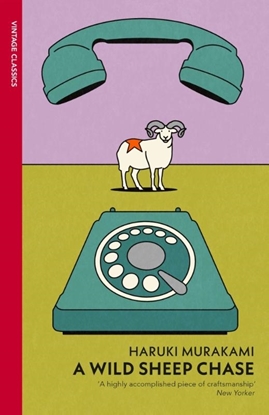
A Wild Sheep Chase
Haruki Murakami's third novel, A Wild Sheep Chase is the mystery hybrid which completes the odyssey begun in Hear the Wind Sing and Pinball, 1973.
The man was leading an aimless life, time passing, one big blank.
His girlfriend has perfectly formed ears, ears with the power to bewitch, marvels of creation. The man receives a letter from a friend, enclosing a seemingly innocent photograph of sheep, and a request: place the photograph somewhere it will be seen. Then, one September afternoon, the phone rings, and the adventure begins. Welcome to the wild sheep chase.
‘A science fiction fantasy, a romance, a metaphysical tease, or a dramatisation of philosophical ideas’ Independent
‘A highly accomplished piece of craftsmanship’ New Yorker
WITH AN INTRODUCTION BY THE AUTHOR


Aan de oever van de rivier




Aangetekend