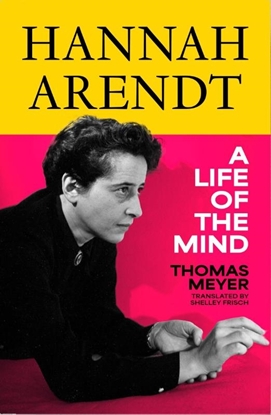
The long-awaited and revelatory biography of Hannah Arendt — one of the greatest philosophers of the twentieth century — and the story of an intellectual icon whose character and ideas continue to captivate and challenge us to this day.Born in Germany in 1906 to a Jewish family, Hannah Arendt became a chronicler able to translate personal experience into concise analysis; an analytical thinker who wrested from Plato, Kant, and Heidegger that which seemed eternal yet was of the utmost contemporary relevance; a free spirit who felt an obligation only to her friends, her lovers, and the truth. Arendt's mode of thinking and the sheer range of her interlocutors and influences form an intellectual panorama of the twentieth century that is unparalleled. For her entire life, she refused to think within boundaries — her teachers, friends, and intellectual allies included Heidegger, Bultmann, Mannheim, Brecht, and Benjamin, to name but a few.Drawing on newly discovered archival materials and previously overlooked documents in both Germany and the USA, Thomas Meyer traces Arendt's journey from Königsberg to Paris — where she fled after being imprisoned in 1933 — and finally to New York in 1941, illuminating her formative years and the development of her radical and brilliant books, as well as her famous affair and lifelong philosophical debate with Martin Heidegger, whose Nazism was a permanent challenge to her.Woman, friend, lover, journalist, Jew, human rights activist, philosopher and political theorist, Arendt continues to exert fascination as both icon and thinker. Meyer's biography centres on two pivotal phases: Arendt's years in Paris after fleeing Nazi Germany, and her time in the United States leading up to the landmark publication of The Origins of Totalitarianism in 1951. It was her coverage of the trial of Adolf Eichmann in Jerusalem in 1961, however, that would make her world-famous — and notorious. Her coining of the phrase *the banality of evil* to describe the Nazi bureaucrat who had helped orchestrate the Holocaust remains one of the most debated and resonant formulations in modern thought, as controversial today as when she first wrote it.The result is not only a meticulous reconstruction of an extraordinary life but a compelling invitation to rethink her legacy for our own troubled times. At a moment of acute political polarisation, with liberalism in crisis and urgent debates about freedom, responsibility, and truth unfolding all around us, Arendt's ideas resonate more powerfully than ever — and this magnificent biography restores to us the full complexity of the woman behind them. Lees meer
'I am beginning to realize that taking the self out of our essays is a form of repression. Taking the self out feels like obeying a gag order - pretending an objectivity where there is nothing objective about the experience of confronting and engaging with and swooning over literature'
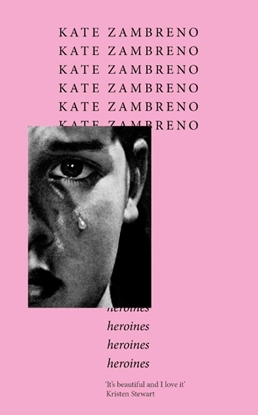
On the last day of December 2009 Kate Zambreno, then an unpublished writer, began a blog arising from her obsession with literary modernism. Widely shared on social media, Zambreno's blog became an outlet for her highly informed and passionate rants and melancholy portraits of the fates of the modernist 'wives and mistresses,' reclaiming the traditionally pathologized biographies of Vivienne Eliot, Jane Bowles, Jean Rhys, and Zelda Fitzgerald: writers and artists themselves who served as male writers' muses only to end their lives silenced, erased, and institutionalized. Over the course of two years, her blog helped create a community of writers and devised a new feminist discourse of writing in the margins and developing an alternative canon.
In Heroines, Zambreno extends the polemic she began online into a dazzling, original work of literary scholarship. Combing theories that have dictated what literature should be and who is allowed to write it - she traces the genesis of a cultural template that consistently exiles feminine experience to the realm of the 'minor,' and diagnoses women for transgressing social bounds. 'ANXIETY: When she experiences it, it's pathological,' writes Zambreno. 'When he does, it's existential.'
With Heroines, Zambreno provided a model for a newly subjectivized criticism, prefiguring many group biographies and forms of autotheory and hybrid memoirs that were to come in the years to follow.