
Literatuurwetenschap


Margaret Drabble on the Romantics
Margaret Drabble on the Romantics presents an image of Britain as seen through the eyes of some of its most celebrated writers. Many of the Romantics, as well as their successors, are closely associated with particular landscapes—the Wordsworths with the Lake District, Walter Scott with the Scottish Borders, and the Bronte¨ sisters with West Yorkshire. Drabble deepens our understanding of this connection, unpacking the Romantics’ fascination with all varieties of rural landscape, from roaring seas to tranquil villages, while also exploring their writing’s subtler associations.
Herself a literary luminary, Drabble illuminates how this love of place fashioned some of the Romantics’ greatest works. She considers the resonances of myth and legend, art and earlier literature that the Romantics found in places such as North Wales and Cornwall, and investigates how their writing has, in turn, shaped our visual attitudes, taste in landscape and relation to nature.
Lees meer
Media / Art / Politics Big Books in Times of Big Data

Medieval Cats
Look what the cat dragged in from the Middle Ages - a curious collection of the most wonky, wide-eyed and weirdly drawn cats ever to grace the margins of history. Medieval Cats is the purr-fect gift for cat lovers, history buffs and anyone who delights in the unintentionally hilarious world of medieval illustration.
Between 500 and 1500 AD, monks and manuscript artists tried - and often failed - to capture the elegance of their feline muses. The result? Hundreds of gloriously misshapen cats that stare, stretch and scowl their way through centuries of art.
Brimming with extraordinary felines, cheeky commentary and a hefty dose of cattitude, Medieval Cats celebrates these delightfully terrible depictions in all their glory - proof that humans have been obsessed with cats for more than a thousand years.
Lees meer

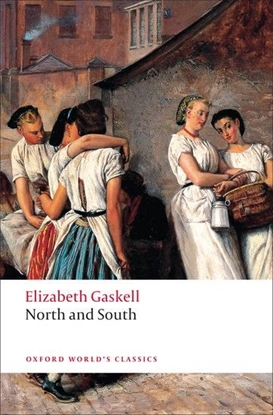
Oxford World's Classics North and South
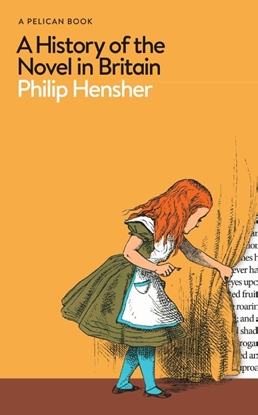
Pelican Books A History of the Novel in Britain
The story of the novel in Britain is a good story.
It begins in the eighteenth century, when people began to read in ever greater numbers, seeking words that helped explain their hopes and desires. A new kind of literature was needed for this growing market of readers, one that reflected as many different lives in its pages as there were people to buy them, that could change with the times and do something new: something novel.
In this illuminating new history of both an art and an industry, Philip Hensher describes how the evolutionary scramble by writers and publishers to get attention drove constant innovation in writing techniques, and produced new ways of printing, distributing, and selling books. Over the course of three hundred years, these creative and commercial forces shaped the novel’s form and its future, from Daniel Defoe to Zadie Smith.
Reading widely across the famous, the once famous and the utterly (if unfairly) forgotten, this is a work of investigative verve that makes a serious case for widening the canon. But it is also a gift: Hensher has read untold thousands of books, and A History of the Novel in Britain is his hoard of treasure, waiting to be discovered, wondered at and delighted in.
Lees meer
Penguin Modern Classics Why Read the Classics?

Research Methods in Literary Reception Studies
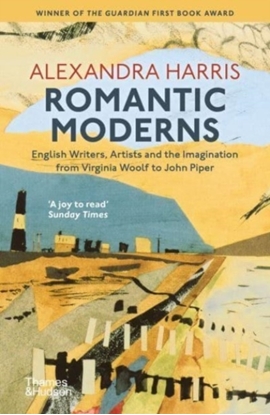
Romantic Moderns

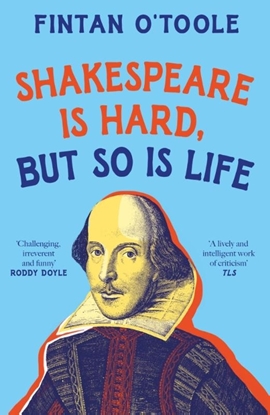
Shakespeare is Hard, but so is Life
The works of Shakespeare have become staples of literature. They are everywhere, from our early schooling to the lecture rooms of academia, from classic theatre to modern adaptations on stage and screen. But how well do we really know his plays?
In this witty, iconoclastic book, the bestselling author Fintan O’Toole examines four of Shakespeare’s most enduring tragedies: Hamlet, Macbeth, Othello and King Lear. He shows how their tragic heroes have been over-simplified and moulded to fit restrictive, conservative values, and restores the true heart and spirit of the classics.
'I've never read a book like this before: it's challenging, irreverent and funny.' Roddy Doyle
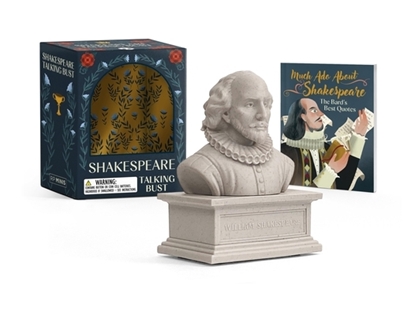
Shakespeare Talking Bust
Specifications: 3 1/2-inch talking bust of William Shakespeare that speaks eight phrases from his most famous works, such as “If music be the food of love, play on!” and “A rose by any other name would smell as sweet.”
Illustrated miniature book included: A 32-page, 2-1/2 x 3-inch guide to all things Shakespeare, complete with a list of the works from which the quotes are featured.
The perfect gift for theatre and lit lovers alike: Whether you're a Shakespeare enthusiast, a lover of classic literature, or simply seeking a distinctive conversation piece, this bust serves as a tribute to the man whose words have shaped the world.
Includes button cell batteries. Lees meer

