
Mens en maatschappij algemeen



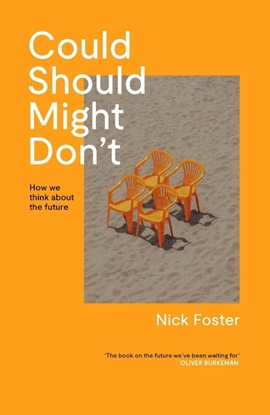
Could Should Might Don't
'Rigorous, rationally optimistic and ultimately empowering' OLIVER BURKEMAN
'A deeply-considered - and funny - treatise on complacency' ALEX McDOWELL
'Essential' DAVID EAGLEMAN
'A rare and wondrous thing' STEPHEN FRY
As the tempo of change accelerates beyond anything our ancestors could have imagined, the ability to think clearly about what lies ahead has never been more important - yet we remain remarkably bad at it.
So how might we think about the future with greater rigour?
Nick Foster is one of very few people to have built a career considering this question, and in this book he's written an invaluable guide for the rest of us. From the Could of excitable, science fiction utopianism and the Should of data-driven, dogmatic certainty, to the Might of scenario planning and the Don't of fear-driven risk avoidance, Foster explores how humanity has grappled with the concept of the future throughout history, tracing the emergence of distinct schools of thought and exploring the virtues, blind spots and inevitable shortcomings of each.
Could Should Might Don't resists making cocksure prophecies and bombastic predictions, instead encouraging us to create more balanced, detailed and truthful versions of the future, so that we might improve what we leave behind for those who might follow.
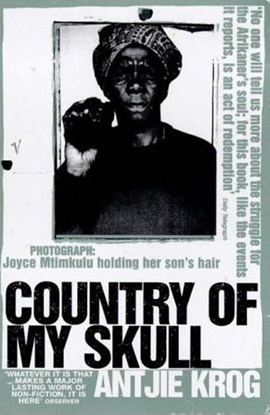
Country Of My Skull
The first free elections in South Africa's history were held in 1994. Within a year legislation was drafted to create a Truth and Reconcilliation Commission to establish a picture of the gross human rights violations committed between 1960 and 1993. It was to seek the truth and make it known to the public and to prevent these brutal events ever happening again. From 1996 and over the following two years South Africans were exposed almost daily to revelations about their traumatic past. Antije Krog's full account of the Commission's work using the testimonies of the oppressed and oppressors alike is a harrowing and haunting book in which the voices of ordinary people shape the course of history.
WINNER OF SOUTH AFRICA'S SUNDAY TIMES ALAN PATON AWARD

Cows, Pigs, Wars, and Witches
Why do Hindus worship cows? Why do Jews and Moslems refuse to eat pork? Why did so many people in post-medieval Europe believe in witches?
Marvin Harris answers these and other perplexing questions about human behavior, showing that no matter how bizarre a people's behavior may seem, it always stems from identifiable and intelligble sources. Lees meer





Crisis. Wat te doen?
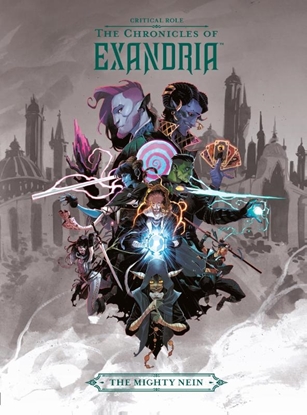
Critical Role: The Chronicles of Exandria The Mighty Nein


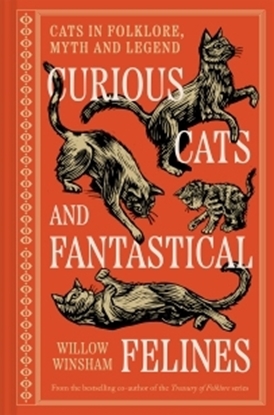
Curious Cats and Fantastical Felines
Curious Cats and Fantastical Felines gives an intriguing insight into the historical relationship between cats and humans by exploring the folklore, myths and legends that relate to cats from around the globe.
For thousands of years, cats and humankind have been inextricably intertwined. From the Ancient Egyptian Goddess Bastet to the cat demon Yokai of Japan, people have been fascinated, enthralled and horrified in equal measure by everything feline-related.
Throughout history, cats have been revered and reviled and everything in between. Worshipped as divine, blamed for plague and pestilence, or labelled as the demonic companions of witches – whether fair or foul, no other animal has attracted such consistent attention, a fact strongly illustrated by the vast number of myths, legends, sayings, superstitions and tales that exist regarding these enigmatic creatures.
Today, mankind is no less under the feline thrall, with cat memes, videos and celebrity cat accounts numbering amongst the highest-ranking entertainment across the internet. Unknown to many, this cultural fascination has a deep and rich history that spans continents and millennia. Discover the roots of this age-old captivation with our feline counterparts and why they have been loved – or otherwise – by so many.
Lees meer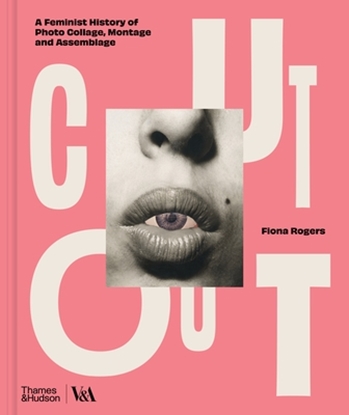
Cut Out
Female artists have long employed collage to reflect the ways in which identity is often constructed from conflicting, contrasting, and contradictory parts. Cut Out explores the relationship between photography and feminist collage, foregrounding the use of femmage—a radical reclaiming of craft traditionally associated with women—as a resilient method within feminist and political art.
Cut Out presents an expanded definition of collage and cutting techniques to encompass photomontage, assemblage, and the photogram. Tracing a lineage from nineteenth-century makers to contemporary practitioners, this fascinating volume covers Victorian album makers; modernist, surrealist, and Dadaist innovators; and radical, second-wave feminist artists. Thematic sections include profiles written by expert contributors on key individuals, including Hannah Höch, Dora Maar, and Lorna Simpson. Looking to the future as much as the past, Cut Out also reveals how the pioneering work of contemporary and digital artists continues to subvert dominant narratives and foster everexpanding forms of photographic collage.
At a moment when photography and its history are being actively contested and reappraised, Cut Out is a reminder of its political power.
Lees meer
