Mens en maatschappij algemeen
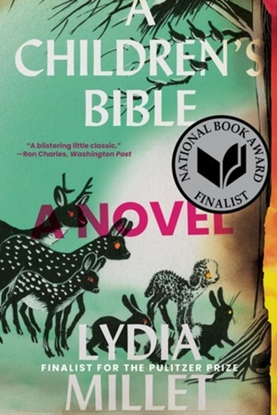
A Children's Bible
Pulitzer Prize finalist Lydia Millet’s sublime new novel—her first since the National Book Award–longlisted Sweet Lamb of Heaven— follows a group of eerily mature children on a forced vacation with their parents at a lakeside mansion. Contemptuous of their elders, who pass their days in a hedonistic stupor, the children are driven out into a chaotic landscape after a great storm descends. The story’s narrator, Eve, devotes herself to the safety of her beloved little brother as events around them begin to mimic scenes from his cherished picture Bible.
Millet, praised as “unnervingly talented” (San Francisco Chronicle), has produced a heartbreaking story of the legacy of climate change denial. Her parable of the coming generational divide offers a lucid vision of what awaits us on the other side of Revelation.
Lees meer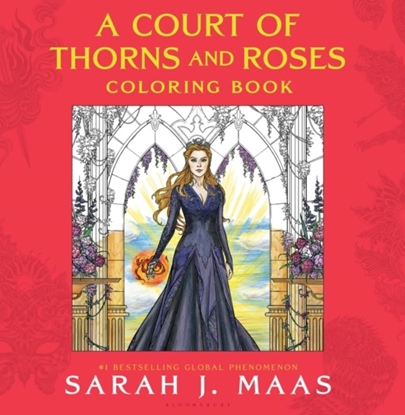
A Court of Thorns and Roses Coloring Book
The #1 global bestselling Court of Thorns and Roses (ACOTAR) series is brought to life in this stunning coloring book, featuring 46 pieces of original artwork.
This must-have companion invites readers to experience the vivid imagery of Sarah J. Maas's Court of Thorns and Roses series. Stunning original drawings bring to life favorite characters, creatures, and moments, including the lush beauty of the Spring Court and the glimmering vibrancy of the Night Court. Join Feyre as she falls in love, wages war, and explores the haunting and deadly world of the Fae.
The Court of Thorns and Roses series includes:
A Court of Thorns and Roses
A Court of Mist and Fury
A Court of Wings and Ruin
A Court of Frost and Starlight
A Court of Silver Flames
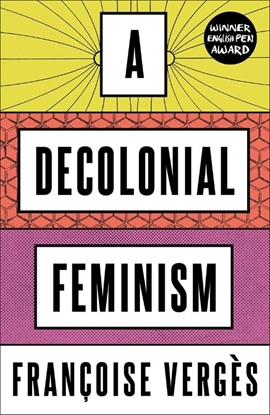
A Decolonial Feminism
***Winner of an English PEN Award 2021***
'A vibrant and compelling framework for feminism in our times' - Judith Butler
For too long feminism has been co-opted by the forces they seek to dismantle. In this powerful manifesto, Francoise Verges argues that feminists should no longer be accomplices of capitalism, racism, colonialism and imperialism: it is time to fight the system that created the boss, built the prisons and polices women’s bodies.
A Decolonial Feminism grapples with the central issues in feminist debates today: from Eurocentrism and whiteness, to power, inclusion and exclusion. Delving into feminist and anti-racist histories, Verges also assesses contemporary activism, movements and struggles, including #MeToo and the Women's Strike.
Centring anticolonialism and anti-racism within an intersectional Marxist feminism, the book puts forward an urgent demand to free ourselves from the capitalist, imperialist forces that oppress us.


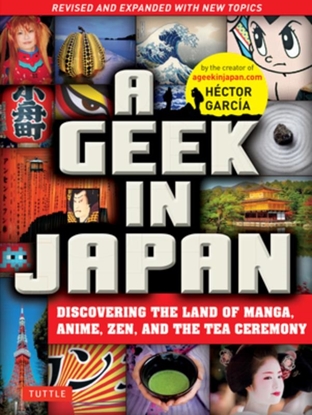
A Geek in Japan
This new edition has been thoroughly revised and expanded with new chapters on Japanese video games, architecture, and a special section on visiting Kyoto. Reinvented for the internet age, it's packed with personal essays and hundreds of photographs, presenting all the touchstones of both traditional and contemporary culture in an entirely new way.
The expansive range of topics include:
- Bushido, Geisha, Samurai, Shintoism, and Buddhism
- Traditional arts and disciplines like Ukiyo-e, Ikebana, Zen meditation, calligraphy, martial arts, and the tea ceremony
- Insightful essays on code words and social mores; dating and drinking rituals; working and living conditions and symbols and practices that are peculiarly Japanese
- Japanese pop culture genres and their subcultures, like otaku, gals, visual kei, and cosplay
For visitors, the author includes a mini guide to his favorite neighborhoods in Tokyo as well as tips on special places of interest in other parts of Japan. Garcia has written an irreverent, insightful, and highly informative guide for the growing ranks of Japanophiles around the world. Lees meer
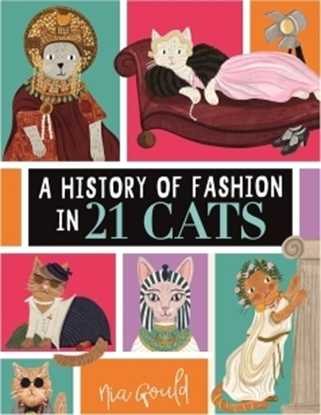
A History of Fashion in 21 Cats
From the bejewelled Byzantines to the grunge era of the 1990s, A History of Fashion in 21 Cats takes the most iconic eras in fashion history and distils each of them into quirkily illustrated cat form.
Taking inspiration from the designers who set the trends and the legends who wore them, as well as placing each style into its fascinating historical context, each moggy maven comes with a breakdown of the key features that defined the era so we can understand what makes them so distinctive. Taking in a diverse range of cultures, the history spans the ancient Egyptians to the grunge era of the 1990s, taking in Early African fashion and the Edo era up to Rockabilly, Hollywood glamour and Harajuku styles.
Illustrated by art-lover and animal enthusiast Nia Gould, A History of Fashion in 21 Cats is a stunningly stylish companion to A History of Art in 21 Cats and A History of Portraits in 21 Dogs.
Also available in the series:
9781910552902 A History of Art in 21 Cats
9781915751270 A History of Portraits in 21 Dogs
A History of Tea
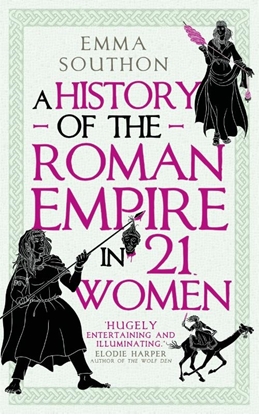
A History of the Roman Empire in 21 Women
Rome as you’ve never seen it before – brazenly unconventional, badly behaved and ever so feminine.
‘Hugely entertaining and illuminating’ —Elodie Harper, author of The Wolf Den
A WATERSTONES BEST HISTORY BOOK OF 2023
Here’s how the history of the Roman Empire usually goes…
We kick off with Romulus murdering his brother, go on to Brutus overthrowing Tarquin, bounce through an appallingly tedious list of battles and generals and consuls, before emerging into the political stab-fest of the late Republic. After ‘Et tu, Brute?’, it runs through all the emperors, occasionally nodding to a wife or mother to show how bad things get when women won’t do as they’re told, until Constantine invents Christianity only for Attila the Hun to come and ruin everything.
Let’s tear up this script. The history of Rome and its empire is so much more than these ‘Important Things’.
In this alternative history, Emma Southon tells another story about the Romans, one that lives through Vestal Virgins and sex workers, business owners and poets, empresses and saints.
- Discover how entrepreneurial sex worker Hispala Faecenia uncovered a conspiracy of treason, human sacrifice and Bacchic orgies so wild they would make Donna Tartt blush, becoming one of Rome’s unlikeliest heroes.
- Book yourself a table at the House of Julia Felix and get to know Pompeii’s savviest businesswoman and restauranteur. Indulge in an array of locally sourced delicacies as you take in the wonderful view of Mount Vesuvius… what could possibly go wrong?
- Join the inimitable Septimia Zenobia, who – after watching a series of incompetent, psychopathic and incompetently psychopathic emperors almost destroy the Empire – did what any of us would do. She declared herself Empress, took over half the Roman Empire and ran it herself.

A Little Gay History


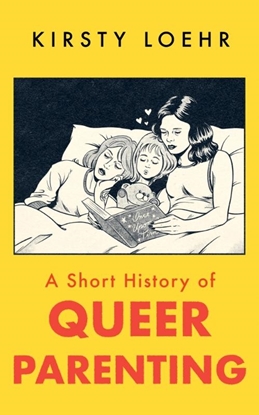
A Short History of Queer Parenting
Queer families have always existed
Even Sappho, the OG lesbian, had a daughter named Cleis, in honour of vaginas everywhere! For centuries, the women of ‘The Golden Orchid Society’ in Qing-dynasty China were getting married and raising daughters together – platonically, obviously... And Vita Sackville-West and Harold Nicolson’s fabulously bisexual open marriage proved women really can have it all – a husband, two kids, a writing career and Virginia Woolf.
Maybe you’re exploring your options. Maybe you don’t want kids but you have questions. Either way, Kirsty Loehr provides another rollicking guide to the ups and downs of queer parenthood through the ages. Lees meer
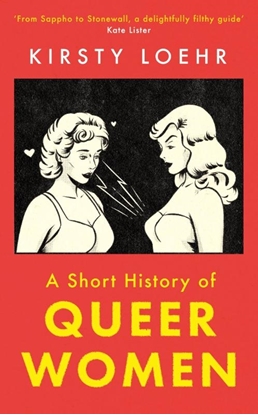
A Short History of Queer Women
Kirsty Loehr exposes centuries of outrageous straightwashing in this deliciously queer history
'Fast paced, fun, and delightfully filthy.' Kate Lister, host of Betwixt the Sheets
No, they weren't 'just friends'!
Queer women have been written out of history since, well, forever. ‘But historians famously care about women!’, said no one. From Anne Bonny and Mary Read who sailed the seas together disguised as pirates, to US football captain Megan Rapinoe declaring ‘You can’t win a championship without gays on your team’, via countless literary salons and tuxedos, A Short History of Queer Women sets the record straight on women who have loved other women through the ages.
Who says lesbians can’t be funny?
Lees meer
A Woman Looking at Men Looking at Women
'A great book'
Elif Shafak, Observer
'Phenomenal'
Guardian
In this remarkable collection of essays, Siri Hustvedt confirms her reputation as one of our most important contemporary writers, bringing a feminist, interdisciplinary perspective to subjects across the humanities and sciences.
The book's first section explores the complexities of perception and art, with Louise Bourgeois, Pablo Picasso, and Karl Ove Knausgaard among those who come under her scrutiny. In the book's central essay she explores the intractable mind-body problem, and in the final section she reflects on the mysteries of hysteria, synesthesia, and memory.
With astounding clarity, passion, and wit, Hustvedt exposes gender bias, upends received ideas, and challenges her reader to think again.
'A writer with an unusual blend of incisive intelligence, humour and imagination . . . we are fortunate to have Hustvedt voicing doubt so intelligently'
Lara Feigel, Financial Times