
Middeleeuwen (500-1500)
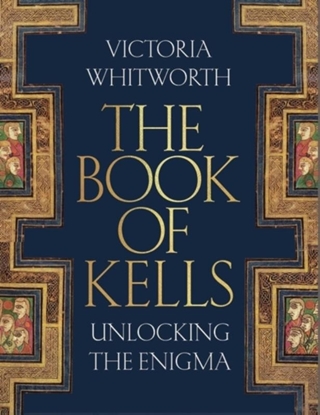
The Book of Kells
A new and definitive account of one of the most famous and mysterious manuscripts in the world.
The Book of Kells is a mystery. It is distinct from all other copies of the gospels from the early Middle Ages, not only in the quality and amount of its decoration but also in the peculiarities of the ordering of its contents, the oddness of its apparatus, the appearance of the script, the interplay of text and ornament and the erratic forms of its Latin. Scholars cannot agree on the number of scribes and artists involved; or establish the purpose of the Book; or decide whether its oddities are the result of incompetence, even carelessness, and how those oddities relate to the minutely careful and deeply meaningful art.
In this beautifully illustrated, ground-breaking book, Victoria Whitworth examines the famous text and sheds new light on its conception and purpose.

The Burgundians
A masterful history of the great dynasty of the Netherlands' Middle Ages.
'A sumptuous feast of a book' The Times, Books of the Year
'Thrillingly colourful and entertaining' Sunday Times
'A thrilling narrative of the brutal dazzlingly rich wildly ambitious duchy' Simon Sebag Montefiore
5 stars! Daily Telegraph
'A masterpiece' De Morgen
'A history book that reads like a thriller' Le Soir
At the end of the fifteenth century, Burgundy was extinguished as an independent state. It had been a fabulously wealthy, turbulent region situated between France and Germany, with close links to the English kingdom. Torn apart by the dynastic struggles of early modern Europe, this extraordinary realm vanished from the map. But it became the cradle of what we now know as the Low Countries, modern Belgium and the Netherlands. This is the story of a thousand years, a compulsively readable narrative history of ambitious aristocrats, family dysfunction, treachery, savage battles, luxury and madness. It is about the decline of knightly ideals and the awakening of individualism and of cities, the struggle for dominance in the heart of northern Europe, bloody military campaigns and fatally bad marriages. It is also a remarkable cultural history, of great art and architecture and music emerging despite the violence and the chaos of the tension between rival dynasties.
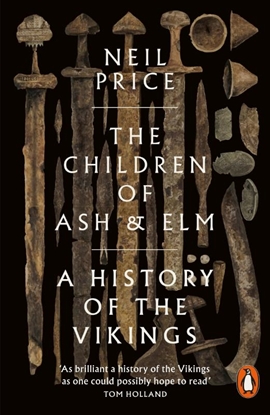
The Children of Ash and Elm
A TIMES BOOK OF THE YEAR
'As brilliant a history of the Vikings as one could possibly hope to read' Tom Holland
The 'Viking Age' is traditionally held to begin in June 793 when Scandinavian raiders attacked the monastery of Lindisfarne in Northumbria, and to end in September 1066, when King Harald Hardrada of Norway died leading the charge against the English line at the Battle of Stamford Bridge. This book, the most wide-ranging and comprehensive assessment of the current state of our knowledge, takes a refreshingly different view. It shows that the Viking expansion began generations before the Lindisfarne raid, and traces Scandinavian history back centuries further to see how these people came to be who they were.
The narrative ranges across the whole of the Viking diaspora, from Vinland on the eastern American seaboard to Constantinople and Uzbekistan, with contacts as far away as China. Based on the latest archaeology, it explores the complex origins of the Viking phenomenon and traces the seismic shifts in Scandinavian society that resulted from an economy geared to maritime war. Some of its most striking discoveries include the central role of slavery in Viking life and trade, and the previously unsuspected pirate communities and family migrations that were part of the Viking 'armies' - not least in England.
Especially, Neil Price takes us inside the Norse mind and spirit-world, and across their borders of identity and gender, to reveal startlingly different Vikings to the barbarian marauders of stereotype. He cuts through centuries of received wisdom to try to see the Vikings as they saw themselves - descendants of the first human couple, the Children of Ash and Elm. Healso reminds us of the simultaneous familiarity and strangeness of the past, of how much we cannot know, alongside the discoveries that change the landscape of our understanding. This is an eye-opening and surprisingly moving book.
Lees meer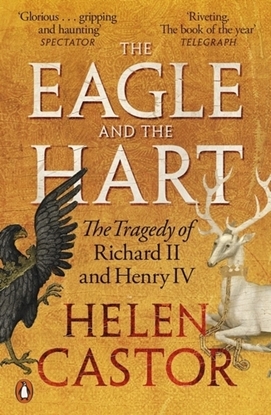
The Eagle and the Hart
THE SUNDAY TIMES TOP TEN BESTSELLER
The author of She-Wolves chronicles the lives and reigns of Richard II and Henry IV, two cousins whose rivalry brought their nation to the brink of disintegration - and back again
*LONGLISTED FOR THE WOMEN'S PRIZE FOR NON-FICTION 2025*
*SHORTLISTED FOR THE ELIZABETH LONGFORD PRIZE FOR HISTORICAL BIOGRAPHY 2025*
*THE TELEGRAPH'S BEST BOOK OF THE YEAR 2024*
'A glorious work of history... a gripping and haunting tragedy... There was no book published this year, novels included, that I found richer in character; no plot more taut' - Tom Holland, The Spectator
'A dazzling tour de force of epic royal history: a compulsive, unputdownable real-life thriller, a gripping portrait of ruthless power politics, and a study of British tyranny... written with the delicacy and elegance of one of Britain’s most brilliant historians at the top of her game' - Simon Sebag-Montefiore
'If ever a book of history was blessed with contemporary relevance, this one is. The dumbfounding, delusional, narcissistic King Richard; the white-knuckle ride of Henry IV, dogged all the way by notions of illegitimacy. I feel these men could have been ripped from today’s headlines. The book’s great achievement is in the storytelling — the unfolding drama, the secrets of power and ambition so beautifully controlled in the telling. The Eagle and the Hart will be a non-fiction book of the year and will deserve the ovations it is certain to receive. When history is this gripping there’s nothing like it' - Andrew O'Hagan
Richard of Bordeaux and Henry Bolingbroke were first cousins, born just three months apart. Their lives were from the beginning entwined. When they were still children, Richard was crowned King Richard II with Henry at his side, carrying the sword of state: a ten-year-old lord in the service of his ten-year-old king.
Yet, as the animals on their heraldic badges showed, they grew up to be opposites: Richard was the white hart, a thin-skinned narcissist, and Henry the eagle, a chivalric hero, a leader who inspired loyalty where Richard inspired only fear. Henry had all the qualities Richard lacked, all the qualities a sovereign needed, bar one: birth right. Increasingly threatened by his charismatic cousin, Richard became consumed by the need for total power, in a time of constant conflict, rebellions and reprisals. When he banished Henry into exile, the stage was set for a final confrontation, as the hart became the tyrant and the eagle his usurper.
Helen Castor tells this story of one of the strangest and most fateful relationships in English history. It is a story about power, and masculinity in crisis, and a nation brought to the brink of catastrophe. At its heart, it is the story of two men whose lives were played out in extraordinary parallel, to devastating effect.
Lees meer
The First Kingdom
The bestselling author of The King in the North turns his attention to the obscure era of British history known as 'the age of Arthur'.
'Not just a valuable book, but a distinctive one as well' Tom Holland, Sunday Times
'An accessible and illuminating book' Gerard de Groot, The Times
'A fascinating picture of Britain's new-found independence' This England
Somewhere between the departure of the Roman legions in the early fifth century and the arrival of Augustine's Christian mission at the end of the sixth, the kingdoms of Early Medieval Britain were formed. But by whom? And out of what?
The First Kingdom is a skilfully wrought investigation of this mysterious epoch, synthesizing archaeological research carried out over the last forty years to tease out reality from the myth. Max Adams presents an image of post-Roman Britain whose resolution is high enough to show the emergence of distinct political structures in the sixth century – polities that survive long enough to be embedded in the medieval landscape, recorded in the lines of river, road and watershed, and memorialized in place names.
The Northern Crusades

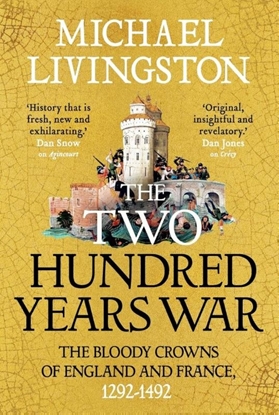
The Two Hundred Years War
A new and radically original account of the longest military conflict in European history, which challenges the conventional periodisation of the ‘Hundred Years War’ to consider a much longer period of Anglo-French conflict.
Michael Livingston argues that the English lens through which the war has been viewed has led historians to define it in terms of English interests (most famously, the claim of the English Plantagenet king Edward III to be the rightful king of France), and that the events collectively labelled the ‘Hundred Years War’ are best seen as a sequence of steps in France’s struggle to define itself as a nation. For much of the period, France’s primary rival was indeed England. But it was by no means the only combatant. Burgundy stood in its way, too, as did Brittany, Flanders, Navarre and other rival powers.
Viewing France as the primary engine driving the war leads Livingston to consider a much longer timespan, starting with the Anglo-French ‘Pirate War’ of 1292 (which swiftly escalated into a fight over England’s feudal possessions in Gascony) and ending with the marriage of Charles VIII of France to Anne of Brittany by which Brittany was subsumed into the French realm.
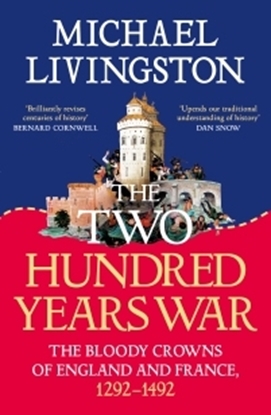
The Two Hundred Years War
A new and radically original account of the longest military conflict in European history, which challenges the conventional periodisation of the ‘Hundred Years War’ to consider a much longer period of Anglo-French conflict.
Michael Livingston argues that the English lens through which the war has been viewed has led historians to define it in terms of English interests (most famously, the claim of the English Plantagenet king Edward III to be the rightful king of France), and that the events collectively labelled the ‘Hundred Years War’ are best seen as a sequence of steps in France’s struggle to define itself as a nation. For much of the period, France’s primary rival was indeed England. But it was by no means the only combatant. Burgundy stood in its way, too, as did Brittany, Flanders, Navarre and other rival powers.
Viewing France as the primary engine driving the war leads Livingston to consider a much longer timespan, starting with the Anglo-French ‘Pirate War’ of 1292 (which swiftly escalated into a fight over England’s feudal possessions in Gascony) and ending with the marriage of Charles VIII of France to Anne of Brittany by which Brittany was subsumed into the French realm.


Ubbi de Fries

Van Rome tot Rome

Verborgen levens
Eleanor Barraclough belicht de alledaagse wereld van de beruchte Vikingbeschaving in ‘Verborgen levens’.
Lees meer


Vorsten van Albion

