
Monografie (kunst)
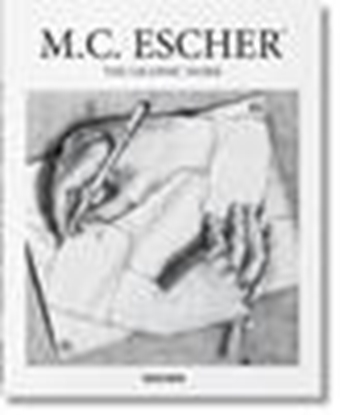
M.C. Escher
From impossible staircases to tessellated birds, Dutch artist M.C. Escher (1898–1972) crafted a unique graphic language of patterns, puzzles, and mathematics. Dense, complex, and structured by intricate principles, his work is at the same time decorative and playful, toying constantly with optic illusions and the limitations of sensory perception. For mathematicians and scientists, Escher is a mastermind. For hippies, he was the pioneer of psychedelic art.
Born in Leeuwarden, in the Netherlands in 1898, Escher’s early works focused on nature and landscapes, with regular exhibitions in Holland, and some international recognition. It was on a trip to the Alhambra Palace in Spain in the 1920s, however, that Escher found his niche. Sketching the patterns of the palace’s Moorish architecture, Escher became captivated by the codependency of forms within and next to each other.
Working mainly with lithographs and woodcuts, Escher went on to explore the relationships among shapes, figures, and space with a near-obsessive delight. He reveled in quirky vantage points, multiple perspectives, the transition from paper flatness to illusory volume, and intricate mathematical puzzles such as the Möbius strip, a seemingly infinite loop which twists and recoils on itself in a contortion of apparent physical impossibility.
This introductory book taps into Escher’s brilliant mind with key works from his restless investigation of image and perception. Along the way, you’ll find fish morphing into birds, lizards crawling off the page, masterful reflections, infinite mazes, and some of the most mind-bending images of 20th-century art.

Maaike Schoorel

Made by MSCHF




Malkovich Malkovich Malkovich
John Malkovich appears as some of photographys most famous subjects in 41 recreations of iconic portraits
Hollywood legend John Malkovich may seem like an unlikely choice for an artists muse, but American photographer Sandro Miller declares him a photographers dream. Miller (born 1958) has been finding inspiration in the Academy Award-nominated actor since the two first met in 1999. In their latest collaboration, Miller pays homage to the great photographers of past and present, with Malkovich as his sole model, in their recreations of 41 iconic portraits. The project is a testament to both Millers skill as a photographer and Malkovichs chameleon-esque acting ability.
With months of research in addition to accurate costumes and makeup application, Millers recreations are delightfully exact in their lighting and editing, while Malkovich seems to easily inhabit the original subjects no matter who he is meant to portray. He appears as the titular migrant mother in Dorothea Langes Depression-era portrait, as a bewigged Andy Warhol cast in crimson and as both sisters in Diane Arbus infamous Identical Twins, Roselle, New Jersey, matching with himself in a wide-collared dress and lace stockings. With tongue planted firmly in cheek, Miller manages to breathe new life into some of the worlds most recognizable images in this playful take on the history of photography's intersection with pop culture.


Mary Cassatt
This groundbreaking study redefines the status of the beloved American artist Mary Cassatt, placing her work in the wider context of nineteenth-century feminism and art theory. Mary Cassatt looks at the artist’s work in light of her time as an advocate for women’s intellectual life and political emancipation. Esteemed by her contemporaries for her commitment to what she and her radical colleagues in Paris termed "the new art"—now called impressionism—Cassatt brought her discerning gaze and compositional inventiveness to the study of the subtle, often psychological, social interactions of women in public and private spaces.
Focusing on key moments of engagement and change over the artist’s long career, art historian Griselda Pollock discusses Cassatt’s artistic training across Europe, her profound study of the old masters, and places fresh emphasis on the artist’s interest in Manet and other contemporary French and Spanish painters as well as her influence on American collections of French modernism. Now revised with a new preface, updates to the bibliography, and color illustrations throughout, this book offers a reevaluation of the work of this important artist as seen through the frames of class, gender, space, and difference.
Lees meer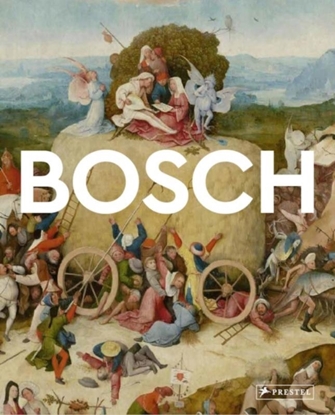
Masters of Art Bosch
Although Bosch's known works amount to no more than two dozen paintings and a handful of drawings, the artist had an enormous impact on religious imagery during his lifetime and for centuries afterward. His enigmatic and mind-bending depictions of humans, animals, and nature undoubtedly influenced the surrealist movement of the 20th century. This book explores Bosch's works in terms of medieval morality, the religious beliefs of his time, and the Northern Renaissance in general. This elegant volume offers exquisite, full-color reproductions that afford readers the opportunity to linger over the works' amazing details. The accompanying text examines Bosch's singular place in the canon of Western art, as a revolutionary portrayer of the imagination, and as a pioneer in the depiction of heaven and hell. Lees meer
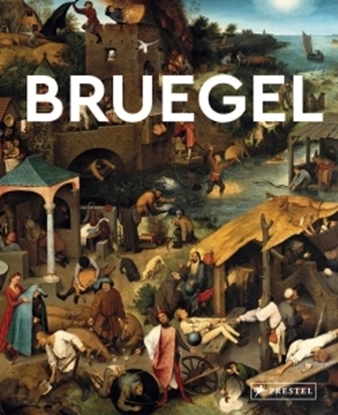
Masters of Art Bruegel
Pieter Bruegel’s depictions of everyday sixteenth century Netherlandish life demonstrated his extraordinary ability to observe and convey the world of ordinary people. The book traces Bruegel’s artistic development from his entry into the Antwerp painters’ guild in 1551 through to his rise as one of the most distinctive and influential artists of his era.
Cultural, political, and religious forces come into view during the chronological structure of the book, as pressures behind the scenes shape labour and communal life. Through grand spectacle and visual satire Bruegel successfully reflected human behaviour, belief, and power with unsparing empirical clarity.
Exquisite reproductions of Bruegel’s paintings and graphic works show what an extraordinary painter he was.
- Elegantly produced and very inviting to browse at the reader’s leisure.
- The Masters of Art series are celebrated introductory texts to art and artists.
- Over 50 essential works chart the emergence of his vision and its evolution over time.
- Features artwork by Bruegel such as ‘The Wedding Dance’ and ‘The Census at Bethlehem’.
- Paintings are accompanied by perceptive commentary from historic context to technique.
Informative and visually generous, this volume offers an engaging introduction to one of the central figures of Northern Renaissance art. Lees meer
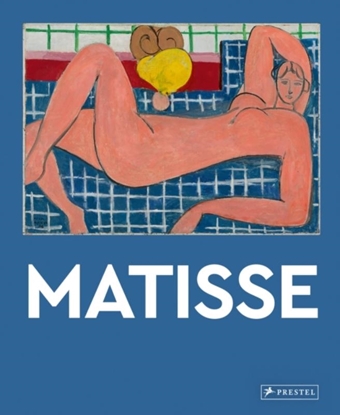
Masters of Art Matisse
From his earliest pointillist-influenced paintings to this mature and playful paper cut-outs; from enormous, ebullient murals to reverent stained glass--Henri Matisse was renowned for his dramatic use of color and fluid draftsmanship. Thirty of Matisse's most beloved works are given close attention in this introduction that explores the varying tensions of the artist's oeuvre--his embrace of pure color, patterns, and texture; the languorous pleasures of the Cote d'Azur; primitive displays of human ecstasy; tranquil scenes of domestic life and soaring monuments to religious life. An engaging biography takes readers through every phase of Matisse's career and reveals how his aversion to troubling or depressing subject matter was in direct opposition to the radical spirit of his work. Lees meer
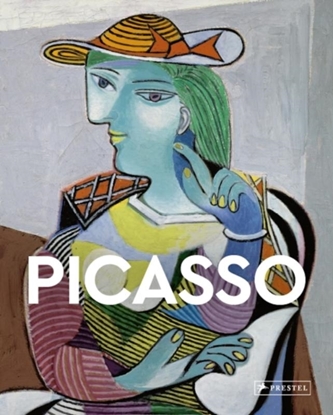
Masters of Art Picasso
Picasso was arguably the most influential artist of the 20th century. Over the course of a career that spanned seven decades--and included thousands of paintings, sculptures, ceramics, drawings, prints, and tapestries--his work continued to evolve in response to his own life and to events in the world around him. This elegant introduction to Picasso offers lively artistic and biographical commentary, as well as beautiful reproductions of key works. Readers will discover why Picasso's work is often categorized by "periods" and his masterful achievements in the realms of neoclassicism, surrealism, and sculpture--in short, how his tremendous body of work reflected the development of modern art in the 20th century. Lees meer
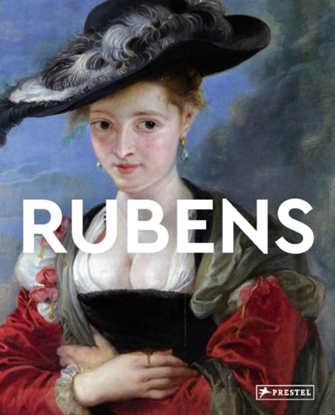
Masters of Art Rubens

