
Monografie (kunst)

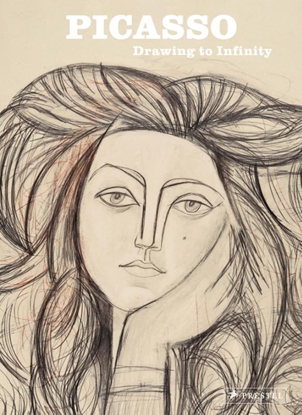
Picasso
From his early studies to his final works, drawing was, for Picasso, an ever-renewing exploration of the powers of the line. Comprising over three hundred reproductions from his massive oeuvre, this collection features both well-received and rarely seen works, as well as images from his extraordinary notebooks. It features fifty penetrating essays that examine the themes, symbols and techniques that echo throughout Picasso’s career— from monsters, crucifixions, and self-portraits to crayon, cross- hatching, and ink. It includes book illustrations and plans for sculptures; color and figure studies; collage and journal entries. Stunning full-color reproductions allow readers to appreciate the enormous inventiveness and diversity of Picasso’s work, from serpentine lines to hatched drawing, from the delicate nuances of pastel to the deep blacks of ink.
Accompanying the largest-ever exhibition of Picasso’s drawings and engravings, this gorgeous volume is a must-have for students and fans of one of the greatest artists of the modern era. Lees meer



Raphael
For centuries, Raphael has been recognized as the supreme High Renaissance painter, with many considering him more versatile than Michelangelo and more prolific than his older contemporary Leonardo da Vinci. Though he died young at thirty-seven, Raphael’s example as a paragon of classicism dominated the academic tradition of European painting until the mid-nineteenth century.
This comprehensive survey looks at the different social and regional contexts of Raphael’s work and all aspects of his artistic production. From early training in Urbino to travels across central Italy, particularly Florence, where he became a noted portraitist and painter of Madonnas, to engagement by the papal court, this volume covers all areas of the artist’s practice. Focus is also devoted to the second half of Raphael’s career, when he became the dominant artist in Rome—even ahead of Michelangelo—and as a sophisticate entrepreneur, was able to extend the range of his activities to that of architect, designer, pioneer archaeologist, and theoretician.
A beautifully illustrated study with over 150 full-color reproductions of Raphael’s work, ranging from major masterpieces to lesser-known paintings and drawings from all periods; art historian Paul Joannides, one of the world’s leading experts on Raphael’s drawings, sheds new light on this seminal artist.
Lees meer
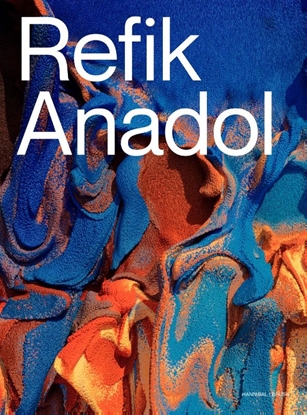
Refik Anadol

Rembrandt

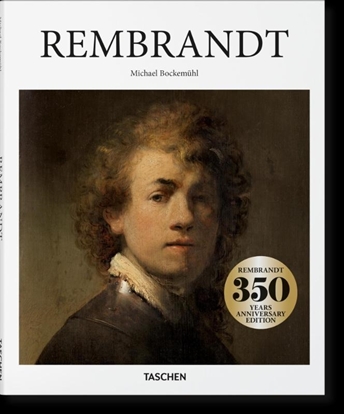
Rembrandt
Rembrandt van Rijn (1606–1669) never left his homeland of the Netherlands but in his massive body of painting, drawing, and etching, he changed the course of Western art. His prolific oeuvre encompasses religious, historical, and secular scenes, as well as one of the most extraordinary series of portraits and self-portraits in history.
Rembrandt’s work foregrounds texture, light, and acute observation. Like sudden, startling apparitions in a shadowy street, his subjects are illuminated against deep, dark backgrounds and rendered with immense physical as well as psychological scrutiny. Whether biblical or mythological figures, powerful patrons, or fellow citizens, each subject is bestowed not only with meticulous facial features but also with the intrigue of thoughts and feelings so that even age-old narratives such as the bible story of David and Bathsheba find a new level of human drama. Rembrandt also left one of the most extensive series of self-portraits of any artist, chronicling his own face from his youth to the year of his death.
Rembrandt’s rise coincided with the blossoming of the Dutch Golden Age, an era of prosperity in the Netherlands. He was encouraged by wealthy patrons, but was above all driven by a profound fascination with people. In this book, we tour some of Rembrandt’s key paintings, etchings, and drawings to introduce his techniques, inspirations, and exceptional achievements. From the Baroque Belshazzar’s Feast to the world-famous Night Watch we uncover a world of deep, rich tones, masterful draftsmanship, and a remarkable sensitivity for the human condition.

