
Natuurkunde algemeen



General Relativity
The latest volume in The New York Times bestselling physics series explains Einstein's masterpiece: the general theory of relativity
He taught us classical mechanics, quantum mechanics and special relativity. Now, physicist Leonard Susskind, assisted by a new collaborator, André Cabannes, returns to tackle Einstein's general theory of relativity. Starting from the equivalence principle and covering the necessary mathematics of Riemannian spaces and tensor calculus, Susskind and Cabannes explain the link between gravity and geometry. They delve into black holes, establish Einstein field equations and solve them to describe gravity waves. The authors provide vivid explanations that, to borrow a phrase from Einstein himself, are as simple as possible (but no simpler).
An approachable yet rigorous introduction to one of the most important topics in physics, General Relativity is a must-read for anyone who wants a deeper knowledge of the universe's real structure.
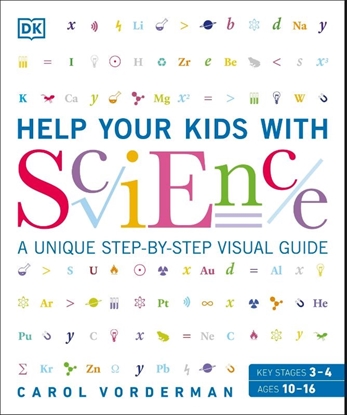
Help Your Kids with Science
If you're left blinded by science, this ultimate home learning workbook companion makes everything clear.
This unique visual reference guide adopts a simple step-by-step approach to give you a complete understanding of this diverse and difficult subject. Bubbling over with pictures, diagrams, and information, this book covers biology, chemistry, and physics in comprehensive depth and detail. Carol Vorderman's Help Your Kids with Science encourages parents and children to work together as a team to solve even the most challenging problems on the school syllabus.
It focuses on the UK National Curriculum up to GCSE level, but proves absolutely invaluable for adult students and science fans alike. The reference section also includes a glossary of key scientific terms and symbols, helping anyone learn a bit more about science, whether for their own knowledge or to tackle Key Stages 3 and 4.
Created with home learning in mind, Help Your Kids with Science ensures children can gain a complete understanding of science, leaving them calm, confident, and exam ready.
Series Overview: DK's bestselling Help Your Kids With series contains crystal-clear visual breakdowns of important subjects. Simple graphics and jargon-free text are key to making this series a user-friendly resource for frustrated parents who want to help their children get the most out of school.
Lees meer


How To
Randall Munroe is . . .'Nerd royalty' Ben Goldacre
'Totally brilliant' Tim Harford
'Laugh-out-loud funny' Bill Gates
'Wonderful' Neil Gaiman
AN INSTANT #1 NEW YORK TIMES BESTSELLER
The world's most entertaining and useless self-help guide, from the brilliant mind behind the wildly popular webcomic xkcd and the million-selling What If? and Thing Explainer
For any task you might want to do, there's a right way, a wrong way, and a way so monumentally bad that no one would ever try it. How To is a guide to the third kind of approach. It's full of highly impractical advice for everything from landing a plane to digging a hole.
'How strange science can fix everyday problems' New Scientist
'A brilliant book: clamber in for a wild ride' Nature
Lees meer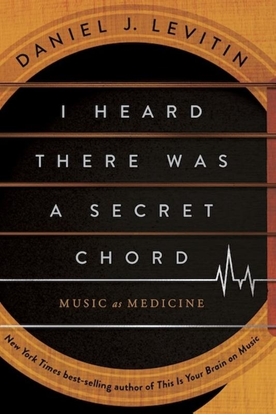
I Heard There Was a Secret Chord
Music is one of humanity’s oldest medicines. From the Far East to the Ottoman Empire, Europe to Africa and the pre-colonial Americas, many cultures have developed their own rich traditions for using sound and rhythm to ease suffering, promote healing, and calm the mind.
In his latest work, neuroscientist and New York Times best-selling author Daniel J. Levitin (This Is Your Brain on Music) explores the curative powers of music, showing us how and why it is one of the most potent therapies today. He brings together, for the first time, the results of numerous studies on music and the brain, demonstrating how music can contribute to the treatment of a host of ailments, from neurodegenerative diseases such as Parkinson’s and Alzheimer’s, to cognitive injury, depression, and pain.
Levitin is not your typical scientist—he is also an award-winning musician and composer, and through lively interviews with some of today’s most celebrated musicians, from Sting to Kent Nagano and Mari Kodama, he shares their observations as to why music might be an effective therapy, in addition to plumbing scientific case studies, music theory, and music history. The result is a work of dazzling ideas, cutting-edge research, and jubilant celebration. I Heard There Was a Secret Chord highlights the critical role music has played in human biology, illuminating the neuroscience of music and its profound benefits for those both young and old.
Lees meer
In Search Of Schrodinger's Cat
'A primer for the magical, near inexplicable world of quantum mechanics... Mind-blowing' Dara Ó Briain
Quantum theory is so shocking that Einstein could not bring himself to accept it. It is so important that it underpins all modern sciences. Without it, we'd have no molecular biology, no understanding of DNA, no genetic engineering, no computers.
A century after the development of quantum mechanics, In Search of Schrödinger's Cat tells the full story of how scientists reckoned with a truth stranger than any fiction. John Gribbin leads us into the ever more bizarre and fascinating world of the smallest particles we have discovered, requiring only that we approach it with an open mind. He introduces the scientists who developed quantum theory. He investigates the atom, radiation, time travel, the birth of the universe, super conductors and life itself. And in a world full of its own delights, mysteries and surprises, he searches for Schrödinger's Cat - a search for quantum reality - as he brings every reader to a clear understanding of the most important area of scientific study today - quantum physics.
Featuring a new preface to mark the centenary of the field, this bestselling classic remains a fascinating and delightful introduction to the strange world of the quantum - an essential element in understanding the modern world.
'John Gribbin is unsurpassed in his ability to convey scientific ideas in lively and accessible language. This new edition of his classic book deserves wide readership. It's specially welcome in the year that marks the centenary of quantum theory – which revolutionised our concept of nature and underpins most of modern technology.' Professor Martin Rees, astronomer royal


