
Oudheid (tot 500)
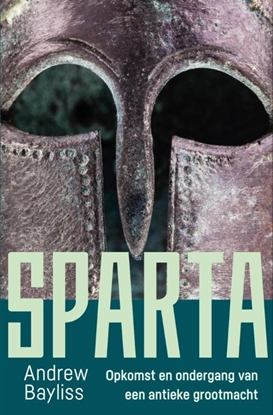


SPQR


Stemmen uit de stilte II


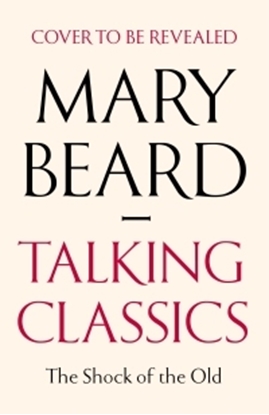
Talking Classics

Tastbaar verleden De Muur van Hadrianus


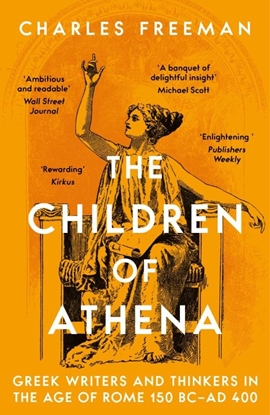
The Children of Athena
The remarkable story of how Greek-speaking writers and thinkers sustained and developed the intellectual legacy of Classical Greece under the rule of Rome.
In 146 BC, Greece yielded to the military might of the Roman Republic; some sixty years later, when Athens and other Greek city-states rebelled against Rome, the general Lucius Cornelius Sulla destroyed the city of Socrates and Plato, laying waste the famous Academy where Aristotle had studied.
However, the traditions of Greek cultural life would continue to flourish – across the eastern Mediterranean world and beyond – during the centuries of Roman rule that followed, in the lives and work of a distinguished array of philosophers, rhetoricians, historians, doctors, scientists, geographers and theologians.
Charles Freeman's accounts of such luminaries as the polymathic physician Galen, the soldier-botanist Dioscorides, the Alexandrian geographer and astronomer Ptolemy and the Neoplatonic philosopher Plotinus are interwoven with 'interludes' that counterpoint and contextualise a sequence of unjustly neglected and richly influential lives.
This is the story of a vibrant, constantly evolving tradition of intellectual inquiry across a period of more than five hundred years, from the second century BC to the start of the fifth century ad – one that would help shape the intellectual landscape of the Middle Ages and long after. The Children of Athena is a cultural history on an epic scale.

The Cleopatras
'A thrilling biography, filled with the imperial ambitions and merciless intrigues' SIMON SEBAG MONTEFIORE
Cleopatra: lover, seductress, and Egypt's greatest queen.
A woman more myth than history, immortalized in poetry, drama, music, art, and film.
She captivated Julius Caesar and Marc Antony, the two greatest Romans of the day, and died in a blaze of glory, with an asp clasped to her breast - or so the legend tells us.
But the real-life story of the historical Cleopatra VII is even more compelling. She was the last of seven Cleopatras who ruled Egypt before it was subsumed into the Roman Empire. The seven Cleopatras were the powerhouses of the Ptolemaic Dynasty, the Macedonian family who ruled Egypt after Alexander the Great. Emulating the practices of the gods, the Cleopatras married their full-blood brothers and dominated the normally patriarchal world of politics and warfare. These extraordinary women keep a close grip on power in the wealthiest country of the ancient world.
Each of the seven Cleopatras wielded absolute power. Their ruthless, single-minded, focus on dominance - generation after generation - resulted in extraordinary acts of betrayal, violence, and murder in the most malfunctional dynasty in history.
Professor Lloyd Llewellyn-Jones offers fresh and powerful insight into the real story of the Cleopatras, and the beguiling and tragic legend of the last queen of Egypt.
Praise for The Cleopatras:
'A real treat for those who relish epic histories of family power' SIMON SEBAG MONTEFIORE
'Admirably readable' ROBIN LANE FOX
'Unlocks the fascinating history of many queens' KARA COONEY
'A vivid account' ADRIAN DODSON
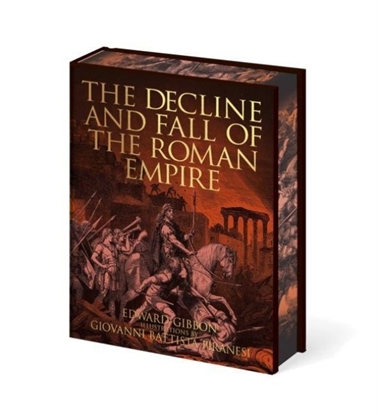
The Decline and Fall of the Roman Empire
Edward Gibbon's masterpiece of historical writing, The Decline and Fall of the Roman Empire, is presented here in a stunning large-format gift edition with printed page edges and classic illustrations by Giovanni Battista Piranesi.
The original publication of Edward Gibbon's Decline and Fall was an exhaustive, six-volume account of a 'revolution which shall ever be remembered and is still felt by the nations of the earth'. Here, this celebrated work of historical scholarship has been abridged to a more digestible length, complete with scabrous and entertaining footnotes detailing the decadence that led to the fall of Rome.
This handsome hardback editions is gloriously illustrated by the illustrious Italian artist, Giovanni Battista Piranesi. These dramatic neoclassical etchings accompany the text, as well as the printed page edges and full-colour endpapers of this edition.
ABOUT THE SERIES: Arcturus Epic Classics brings together stunning hardback gift editions of classic works, presented with striking illustrated page edges and illustrated throughout by such greats as Gustave Doré and Harry Clarke.
The Far Edges of the Known World
‘A tour of those far-flung places where Romans rarely dared to venture’ The Times
‘A strikingly original take . . . uncovering forgotten stories of life on the periphery’ Spectator
'This is the book for expanding your ancient history horizon' Tristan Hughes, host of 'The Ancients' podcast
What was it like to live on the edges of ancient empires, at the boundaries of the known world?
In this bold revisionist history, Owen Rees shifts our focus from the centres of Greece and Rome to the long-ignored societies on the borders.
Thanks to archaeological excavations, we now know that these border societies were thriving cultures – just not ones we might expect. Taking us along the caravan routes of Morocco to the freezing winters of the northern Black Sea, from Co Loa in the Red River valley of Vietnam to the rain-lashed forts south of Hadrian’s Wall, Rees offers us a new, brilliantly rich lens through which to understand the ancient world.
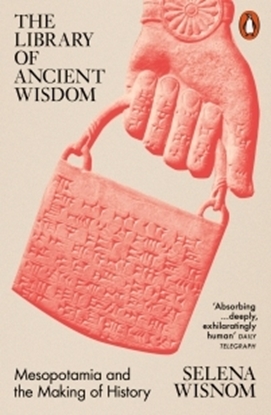
The Library of Ancient Wisdom
The story of the ancient world’s most spectacular library, and the civilization that created it
'A thrilling trip back to Mesopotamia, birthplace of horoscopes and algorithms … via the abundant records they left behind, written on clay tablets… absorbing… hums with life' - Mathew Lyons, Daily Telegraph
'Fascinating and rich in detail… provides an excellent survey of Mesopotamian literary classics.. and offers snippets of daily life' - Literary Review
When a team of Victorian archaeologists dug into a grassy hill in Iraq, they chanced upon one of the oldest and greatest stores of knowledge ever seen: the library of the Assyrian king Ashurbanipal, seventh century BCE ruler of a huge swathe of the ancient Middle East known as Mesopotamia. After his death, vengeful rivals burned Ashurbanipal’s library to the ground - yet the texts, carved on clay tablets, were baked and preserved by the heat. Buried for millennia, the tablets were written in cuneiform: the first written language in the world.
More than half of human history is written in cuneiform, but only a few hundred people on earth can read it. In this captivating new book, Assyriologist Selena Wisnom takes us on an immersive tour of this extraordinary library, bringing ancient Mesopotamia and its people to life. Through it, we encounter a world of astonishing richness, complexity and sophistication. Mesopotamia, she shows, was home to advanced mathematics, astronomy and banking, law and literature. This was a culture absorbed and developed by the ancient Greeks, and whose myths were precursors to Bible stories - in short, a culture without which our lives today would be unrecognizable.
The Library of Ancient Wisdom unearths a civilization at once strange and strangely familiar: a land of capricious gods, exorcisms and professional lamenters, whose citizens wrote of jealous rivalries, profound friendships and petty grievances. Through these pages we come face to face with humanity’s first civilization: their startling achievements, their daily life, and their struggle to understand our place in the universe.
Lees meer
