
Politicologie
Retourtje Brussel
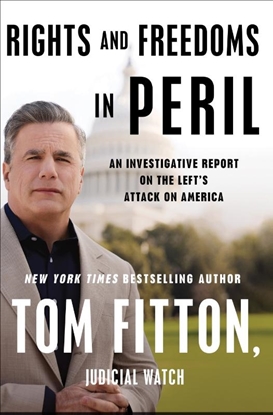
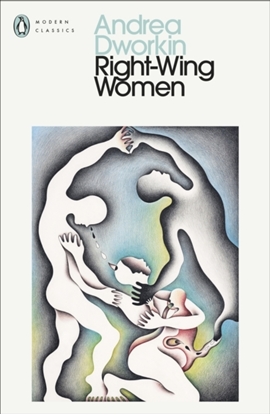
Right-Wing Women
‘Feminism is hated because women are hated’
Why do some women support Right-wing movements, even though they curtail their freedoms? Andrea Dworkin’s timeless, visionary analysis goes to the heart of this contradiction, exploring the Right’s positions on abortion, sexuality, racism and antifeminism, and showing how it attempts both to exploit and to quiet women’s deepest fears of male violence. The Right-wing woman, Dworkin contends, acquiesces to male authority for protection and some semblance of power: because ‘survival depends on it’.
‘Groundbreaking’ Bella Abzug
‘Her razor-sharp analysis of why so many women are attracted to a politics that despises their rights is more relevant today than ever’ Guardian
Lees meer

Road to Freedom
We are a nation born from the conviction that people must be free. But since the middle of the last century, that idea has been co-opted. Forces on the political Right have justified exploitation by cloaking it in the rhetoric of freedom, leading to pharmaceutical companies freely overcharging for medication, a Big Tech free from oversight, politicians free to incite rebellion, corporations free to pollute, and more. How did we get here? Whose freedom are we—and should we—be thinking about?
In The Road to Freedom, Nobel prize winner Joseph E. Stiglitz dissects America’s current economic system and the political ideology that created it, laying bare their twinned failure. “Free” and unfettered markets have only succeeded in delivering a series of crises: the financial crisis, the opioid crisis, and the crisis of inequality. While a small portion of the population has amassed considerable wealth, wages for most people have stagnated. Free and unfettered markets have exploited consumers, workers, and the environment alike. Such failures have fed populist movements that believe being free means abandoning any obligations citizens have to one another. As they grow in strength, these movements now pose a real threat to true economic and political freedom.
As an economic advisor to presidents and as chief economist at the World Bank, Stiglitz has witnessed these profound changes firsthand. As he argues, the failures follow from the elites’ unshakeable dedication to “the neoliberal experiment.” Explicitly taking on giants such as Friedrich Hayek and Milton Friedman, Stiglitz exposes accepted ideas about our political and economic life for what they are: twisted visions that tear at the social fabric while they enrich the very few.
The Road to Freedom breaks new ground, showing how economics—including recent advances in which Stiglitz has played such an important role—reframes how to think about freedom and the role of the state in a twenty-first century society. Drawing on the work of contemporary philosophers, Stiglitz explains a deeper, more humane way to assess freedoms—one that considers with care what to do when one person’s freedom conflicts with another’s. We must reimagine our existing economic and legal systems and embrace forms of collective action, including regulation and investment, if we are to create an innovative society in which everyone can flourish. The task could not be more urgent, and Stiglitz’s latest book is essential reading for those committed to the American ideal of an economic and political system that delivers well-being, opportunity, and meaningful freedoms for all.
Lees meer

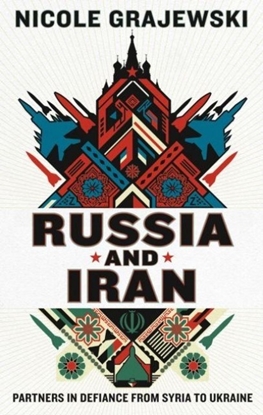
Russia and Iran
‘Grajewski, an international relations scholar, offers a relentlessly detailed account of the recent rapprochement between Russia and Iran.’ — Foreign Affairs
‘One of the few specialists equally versed in both countries … [she] provides valuable details.’ — Frankfurter Allgemeiner
Vladimir Putin’s full-scale invasion of Ukraine in 2022 has cast a spotlight on Russia’s partnership with Iran. Moscow looked to Tehran for drones and ammunition to fuel its so-called ‘special military operation’, and Iran’s support for Russia’s war reflected a decade-long strengthening of Russo-Iranian ties, beginning with the 2011 outbreak of the Syrian Civil War.Despite a relationship historically marred by mistrust and unmet expectations, the two regimes have worked together to promote their common interests in Syria, where battlefield coordination soon developed into much deeper political alignment. Drawing on extensive Russian and Persian primary sources, and interviews with elites from both countries, Nicole Grajewski uncovers the drivers of ever-closer cooperation between the Kremlin and the Islamic Republic. Detailing the internal structures, shared anxieties and broader ambitions underpinning this alignment, she explores the genesis of Russia and Iran's mutual antagonism towards the Western-led global order; the impact of deep-seated leadership concerns over regime security and domestic protests; and the future trajectory of the partnership within the larger world order.
Examining both military dynamics and economic endeavours, as well as elaborate sanctions evasion schemes and collaboration within international organisations, this is the definitive account of contemporary Russia-Iran relations.
- Fluent in both Russian and Persian and with access to elites from both countries, Dr. Nicole Grajewski provides the definitive account on contemporary Russia–Iran relations.
- A timely look at a dangerous partnership with global repercussions
- Charts the evolution of the Russia–Iran relationship in the twenty- first century, from tenuous alignment to robust partnership.
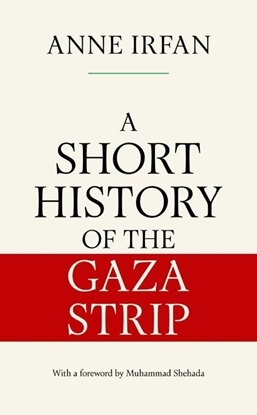
Short History of the Gaza Strip
‘An excellent primer . . . essential reading’ GUARDIAN
*
The world’s eyes are on the Gaza Strip. After more than a year of Israeli military bombardment, it is the scene of unimaginable destruction. It is also one of the most politically significant territories on the planet. Yet how many of us know anything of its history?
In this vital book, Anne Irfan, a leading historian of Palestine-Israel, examines six key moments that bring us to the present day. She begins with Israel’s expulsion of the Palestinian people in 1948, when Israel was established and the Gaza region was truncated to a tiny territory of just 141 square miles. Going on to detail Israel’s occupations of Gaza, the Palestinian national struggle and formation of the PLO, the first intifada, the creation of the Palestinian Authority and the rise of Hamas, Irfan argues that, collectively, these events help explain how we have arrived at the catastrophe of the 2020s and the genocidal violence unleashed by Israel in Gaza after the Hamas-led attacks of October 7.
Written with remarkable clarity, A Short History of the Gaza Strip draws on a decade of meticulous research, weaving in the voices and stories of Palestinians from farmers and teachers to poets and activists. It is an indispensable read for anyone seeking to deepen their knowledge of Palestine and the wider region. In Irfan’s words, ‘History matters, especially in Palestine’ – and never more so than today.
*
‘Wonderfully informative, nuanced, humane’ BBC HISTORY MAGAZINE Book of the Year
‘Explains with wonderful lucidity the context for Gaza’s catastrophe’ NEW STATESMAN
Lees meer
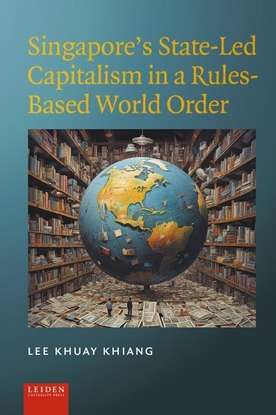
Singapore’s State-Led Capitalism in a Rules-Based World Order
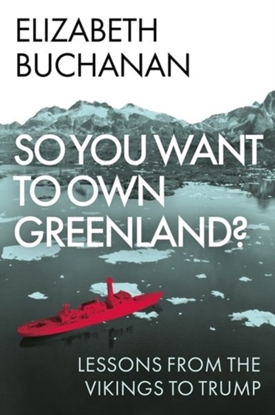
So You Want to Own Greenland?
An indispensable guide to Greenland—why it matters, who covets it and why this wilderness of 56,000 inhabitants could become the next global flashpoint.
‘An engaging blend of history and modern-day political analysis … with a hard line of Realpolitik and a surprising dash of humour.’— Ron Charles, The Washington Post
‘[An] intelligent, incisive survey.’ — The Irish Times
‘Geopolitical analyst Buchanan provides an insightful and witty examination of what makes Greenland such desirable but difficult to maintain real estate.’ — Publishers Weekly
Greenland is no ordinary island. From its discovery by Norsemen to its contemporary strategic significance, it has been a frontier for human exploration and empire, today emerging as a facilitator of geoeconomic competition. This book delves into the rich history and complex politics of Greenland, revealing how this icy expanse has shaped—and been shaped by—the world.
This short history begins with the Vikings, whose mysterious disappearance from Greenland in the 1400s remains one of history’s great puzzles. It then explores the island’s gradual transformation from a Danish possession to an autonomous territory, charting its role during the World Wars and its strategic importance during the Cold War.
Greenland finds itself at the centre of a renewed ‘great game’, balancing transatlantic ties, rising Chinese influence, and mounting domestic pressures for independence. And that’s before President Trump’s agenda is factored in.
Starting from Trump’s plan to purchase Greenland, Elizabeth Buchanan dissects the island’s contemporary role and poses four provocative scenarios for its future—from full independence to an icy geopolitical standoff with Denmark. So You Want to Own Greenland? is an essential read for anyone curious about the future of this frozen frontier and its place on the global stage.
- Concise history of Greenland’s strategic importance
- Starts with the Vikings, whose mysterious disappearance in the 1400s remains one of history’s great puzzles
- Shows how this icy expanse has become the latest pawn in the ‘Great Game’
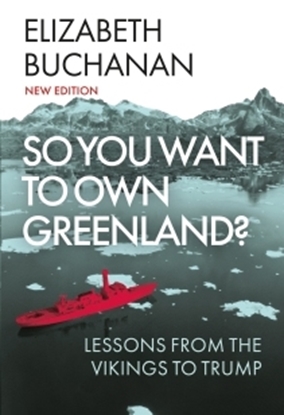
So You Want to Own Greenland?
Now updated and in paperback.
An indispensable guide to Greenland—why it matters, who covets it and why this wilderness of 56,000 inhabitants could become the next global flashpoint.
‘An engaging blend of history and modern-day political analysis … with a hard line of Realpolitik and a surprising dash of humour.’— Ron Charles, The Washington Post
‘[An] intelligent, incisive survey.’ — The Irish Times
‘Geopolitical analyst Buchanan provides an insightful and witty examination of what makes Greenland such desirable but difficult to maintain real estate.’ — Publishers Weekly
Greenland is no ordinary island. From its discovery by Norsemen to its contemporary strategic significance, it has been a frontier for human exploration and empire, today emerging as a facilitator of geoeconomic competition. This book delves into the rich history and complex politics of Greenland, revealing how this icy expanse has shaped—and been shaped by—the world.
This short history begins with the Vikings, whose mysterious disappearance from Greenland in the 1400s remains one of history’s great puzzles. It then explores the island’s gradual transformation from a Danish possession to an autonomous territory, charting its role during the World Wars and its strategic importance during the Cold War.
Greenland finds itself at the centre of a renewed ‘great game’, balancing transatlantic ties, rising Chinese influence, and mounting domestic pressures for independence. And that’s before President Trump’s agenda is factored in.
Starting from Trump’s plan to purchase Greenland, Elizabeth Buchanan dissects the island’s contemporary role and poses four provocative scenarios for its future—from full independence to an icy geopolitical standoff with Denmark. So You Want to Own Greenland? is an essential read for anyone curious about the future of this frozen frontier and its place on the global stage.
- Concise history of Greenland’s strategic importance
- Starts with the Vikings, whose mysterious disappearance in the 1400s remains one of history’s great puzzles
- Shows how this icy expanse has become the latest pawn in the ‘Great Game’
