
Politicologie

The Hidden Globe
ONE OF THE WASHINGTON POST'S TOP 10 BOOKS OF 2024
A NEW YORK TIMES NOTABLE BOOK
“Vivid, revelatory, and politically unpredictable…What bothers Abrahamian, in the end, isn’t the anarchic but the unfair; if capital is free, people deserve the same respect.” —Gideon Lewis-Kraus, The New Yorker
"A season of unrest looms ahead, and The Hidden Globe lays out the unvarnished truth in a luminous feat of reportage.”—Hamilton Cain, Minneapolis Star Tribune
Borders draw one map of the world; money draws another. A journalist’s riveting account exposes a parallel universe that has become a haven for the rich and powerful.
A globe shows the world we think we know: neatly delineated sovereign nations that grant or restrict their citizens’ rights. Beneath, above, and tucked inside their borders, however, another universe has been engineered into existence. It consists of thousands of extraterritorial zones that operate largely autonomously, and increasingly for the benefit of the wealthiest individuals and corporations.
Atossa Abrahamian traces the rise of this hidden globe to thirteenth-century Switzerland, where poor cantons marketed their only commodity: bodies, in the form of mercenary fighters. Over time, economists, theorists, statesmen, and consultants evolved ever more sophisticated ways of exporting and exploiting statelessness, in the form of free trade zones, flags of convenience, offshore detention centers, charter cities controlled by foreign corporations, and even into outer space. By mapping this countergeography, which decides who wins and who loses in the new global order—and helping us to see how it might be otherwise—The Hidden Globe fascinates, enrages, and inspires. Lees meer

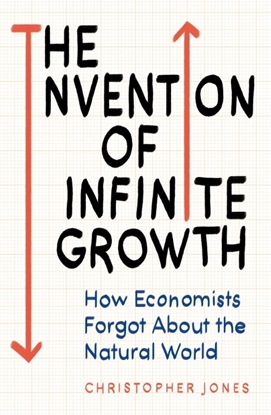
The Invention of Infinite Growth
Let’s connect mainstream economics with reality
People in power tell us that growth is the surest path to a better life. This idea has shaped policy across the globe for the last seventy-five years, promising economic benefits that can continue without limit. Economists have clung to this premise while ignoring the collapse of natural ecosystems necessary to sustain human life.
We can feel the results in a warming climate, biodiversity losses, and skyrocketing inequality. It is obvious now that a thriving future requires an economic framework compatible with the natural world.
Tracing the long battle over how to analyze growth, Christopher F. Jones offers hope for the future. Humans have not always believed that economic growth should be infinite. We can still create new ideas about how to promote environmental sustainability, human welfare and a responsible economy, without compromising the planet and ourselves.
Lees meer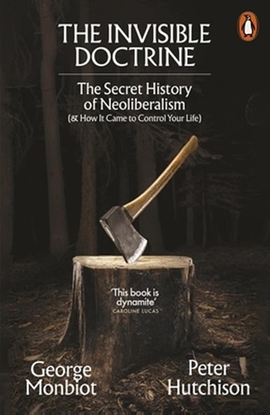
The Invisible Doctrine
*The #1 Sunday Times bestseller*
'Explosive and beautifully told … these truths can set us free' - Danny Dorling
'This book is dynamite – shining a spotlight on the evils of neoliberalism, shattering the myth that ‘there is no alternative’, and laying the foundations for a new politics' - Caroline Lucas
How can you fight something if you don’t know it exists?
We live under an ideology that preys on every aspect of our lives: our education and our jobs; our healthcare and our leisure; our relationships and our mental wellbeing; the planet we inhabit – the very air we breathe. So pervasive has it become that, for most people, it has no name. It seems unavoidable, like a natural law.
But trace it back to its roots, and we discover that it is neither inevitable nor immutable. It was conceived, propagated, and then concealed by the powerful few. Our task is to bring it into the light—and to build a new system that is worth fighting for.
Neoliberalism. Do you know what it is?
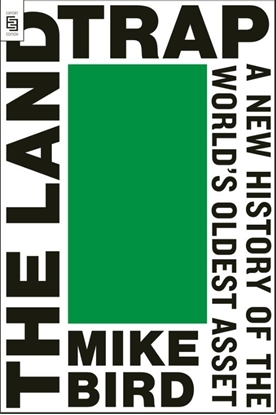
The Land Trap
In The Land Trap, Mike Bird—The Economist’s Wall Street editor—pulls back the curtain on how this ancient asset exerts outsized influence over the modern world. With masterful insight into global finance, Bird reveals how land has quietly become the linchpin of the world’s banking system, affecting everything from soaring housing prices to geopolitical tensions. From the speculative land grabs of colonial America to China’s modern-day real estate crisis, Bird shows how fortunes are built—or destroyed—all on the bedrock of land.
As governments wrestle with inequality, climate crises threaten entire regions, and land becomes ever scarcer, The Land Trap offers a bold new framework for understanding the driving force behind today’s most pressing challenges. Eye-opening and timely, Bird’s analysis unveils how land remains the ultimate currency of power—and the key to economic survival in an increasingly fragile world.
This is the book for anyone who wants to see beyond markets and money to the hidden game being played on a foundation as old as civilization itself. Timely, provocative, and essential, The Land Trap will change how you see the ground beneath your feet. Lees meer
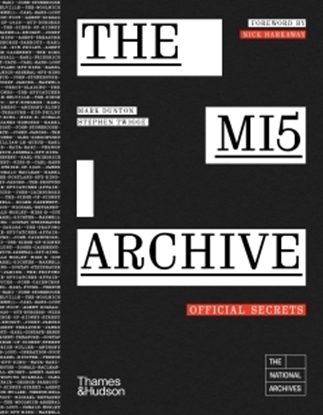
The MI5 Archive
Regnum Defende: Defend the Realm. MI5, the intelligence agency responsible for protecting the UK against threats to national security, has acted under this motto since it was founded in 1909. This has involved the management of secrets over the decades: secrets for which vast swathes of information are now declassified. Detailing uprisings and executions, double agents, and femmes fatales from across the globe, The MI5 Archive presents a window into the world of spycraft that has kept British democracy safe.
Rummage through documents received anonymously to the shadowy PO Box 500, London, W2. Work out what has value and how to decode it, with experts at your shoulder: authors and archivists Mark Dunton and Stephen Twigge have had unparalleled access. Within you will find source material on the Siege of Sidney Street, the Cambridge Spy Ring, and the Profumo Affair, and never-before-published imagery prepared exclusively for this book and the National Archives’ hit exhibition M15: Official Secrets.
From interrogations to surveillance logs, coded messages to intercepted phone calls, The MI5 Archive charts the clandestine activities of MI5 right from its inception.
Lees meer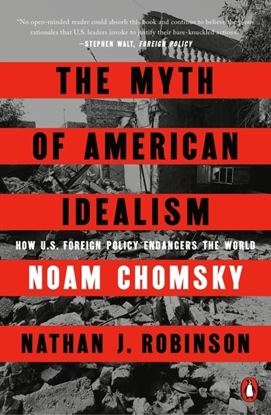
The Myth of American Idealism
A sharp indictment of both American foreign policy and the national myths that support it, and an urgent warning of the threat that U.S. power poses to humanity’s future
The Myth of American Idealism offers a timely and comprehensive introduction to the incisive critiques of U.S. power that have made Noam Chomsky one of the most widely known public intellectuals of all time. Surveying the history of U.S. military and economic activity around the world, Chomsky and coauthor Nathan J. Robinson vividly trace the way the American pursuit of global domination has wrought havoc in country after country.
Chomsky and Robinson offer penetrating accounts of Washington’s relationship with the Global South, its role in the Israeli-Palestinian conflict, and the wars in Iraq and Afghanistan—all justified with noble stories about humanitarian missions and the benevolent intentions of American policymakers. The same myths that have led to repeated disastrous wars, they argue, are now imperiling humanity’s future. Examining nuclear proliferation and climate change, they show how U.S. policies are continuing to exacerbate global threats.
For well over half a century, Noam Chomsky has committed himself to exposing governing ideologies and criticizing his country’s unchecked power. At once thorough and devastating, urgent and provocative, The Myth of American Idealism offers a highly readable entry to a lifetime of thought and activism. Lees meer
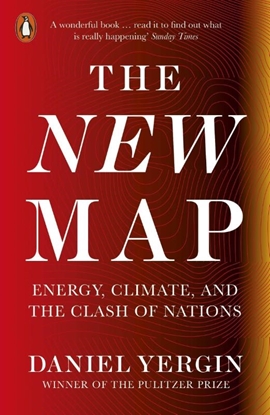
The New Map
'The direction of travel in the global energy system seems clear: a historic shift away from fossil fuels is under way. Who better to chart it than Daniel Yergin? ... a flair for dramatic detail and sprightly insights' Pilita Clark, Financial Times
The Pulitzer Prize-winning author and global energy expert reveals how climate change and the shale revolution in oil and gas are shaking the global order, challenging nations and industries, and accelerating a second energy revolution - the quest for renewables and for 'net zero carbon'.
UPDATED WITH A NEW EPILOGUE
'A tour de force' David Von Drehle, Washington Post
'A kaleidoscopic survey of seemingly every geopolitical development in history, all seen through the lens of energy . . . Admirable, well-researched, highly readable' Keith Johnson, Foreign Policy
Lees meer


The Origins of Political Order