Praktische filosofie

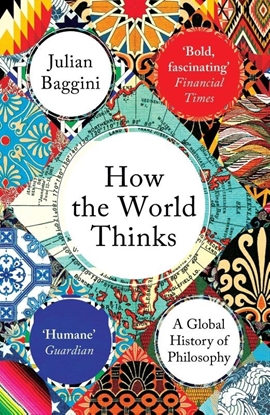
How the World Thinks
'There to fill the Sapiens-size hole in your life' Observer
A groundbreaking global overview of philosophy, travelling the world to provide a wide-ranging map of human thought
One of the great unexplained wonders of history is that philosophy flowered entirely separately in China, India and Ancient Greece at more or less the same time. These writings would have a profound impact on the development of distinctive cultures in different parts of the world.
In How the World Thinks Julian Baggini sets out to expand our horizons, exploring the philosophies of Japan, India, China and the Muslim world, as well as the lesser-known oral traditions of Africa and Australia's first peoples. Interviewing thinkers from around the globe, Baggini asks questions such as: why is the West is more individualistic than the East? What makes secularism a less powerful force in the Islamic world than in Europe? And how has China resisted pressures for greater political freedom?
Baggini shows that by gaining greater knowledge of how others think we take the first step to a greater understanding of ourselves.
'Terrific. The intellectual and spiritual generosity of this book makes it an essential text for our fractious and dangerously divided era' Richard Holloway, author of Stories We Tell Ourselves
'This bold fascinating book seeks to inhabit other philosophical traditions, with humility but without patronisingly exempting them from the critique he applies to ours... Deft [and] rigorous' Jane O'Grady, Financial Times
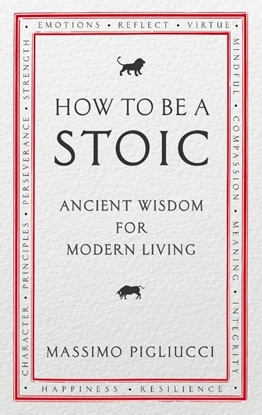
How to Be a Stoic
A philosophy still relevant in the modern world, Pigliucci, one of the top philosophers on Twitter and a regular contributor to the New York Times, Newsweek, Washington and Huffington Posts, shows how you can apply stoicism to your everyday life and make it more meaningful. With practical tips and exercises, meditations and mindfulness, this is perfect for fans of Jules Evans' Philosophy of Life - or anyone wanting to imbue their life with new meaning.
'Pigliucci makes a good case for Stoicism and living stoically' -- Daily Telegraph
'A good case for the enduring relevance of 2,000-year-old precepts' -- TIMES HIGHER EDUCATION SUPPLEMENT
'Enjoyed reading this - enough information to be enlightening and clear and simple enough for a novice in the field to access easily' -- ***** Reader review
'Enlightening' -- ***** Reader review
'Loved this book so much' -- ***** Reader review
'Easy to understand with just the right twist of Philosophy' -- ***** Reader review
'Very thought provoking' -- ***** Reader review
'A great book full of great wisdom' -- ***** Reader review
'I am loving this book. Have been reading it non-stop since I got it' -- ***** Reader review
**********************************************************************************************
'In this thought-provoking book, Massimo Pigliucci shares his journey of discovering the power of Stoic practices in a philosophical dialogue with one of Stoicism's greatest teachers.' RYAN HOLIDAY, BESTSELLING AUTHOR OF THE OBSTACLE IS THE WAY AND THE DAILY STOIC
Who am I?
What am I doing?
How ought I to live my life?
Stoicism teaches us to acknowledge our emotions, reflect on what causes them and redirect them for our own good. Whenever we worry about how to be happy, we are worrying about how to lead a good life. No goal seems more elusive.
Massimo Pigliucci explores this remarkable philosophy and how its wisdom can be applied to our everyday lives in the quest for meaning. He shows how stoicism teaches us the importance of a person's character, integrity and compassion.
Whoever we are, we can take something away from stoicism and, in How to be a Stoic, with its practical tips and exercises, meditations and mindfulness, he also explains how relevant it is to every part of our modern lives.
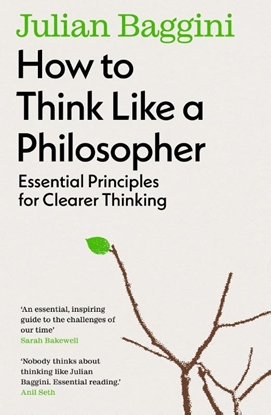
How to Think Like a Philosopher
As politics slides toward impulsivity, and outrage bests rationality, how can philosophy help us critically engage with the world?
How to Think Like A Philosopher is a revelatory exploration of the methods, tenets and attitudes of thought that guide philosophy, and how they can be applied to our own lives.
Drawing on decades of enquiry and a huge range of interviews, Julian Baggini identifies twelve key principles that promote incisive thinking. Pay attention; question everything; seek clarity, not certainty: these are just a few of philosophy's guiding maxims which can be applied to everything from understanding the impact of climate change to correctly appraising our own temperaments.
Both a fresh introduction to philosophy covering canonical and contemporary philosophers, and an essential, practical guide to good thinking, How to Think Like a Philosopher shows us the way to a more humane, balanced and rational approach to thinking, to politics, and to life.
How to Travel