
Science fiction
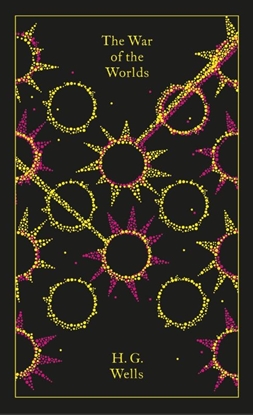
Penguin Clothbound Classics The War of the Worlds
The night after a shooting star is seen streaking through the sky from Mars, a cylinder is discovered on Horsell Common in London. At first, naïve locals approach the cylinder armed just with a white flag - only to be quickly killed by an all-destroying heat-ray, as terrifying tentacled invaders emerge. Soon the whole of human civilisation is under threat, as powerful Martians build gigantic killing machines, destroy all in their path with black gas and burning rays, and feast on the warm blood of trapped, still-living human prey. The forces of the Earth, however, may prove harder to beat than they at first appear. The War of the Worlds has been the subject of countless adaptations, including an Orson Welles radio drama which caused mass panic when it was broadcast, with listeners confusing it for a news broadcast heralding alien invasion; a musical version by Jeff Wayne; and, most recently, Steven Spielberg's 2005 film version, starring Tom Cruise.
This Penguin Classics edition includes a full biographical essay on Wells, a further reading list and detailed notes. The introduction, by Brian Aldiss, considers the novel's view of religion and society.
For more than seventy years, Penguin has been the leading publisher of classic literature in the English-speaking world. With more than 1,700 titles, Penguin Classics represents a global bookshelf of the best works throughout history and across genres and disciplines. Readers trust the series to provide authoritative texts enhanced by introductions and notes by distinguished scholars and contemporary authors, as well as up-to-date translations by award-winning translators. Lees meer

Penguin Essentials 1984
The perfect edition for any Orwell enthusiasts' collection, discover the classic dystopian masterpiece beautifully reimagined by renowned street artist Shepard Fairey
Winston Smith works for the Ministry of Truth in London, chief city of Airstrip One. Big Brother stares out from every poster, the Thought Police uncover every act of betrayal. When Winston finds love with Julia, he discovers that life does not have to be dull and deadening, and awakens to new possibilities. Despite the police helicopters that hover and circle overhead, Winston and Julia begin to question the Party; they are drawn towards conspiracy. Yet Big Brother will not tolerate dissent - even in the mind. For those with original thoughts they invented Room 101. . .
First published in 1949, 1984 is George Orwell's terrifying vision of a totalitarian future in which everything and everyone is slave to a tyrannical regime.
'Right up there among my favourite books . . . I read it again and again' Margaret Atwood
'More relevant to today than almost any other book that you can think of' Jo Brand
'The book of the twentieth century . . . haunts us with an ever-darker relevance' Independent
COMPLETE THE TRIO WITH SHEPARD FAIREY'S NEW-LOOK ANIMAL FARM AND DOWN AND OUT IN PARIS AND LONDON.
Lees meer
Penguin Essentials A Clockwork Orange
'Every generation should discover this book' Time Out
________________
In this nightmare vision of youth in revolt, fifteen-year-old Alex and his friends set out on a diabolical orgy of robbery, rape, torture and murder. Alex is jailed for his teenage delinquency and the State tries to reform him - but at what cost?
Experiment of language? Social prophecy? Black comedy? A Clockwork Orange is all of these.
Dazzling and transgressive, this frightening fable about good and evil asks the meaning of human freedom.
________________
'A gruesomely witty cautionary tale' Time
'Not only about man's violent nature and his capacity to choose between good and evil. It is about the excitements and intoxicating effects of language' Daily Telegraph
'I do not know of any other writer who has done as much with language . . . a very funny book' William S. Burroughs
'One of the cleverest and most original writers of his generation' The Times Lees meer
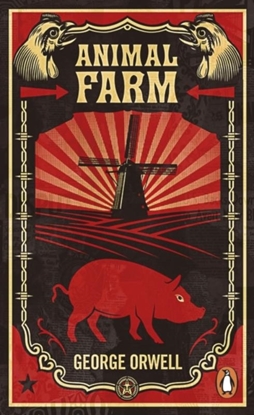
Penguin Essentials Animal Farm
The perfect edition for any Orwell enthusiasts' collection, discover Orwell's classic dystopian masterpiece beautifully reimagined by renowned street artist Shepard Fairey
'All animals are equal. But some animals are more equal than others.'
Mr Jones of Manor Farm is so lazy and drunken that one day he forgets to feed his livestock. The ensuing rebellion under the leadership of the pigs Napoleon and Snowball leads to the animals taking over the farm. Vowing to eliminate the terrible inequities of the farmyard, the renamed Animal Farm is organised to benefit all who walk on four legs. But as time passes, the ideals of the rebellion are corrupted, then forgotten. And something new and unexpected emerges. . .
First published in 1945, Animal Farm - the history of a revolution that went wrong - is George Orwell's brilliant satire on the corrupting influence of power.
'Remains our great satire of the darker face of modern history' Malcolm Bradbury
'A prophet who thought the unthinkable and spoke the unspeakable, even when it offended conventional thought' Daily Express
'As valid today as it was fifty years ago' Ralph Steadman
COMPLETE THE TRIO WITH SHEPARD FAIREY'S NEW-LOOK 1984 AND DOWN AND OUT IN PARIS AND LONDON.
Lees meer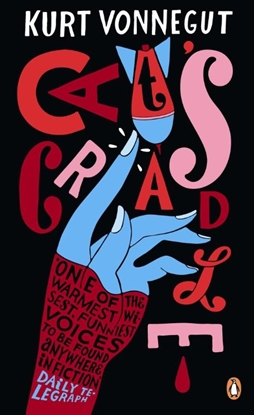
Penguin Essentials Cat's Cradle
Kurt Vonnegut's Cat's Cradle is an irreverent and highly entertaining fantasy about the playful irresponsibility of nuclear scientists, beautifully repackaged as part of the Penguin Essentials range.
'All of the true things I am about to tell you are shameless lies.'
Dr Felix Hoenikker, one of the founding fathers of the atomic bomb, has left a deadly legacy to the world. For he is the inventor of Ice-nine, a lethal chemical capable of freezing the entire planet. The search for its whereabouts leads to Hoenikker's three eccentric children, to a crazed dictator in the Caribbean, to madness.
Will Felix Hoenikker's death wish come true? Will his last, fatal gift to humankind bring about the end that, for all of us, is nigh?
Told with deadpan humour and bitter irony, Kurt Vonnegut's cult tale of global apocalypse preys on our deepest fears of witnessing the end and, worse still, surviving it . . .
'The time to read Vonnegut is just when you begin to suspect that the world is not what it appears to be. He is not only entertaining, he is electrocuting. You read him with enormous pleasure because he makes your hair stand on end' New York Times
'One of the warmest, wisest, funniest voices to be found anywhere in fiction' Daily Telegraph
'Vonnegut has looked the world straight in the eye and never flinched' J. G. Ballard
Kurt Vonnegut was born in Indianapolis in 1922. He studied at the universities of Chicago and Tennessee and later began to write short stories for magazines. His first novel, Player Piano, was published in 1951 and was followed by The Sirens of Titan (1959), Mother Night (1961), Cat's Cradle (1963), God Bless You Mr Rosewater (1964), Welcome to the Monkey House (1968); a collection of short stories, Slaughterhouse Five (1969), Breakfast of Champions (1973), Slapstick, or Lonesome No More (1976), Jailbird (1979), Deadeye Dick (1982), Galapagos (1985), Bluebeard (1988), Hocus Pocus (1990) and Timequake (1997). He is also the author of a number of collections of short stories and essays. Kurt Vonnegut died in 2007.

Penguin Essentials The Man in the High Castle
NOW AN AMAZON ORIGINAL SERIES
'Truth, she thought. As terrible as death. But harder to find.'
America, fifteen years after the end of the Second World War. The winning Axis powers have divided their spoils: the Nazis control New York, while California is ruled by the Japanese. But between these two states - locked in a cold war - lies a neutal buffer zone in which legendary author Hawthorne Abendsen is rumoured to live. Abendsen lives in fear of his life for he has written a book in which World War Two was won by the Allies. . .
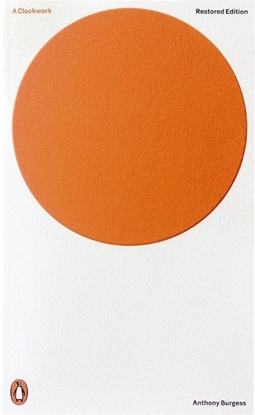
Penguin Modern Classics A Clockwork Orange
Edited by Andrew Biswell With a Foreword by Martin Amis
'It is a horrorshow story ...'
Fifteen-year-old Alex likes lashings of ultraviolence. He and his gang of friends rob, kill and rape their way through a nightmarish future, until the State puts a stop to his riotous excesses. But what will his re-education mean?
A dystopian horror, a black comedy, an exploration of choice, A Clockwork Orange is also a work of exuberant invention which created a new language for its characters. This critical edition restores the text of the novel as Anthony Burgess originally wrote it, and includes a glossary of the teen slang 'Nadsat', explanatory notes, pages from the original typescript, interviews, articles and reviews, shedding light on the enduring fascination of the novel's 'sweet and juicy criminality'.
Anthony Burgess was born in Manchester in 1917 and educated at Xaverian College and Manchester University. He spent six years in the British Army before becoming a schoolmaster and colonial education officer in Malaya and Brunei. After the success of his Malayan Trilogy, he became a full-time writer in 1959. His books have been published all over the world, and they include The Complete Enderby, Nothing Like the Sun, Napoleon Symphony, Tremor of Intent, Earthly Powers and A Dead Man in Deptford. Anthony Burgess died in London in 1993.
Andrew Biswell is the Professor of Modern Literature at Manchester Metropolitan University and the Director of the International Anthony Burgess Foundation. His publications include a biography, The Real Life of Anthony Burgess, which won the Portico Prize in 2006. He is currently editing the letters and short stories of Anthony Burgess.
Lees meer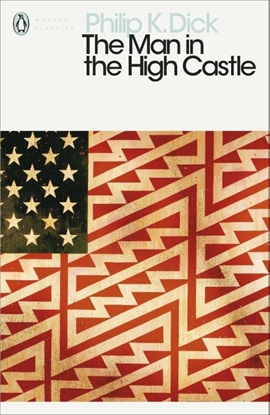
Penguin Modern Classics The Man in the High Castle
A dazzling speculative novel of 'counterfactual history' from one of America's most highly-regarded science fiction authors, Philip K. Dick's The Man in the High Castle includes an introduction by Eric Brown in Penguin Modern Classics.
Philip K. Dick's acclaimed cult novel gives us a horrifying glimpse of an alternative world - one where the Allies have lost the Second World War. In this nightmare dystopia the Nazis have taken over New York, the Japanese control California and the African continent is virtually wiped out. In a neutral buffer zone in America that divides the world's new rival superpowers, lives the author of an underground bestseller. His book offers a new vision of reality - an alternative theory of world history in which the Axis powers were defeated - giving hope to the disenchanted. Does 'reality' lie with him, or is his world just one among many others?
Philip Kindred Dick (1928-82) was born in Chicago in 1928. His career as a science fiction writer comprised an early burst of short stories followed by a stream of novels, typically character studies incorporating androids, drugs, and hallucinations. His best works are generally agreed to be The Man in the High Castle and Do Androids Dream of Electric Sheep?, the inspiration for the movie Blade Runner.
If you enjoyed The Man in the High Castle, you might like Yevgeny Zamyatin's We, also available in Penguin Classics.
'The most brilliant science fiction mind on any planet'
Rolling Stone
'Dick's finest book, and one of the very best science fiction novels ever published'
Eric Brown
Penguin Science Fiction Cat's Cradle
'Vonnegut looked the world straight in the eye and never flinched' J. G. Ballard
This bitterly funny Cold War satire on the end of the world expresses our deepest fears of Armageddon, and has become a counter-culture classic.
'A satirist with a heart, a moralist with a whoopee cushion' Jay McInerney
'The closest thing we had to a Voltaire' Tom Wolfe
'The time to read Vonnegut is just when you begin to suspect that the world is not what it appears to be. He is not only entertaining, he is electrocuting' The New York Times
Penguin Science Fiction Dimension of Miracles
'Hilarious SF satire. Douglas Adams said it was the only thing like The Hitchhiker's Guide to the Galaxy, although written ten years earlier. It's wonderful' Neil Gaiman
This madcap cosmic farce relates the adventures of the hapless human Carmody, as he attempts to make his way home to Earth after winning the grand prize in the Intergalactic Sweepstake, encountering parallel worlds, incompetent bureaucrats and talking dinosaurs on the way.
'The greatest entertainer ever produced by science fiction ... a feast of wit and intelligence' J. G. Ballard
Penguin Science Fiction Flatland
'At once a playful brainteaser about geometry, a pointed satire of Victorian manners - and a strangely compelling argument about the greatest mysteries of the Universe' Wall Street Journal
'Flatland could lead to very profound thought about our Universe and ourselves' Isaac Asimov Lees meer

Penguin Science Fiction We
'The best single work of science fiction yet written' Ursula K. Le Guin
The dystopian masterwork that inspired George Orwell's Nineteen Eighty-Four, We depicts a futuristic totalitarian society, 'OneState', where humans have become numbers. Suppressed in Russia for decades, it is a chilling vision of a world enslaved by technology.
'Zamyatin's parable looked forward to climate change and surveillance culture ... to peer into its future is to see modernity's reflection gazing darkly back' Economist
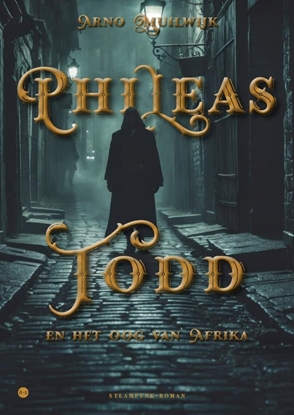
Phileas Todd en het Oog van Afrika
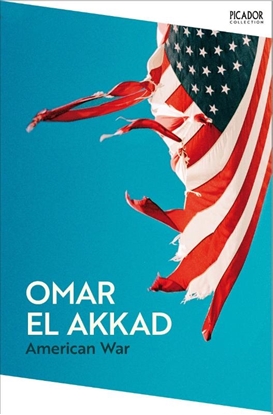
Picador Collection American War

Picador Collection Exhalation
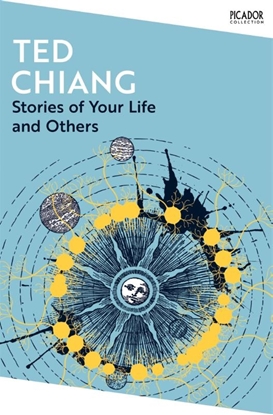
Picador Collection Stories of Your Life and Others
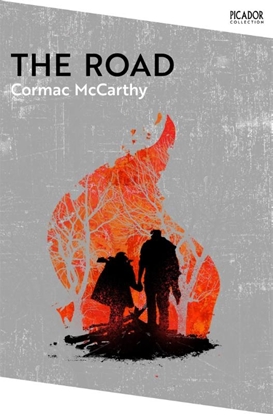
Picador Collection The Road


