
Theater-, film- en televisiewetenschap algemeen
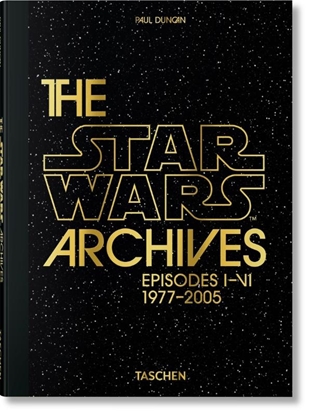
The Star Wars Archives
When Star Wars was released in 1977, everybody who saw and reviewed it considered the movie an exciting, innovative piece of pop culture, a fast-moving, special-effects laden fairy tale in space. The film, and the episodes that followed, created a worldwide phenomenon, a massive success for creator George Lucas’s production company Lucasfilm, his special effects company Industrial Light & Magic, and for the studio Twentieth Century Fox.
Over six movies and 28 years writer, director and producer George Lucas created the modern monomyth of our time, one that resonates with the child in us all.
The book begins with Anakin Skywalker as we watch him being trained as a Jedi under Obi-Wan Kenobi, find love with the Queen of Naboo, Padmé Amidala, and ultimately turn to the dark side of his nature and become more machine than man. Years later we follow moisture farmer Luke Skywalker on his journey through a galaxy far, far away, meeting extraordinary characters like the mysterious hermit Obi-Wan Kenobi, space pirates Han Solo and Chewbacca, loyal droids C-3PO and R2-D2, bold Princess Leia and the horrific Darth Vader, servant of the dark, malevolent Emperor.
To achieve his epic vision George Lucas created the space for ground-breaking visual effects and digital technologies that have forever changed the way we make and see visual entertainment.
Paul Duncan and the TASCHEN team, with the full cooperation of Lucasfilm, dive into the Lucasfilm archives to create a book profusely illustrated with script pages, production documents, concept art, storyboards, on-set photography, stills, and posters from the six Star Wars films written and produced by George Lucas.
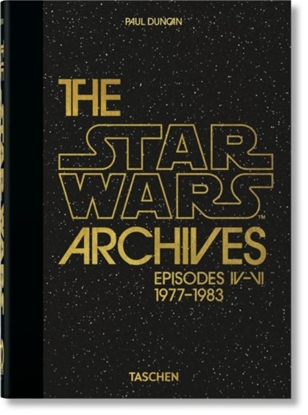
The Star Wars Archives. 1977–1983. 45th Ed.
Star Wars exploded onto our cinema screens in 1977, and the world has not been the same since. After watching depressing and cynical movies throughout the early 1970s, audiences enthusiastically embraced the positive energy of the Star Wars galaxy as they followed moisture farmer Luke Skywalker on his journey through a galaxy far, far away, meeting extraordinary characters like mysterious hermit Obi-Wan Kenobi, space pirates Han Solo and Chewbacca, loyal droids C-3PO and R2-D2, bold Princess Leia Organa and the horrific Darth Vader, servant of the dark, malevolent Emperor.
Writer, director, and producer George Lucas created the modern monomyth of our time, one that resonates with the child in us all. He formed Industrial Light & Magic to develop cutting-edge special effects technology, which he combined with innovative editing techniques and a heightened sense of sound to give audiences a unique sensory cinematic experience.
In this first volume, made with the full cooperation of Lucasfilm, Lucas narrates his own story, taking us through the making of the original trilogy—Episode IV A New Hope, Episode V The Empire Strikes Back, and Episode VI Return of the Jedi—and bringing fresh insights into the creation of a unique universe. Complete with script pages, production documents, concept art, storyboards, on-set photography, stills, and posters, this is the authoritative exploration of the original saga as told by its creator.
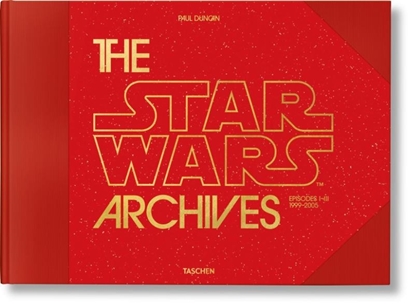
The Star Wars Archives. 1999–2005
From the moment Star Wars burst onto the screen in 1977, audiences have been in equal parts fascinated and appalled by the half-man/half-machine hybrid Darth Vader. In 1999, creator George Lucas began the story of how Anakin Skywalker grew up to train as a Jedi under Obi-Wan Kenobi, found love with the Queen of Naboo, Padmé Amidala, before turning to the dark side of his nature and becoming more machine than man.
After driving the development of nascent digital technology, George Lucas perceived how he could create new creatures and new worlds on a grander scale than ever before. He created the first digital blockbuster, and met fierce resistance when he pushed for widespread digital cameras, sets, characters, and projection – all of which are now used throughout the industry. He essentially popularized the modern way of making movies.
Made with the full cooperation of George Lucas and Lucasfilm, this second volume covers the making of the prequel trilogy — Episode I The Phantom Menace, Episode II Attack of the Clones, and Episode III Revenge of the Sith — and features exclusive interviews with Lucas and his collaborators. The book is profusely illustrated with script pages, production documents, concept art, storyboards, on-set photography, stills, and posters.
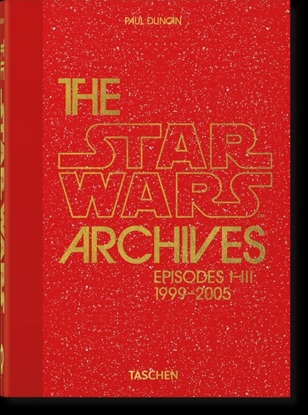
The Star Wars Archives. 1999–2005. 45th Ed.
From the moment Star Wars burst onto the screen in 1977, audiences have been in equal parts fascinated and appalled by the half-man/half-machine hybrid Darth Vader. In 1999, creator George Lucas began the story of how Anakin Skywalker grew up to train as a Jedi under Obi-Wan Kenobi, found love with the Queen of Naboo, Padmé Amidala, before turning to the dark side of his nature and becoming more machine than man.
After driving the development of nascent digital technology, George Lucas perceived how he could create new creatures and new worlds on a grander scale than ever before. He created the first digital blockbuster, and met fierce resistance when he pushed for widespread digital cameras, sets, characters, and projection – all of which are now used throughout the industry. He essentially popularized the modern way of making movies.
Made with the full cooperation of George Lucas and Lucasfilm, this second volume covers the making of the prequel trilogy — Episode I The Phantom Menace, Episode II Attack of the Clones, and Episode III Revenge of the Sith — and features exclusive interviews with Lucas and his collaborators. The book is profusely illustrated with script pages, production documents, concept art, storyboards, on-set photography, stills, and posters.
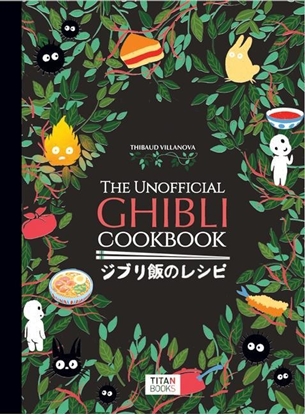
The Unofficial Ghibli Cookbook
Dive into the dreamlike worlds of these animated film masterpieces and enjoy the recipes created by Thibaud Villanova, a specialist in the cuisine of the imagination. With adorable illustrations and full color photo spreads, these delightful and simplified dishes are suitable for both beginners and more seasoned chefs.
Recipes include:
• Satsuki’s Bento from My Neighbor Totoro
• Calcifer’s Breakfast from Howl’s Moving Castle
• Shio Ramen from Ponyo
• O-Baba’s Soup from Nausica of the Valley of the Wind
• Bathhouse Nikuman from Spirited Away
• Kiki’s Chocolate Cake from Kiki’s Delivery Service
With helpful sections like a glossary of culinary terms and different knife varieties and their uses, this enchanting cookbook is practical and accessible, while retaining all the magic and creative whimsy of these animated classics. This is the perfect gift for Studio Ghibli fans ready to immerse in the worlds of their favorite films. Lees meer
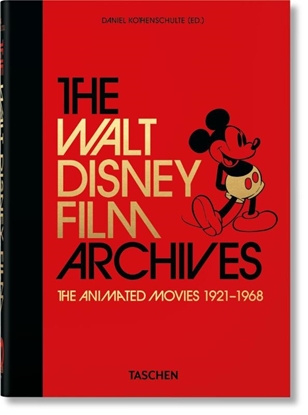
The Walt Disney Film Archives
One of the most creative minds of the 20th century, Walt Disney built a unique and unrivaled imaginative universe. Like scarcely any other classics of cinema, his astonishing collection of animated cartoons revolutionized storytelling on screen and enchant to this day across geographies and generations.
This expansively illustrated publication on Disney animation gathers hundreds of images as well as essays by Disney experts, taking us to the beating heart of the studio’s “Golden Age of Animation.” We trace Disney’s complete animation journey from the silent film era, through his first full-length feature Snow White and the Seven Dwarfs (1937) and Fantasia (1940), right up to his last masterpieces Winnie the Pooh and the Honey Tree (1966) and The Jungle Book (1967).
With extensive research conducted through the historical collections of the Walt Disney Company, as well as private collections, editor Daniel Kothenschulte curates some of the most precious concept paintings and storyboards to reveal just how these animation triumphs came to life. Masterful cel setups provide highly detailed illustrations of famous film scenes while rare pictures taken by Disney photographers bring a privileged insider’s view to the studio’s creative process.
Each of the major animated features that were made during Walt’s lifetime—including Pinocchio, Fantasia, Dumbo, Bambi, Cinderella, Peter Pan, and One Hundred and One Dalmatians—is given its own focus chapter, without forgetting less-familiar gems such as the experimental short films of the Silly Symphonies series and under-appreciated episodic musical films such as Make Mine Music and Melody Time.
Realizing the Disney style was a collective project and, as much as the master himself, The Walt Disney Film Archives acknowledges the outstanding animators and designers who influenced the style of the studio, among them Albert Hurter, Gustaf Tenggren, Kay Nielsen, Mary Blair, Sylvia Holland, Tyrus Wong, Ken Anderson, Eyvind Earle, and Walt Peregoy.
Copyright © 2020 Disney Enterprises, Inc.
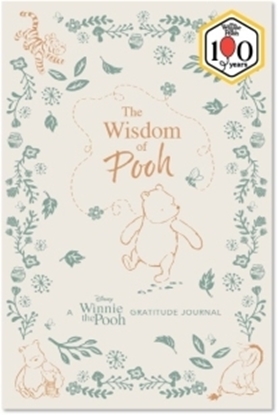
The Wisdom of Pooh: A Disney: Winnie the Pooh Gratitude Journal
Enjoy the timeless wisdom from everyone’s favorite “silly old bear” and his friends, paired with classic Disney illustrations.
Appreciate the magic of each day—whether it be good friends, a cozy home, or a simple smackerel—with The Wisdom of Pooh. Each page invites you to explore your thoughts and feelings alongside charming art featuring Pooh, Piglet, Eeyore, Rabbit, Owl, and more. With this supporting cast, you’ll find a comfortable space to check-in and share your own stories each day. The iconic Disney illustrations and relaxing motifs are supported with inspirational quotes and interactive prompts. It’s the perfect gift for a variety of occasions and for fans of all ages. Lees meer
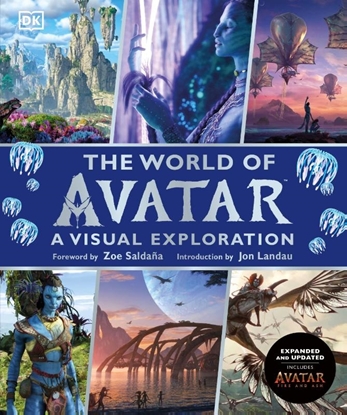
The World of Avatar Updated Edition
Newly revised with updates from Avatar: Fire and Ash, The World of Avatar: Updated Edition celebrates the spectacular world of Pandora, from its intricate geomorphology, flora and fauna, to the customs and beliefs of the Na’vi clans.
This book uncovers key content from the first three films in the ongoing franchise: Avatar, Avatar: The Way of Water and the highly anticipated blockbuster of 2025 - Avatar: Fire and Ash. It combines original movie stills and artwork with stunning imagery from expanded experiences, such as Ubisoft’s Frontiers of Pandora video game.
With a foreword by Avatar star Zoe Saldaña (Neytiri), and an introduction by producer Jon Landau, The World of Avatar: Updated Edition is the perfect visual guide for excited fans hoping to get a sneak peek of Avatar: Fire and Ash, or anticipating the mammoth success of Avatar for years to come.
© 2024 20th Century Studios. All rights reserved.
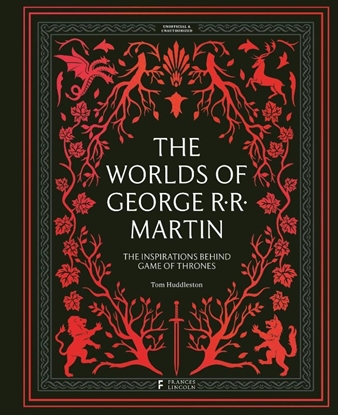
The Worlds of George RR Martin
In the many realms of modern fantasy there is only one true King, and his name is George Raymond Richard Martin.
With A Song of Ice and Fire, Martin has created a world on a scale almost unrivalled by any other single writer. Approaching two million words and still evolving, this genuinely epic series of novels, with its deeply interlocking narratives, finely crafted drama and enormous range of characters, is a creation of extraordinary breadth.
So how did a writer best known for short stories come to craft such a gigantic sequence of novels, and what is the key to their extraordinary success? What sources – historical, literary and personal – did Martin draw upon in the writing, and what inspiration did they give him?
The Worlds of George R.R. Martin is an in-depth bringing together of the enormous range of inspirations behind Martin’s work – from historical borrowings as wide-ranging as the Roman empire, the Wars of the Roses and the Mongol conquests, to diverse literary and mythological texts, and Martin’s own family experience and biography.
The Worlds of Wes Anderson
In all his films, Wes Anderson turns the mundane into magic by building distinctive and eccentric worlds. But how well do you know the man behind the camera? Discover the inspirations of one of our most revered auteurs with The Worlds of Wes Anderson.
Anderson’s playful and vibrant aesthetic is universally admired – but how has he managed to create such a recognisable identity?
From Hitchcock and Spielberg to Truffaut and Varda, there are countless homages and references scattered throughout Anderson’s filmography, while his cultural anchor points go far beyond film and into the worlds of art and literature.
Evocations of place and time underpin his work, from mid-century Paris in The French Dispatch to grand pre-war Europe in The Grand Budapest Hotel, while cultural institutions – such as Jacques Cousteau and The New Yorker magazine – are other touchstones.
For Wes Anderson fans and cinephiles alike, this is an essential insight into the creative process of one of the world’s most unique filmmakers.
Lees meer
Theater is democratie in het klein
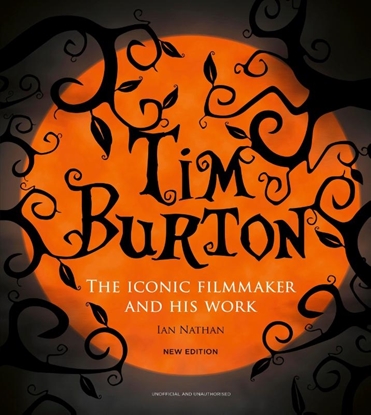
Tim Burton
Tim Burton is one of the most popular and remarkable filmmakers of the last 30 years, being responsible for such films as Edward Scissorhands, The Nightmare Before Christmas, Corpse Bride and Alice in Wonderland. He is famed for the visually arresting style of his films combined with highly original storylines.
A truly international filmmaker, Tim Burton has carved a reputation as one of the world's greatest creative directors. This stunning treasury explores the influences on his development as a filmmaker and assesses how he has captured the fruits of his imagination on screen.
Illustrated with many behind‑the‑scenes photographs and stunning film stills, chapters analyze the success and style of films such as Beetlejuice, Ed Wood and Mars Attacks!, and examine how Burton breathed new life into well‑known stories that include Batman, Planet of the Apes,Charlie and the Chocolate Factory,Alice Through the Looking Glass and Dumbo.
Tim Burton: The Iconic Filmmaker and His Work is a must for anyone who enjoys the creativity of films and is a fitting appreciation of one of Hollywood’s most dynamic movie directors. It takes you through his films, explaining how he got to where he is and why his films are so revered. Lees meer


Tomb Raider: The Official Cookbook and Travel Guide
Tomb Raider: The Official Cookbook and Travel Guide is a thrilling and delicious tutorial on recipes based on the cultural history of the many locations Lara Croft has visited throughout her 25 years of global adventures—bringing the taste back home to you. Inspired by the hit Tomb Raider videogame franchise, this book features over 40 recipes from the many locations Lara Croft visits and explores across the globe, with food and drinks inspired by key characters and locations. Also included is expert information on the cultural history of the many beautiful cities and countries to which she travels. A global exploration, this unique cookbook and travel guide takes fans on an exclusive journey across the planet chasing the thrills and adventures of Lara Croft. Featuring beautiful full color photography as well as stunning art from the games, this is the ultimate gift for fans, travelers, and food aficionados alike.
OVER 40 RECIPES: Features over 40 recipes inspired by the many locations Lara Croft visits across the world
TRAVEL GUIDE: In addition to over 40 recipes, this book includes a one-of-a-kind travel guide celebrating the many beautiful countries and cities Lara visits
25TH ANNIVERSARY: Officially licensed by and created in partnership with Square Enix and Crystal Dynamics for the 25th anniversary of Tomb Raider Lees meer
Ultimate Trivia The Rom-Com Ultimate Trivia Book


