Theoretische filosofie
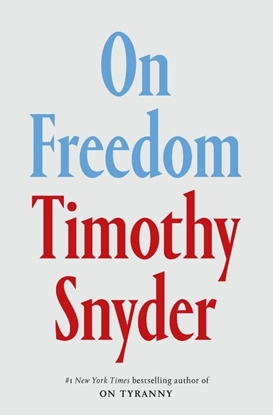
On Freedom
“[Snyder’s] deep political and philosophical examination of how to . . . create and sustain freedom provides a hopeful view for the future.”—Los Angeles Times
Timothy Snyder has been called “the leading interpreter of our dark times.” As a historian, he has given us startling reinterpretations of political collapse and mass killing. As a public intellectual, he has turned that knowledge toward counsel and prediction, working against authoritarianism here and abroad. His book On Tyranny has inspired millions around the world to fight for freedom. Now, in this tour de force of political philosophy, he helps us see exactly what we’re fighting for.
Freedom is the great American commitment, but as Snyder argues, we have lost sight of what it means—and this is leading us into crisis. Too many of us look at freedom as the absence of state power: We think we're free if we can do and say as we please, and protect ourselves from government overreach. But true freedom isn’t so much freedom from as freedom to—the freedom to thrive, to take risks for futures we choose by working together. Freedom is the value that makes all other values possible.
On Freedom takes us on a thrilling intellectual journey. Drawing on the work of philosophers and political dissidents, conversations with contemporary thinkers, and his own experiences coming of age in a time of American exceptionalism, Snyder identifies the practices and attitudes—the habits of mind—that will allow us to design a government in which we and future generations can flourish. We come to appreciate the importance of traditions (championed by the right) but also the role of institutions (the purview of the left). Intimate yet ambitious, this book helps forge a new consensus rooted in a politics of abundance, generosity, and grace. Lees meer
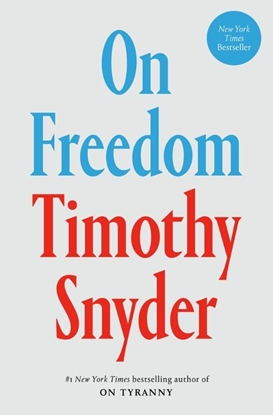
On Freedom
“[Snyder’s] deep political and philosophical examination of how to . . . create and sustain freedom provides a hopeful view for the future.”—Los Angeles Times
Timothy Snyder has been called “the leading interpreter of our dark times.” As a historian, he has given us startling reinterpretations of political collapse and mass killing. As a public intellectual, he has turned that knowledge toward counsel and prediction, working against authoritarianism here and abroad. His book On Tyranny has inspired millions around the world to fight for freedom. Now, in this tour de force of political philosophy, he helps us see exactly what we’re fighting for.
Freedom is the great American commitment, but as Snyder argues, we have lost sight of what it means—and this is leading us into crisis. Too many of us look at freedom as the absence of state power: We think we're free if we can do and say as we please, and protect ourselves from government overreach. But true freedom isn’t so much freedom from as freedom to—the freedom to thrive, to take risks for futures we choose by working together. Freedom is the value that makes all other values possible.
On Freedom takes us on a thrilling intellectual journey. Drawing on the work of philosophers and political dissidents, conversations with contemporary thinkers, and his own experiences coming of age in a time of American exceptionalism, Snyder identifies the practices and attitudes—the habits of mind—that will allow us to design a government in which we and future generations can flourish. We come to appreciate the importance of traditions (championed by the right) but also the role of institutions (the purview of the left). Intimate yet ambitious, this book helps forge a new consensus rooted in a politics of abundance, generosity, and grace. Lees meer
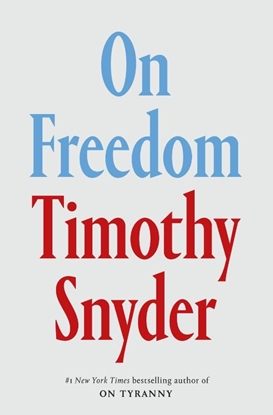
On Freedom (EXP)
“[Snyder’s] deep political and philosophical examination of how to . . . create and sustain freedom provides a hopeful view for the future.”—Los Angeles Times
Timothy Snyder has been called “the leading interpreter of our dark times.” As a historian, he has given us startling reinterpretations of political collapse and mass killing. As a public intellectual, he has turned that knowledge toward counsel and prediction, working against authoritarianism here and abroad. His book On Tyranny has inspired millions around the world to fight for freedom. Now, in this tour de force of political philosophy, he helps us see exactly what we’re fighting for.
Freedom is the great American commitment, but as Snyder argues, we have lost sight of what it means—and this is leading us into crisis. Too many of us look at freedom as the absence of state power: We think we're free if we can do and say as we please, and protect ourselves from government overreach. But true freedom isn’t so much freedom from as freedom to—the freedom to thrive, to take risks for futures we choose by working together. Freedom is the value that makes all other values possible.
On Freedom takes us on a thrilling intellectual journey. Drawing on the work of philosophers and political dissidents, conversations with contemporary thinkers, and his own experiences coming of age in a time of American exceptionalism, Snyder identifies the practices and attitudes—the habits of mind—that will allow us to design a government in which we and future generations can flourish. We come to appreciate the importance of traditions (championed by the right) but also the role of institutions (the purview of the left). Intimate yet ambitious, this book helps forge a new consensus rooted in a politics of abundance, generosity, and grace. Lees meer

On the Genealogy of Morals
Friedrich Nietzsche claimed that the purpose of On the Genealogy of Morals was to call attention to his previous writings. But in fact the book does much more than that, elucidating and expanding on the cryptic aphorisms of Beyond Good and Evil, and presenting a coherent discussion of morality in a work that is more accessible than much of his previous writings.
For more than sixty-five years, Penguin has been the leading publisher of classic literature in the English-speaking world. With more than 1,500 titles, Penguin Classics represents a global bookshelf of the best works throughout history and across genres and disciplines. Readers trust the series to provide authoritative texts enhanced by introductions and notes by distinguished scholars and contemporary authors, as well as up-to-date translations by award-winning translators. Lees meer

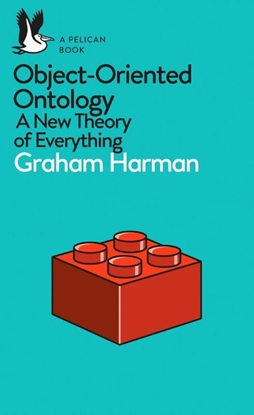
Pelican Books Object-Oriented Ontology
Are humans more special or important than the non-human objects we perceive?
How does this change the way we understand the world?
We humans tend to believe that things are only real in as much as we perceive them, an idea reinforced by modern philosophy, which privileges us as special, radically different in kind from all other objects. But as Graham Harman, one of the theory's leading exponents, shows, Object-Oriented Ontology rejects the idea of human specialness: the world, he states, is clearly not the world as manifest to humans. At the heart of this philosophy is the idea that objects - whether real, fictional, natural, artificial, human or non-human - are mutually autonomous. In this brilliant new introduction, Graham Harman lays out the history, ideas and impact of Object-Oriented Ontology, taking in everything from art and literature, politics and natural science along the way.
Graham Harman is Distinguished Professor of Philosophy at SCI-Arc, Los Angeles. A key figure in the contemporary speculative realism movement in philosophy and for his development of the field of object-oriented ontology, he was named by Art Review magazine as one of the 100 most influential figures in international art. Lees meer
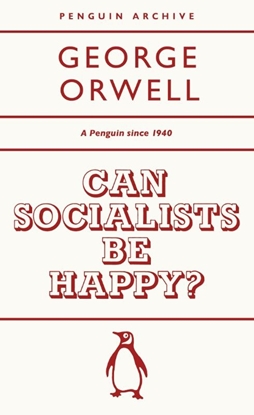
Penguin Archive Can Socialists be Happy?
90 classic titles celebrating 90 years of Penguin Books
No thinking person can or does genuinely keep out of politics, in an age like the present one
Unfailingly wise and often startlingly prophetic, George Orwell’s essays are masterpieces of plain English prose. This stirring new collection brings together his most cherished pieces with lesser-known gems, ranging over everything from tree planting to living with the atom bomb, sleeping rough to the perils of getting what you want in politics.
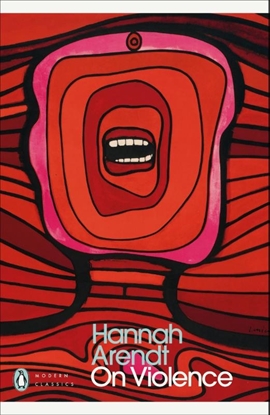
Penguin Modern Classics On Violence
From Hannah Arendt, the author of The Origins of Totalitarianism, her influential essay examining the relationship between violence, power, war and politics
'Violence can destroy power; it is utterly incapable of creating it'
Why has violence played such a significant role in human history? Written in 1970, with the Holocaust and Hiroshima still fresh in recent memory, war in Vietnam raging and the streets of Europe and America exploding into student protest, Hannah Arendt's seminal work dissects violence in the twentieth century: its nature and causes, its relationship with politics and war, its role in the modern age. Arendt warns against the glamorization of violence by revolutionary causes, and argues that true, lasting power can never grow 'out of the barrel of a gun'.
'Incisive, deeply probing, written with clarity and grace, it provides an ideal framework for understanding the turbulence of our times' The Nation
With an introduction by Arendt expert, Lyndsey Stonebridge, Professor of Humanities and Human Rights at the University of Birmingham.
Lees meer
Penguin Pocket Hardbacks Beyond Good and Evil
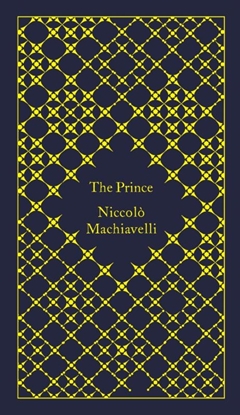
Penguin Pocket Hardbacks The Prince
World-changing ideas meet eye-catching design: the best titles of the extraordinarily successful Great Ideas series are now packaged in Coralie Bickford-Smith’s distinctive, award-winning covers. Whether on a well-curated shelf or in your back pocket, these timeless works of philosophical, political, and psychological thought are absolute must-haves for book collectors as well as design enthusiasts.
As a diplomat in turbulent fifteenth-century Florence, Niccolò Machiavelli knew how quickly political fortunes could rise and fall. The Prince, his tough-minded, pragmatic handbook on how power really works, made his name notorious and has remained controversial ever since. How can a leader be strong and decisive, yet still inspire loyalty in his followers? When is it necessary to break the rules? Is it better to be feared than loved? Examining regimes and their rulers the world over and throughout history, from Roman Emperors to renaissance Popes, from Hannibal to Cesare di Borgia, Machievalli answers all these questions in a work of realpolitik that still has shrewd political lessons for modern times. Tim Parks's acclaimed contemporary translation renders Machiavelli's pointed original into language that feels as alarming and enlightening as when it was first written. His introduction discusses Machiavelli's life and reputation, and explores the historical background to the work.
For more than sixty-five years, Penguin has been the leading publisher of classic literature in the English-speaking world. With more than 1,500 titles, Penguin Classics represents a global bookshelf of the best works throughout history and across genres and disciplines. Readers trust the series to provide authoritative texts enhanced by introductions and notes by distinguished scholars and contemporary authors, as well as up-to-date translations by award-winning translators. Lees meer

Penguin Pocket Hardbacks Utopia
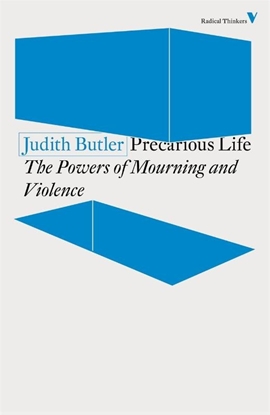
Precarious Life
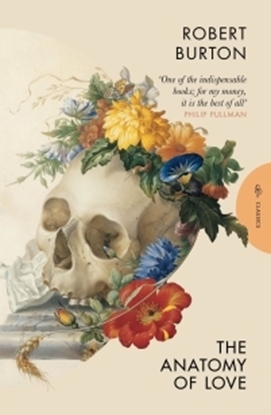
Pushkin Press Classics The Anatomy of Love
“One of the indispensable books; for my money, it is the best of all.” - Philip Pullman
Dryness, paleness, waking, sighing, despair, frenzy, death: love's repercussions can be dire indeed. Perhaps that is why Robert Burton devoted the largest part of his monumental 17th-century psychological work, The Anatomy of Melancholy, to this supreme passion. Edited to offer the modern reader easier access to this classic text, this abridged version preserves all the fantastic variety of the original, as Burton knits together stories and quotations drawn from millennia of European literature in order to understand love's causes, consequences, and cures.
From simple love, honest, pleasant and profitable, to the terrible sequels of jealousy, the grim prognostics for those fallen into love-melancholy, and the dangers of bawds and magic philters, Burton explores every branch and tributary of the great river which can bring us together - or toss us alone onto a desolate shore. We encounter gods and goddesses, ancient kings and queens, lascivious monks and pure-hearted shepherds, marriages happy and unhappy, allurements natural and unnatural, and, most importantly, the cure.
This readable edition of the early modern classic is introduced by contemporary essayist Becca Rothfeld. Intricate yet commonsensical, learned yet earthy, and twinkling throughout with ironic warmth, Burton's masterpiece speaks to the deepest concerns of the human heart as well today as it did four centuries ago. Lees meer
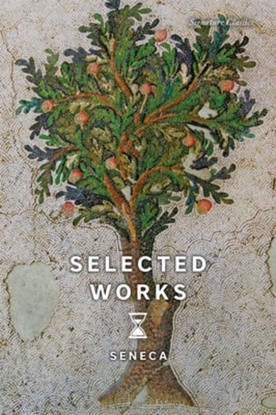
Selected Works
Emphasizing both theory and practical advice, Seneca’s writing is perfectly suited to contemporary readers. He articulated the difficulties of living ethically and influenced many writers, including Marcus Aurelius, Michel de Montaigne, Dante Alighieri, Tertullian, Baruch Spinoza, and Edmund Burke. Lees meer
Stupid Idiots
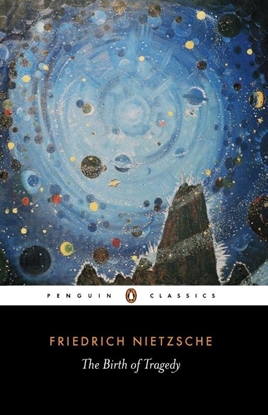
The Birth of Tragedy
The youthful faults of this work were exposed by the author himself in the brilliant Attempt at a Self-Criticism, which he added to the new edition of 1886. But the book, whatever its excesses, remains one of the most relevant statements on tragedy ever penned. It exploded the conception of Greek culture that was prevalent down through the Victorian era, and it analyzed themes developed in the twentieth century by classicists, existentialists, psychoanalysts, and others. Lees meer

The Green Imperative
Whether it’s horror at the plastic littering the world’s beaches or despair at the melting polar ice caps, the world is gradually waking up to the impending climate disaster. In The Green Imperative, Papanek argues for design that addresses these issues head-on. This means using materials that can be recycled and reused, no more pointless packaging, thinking about how products make us feel and engage all our senses, putting nature at the heart of design, working at a smaller scale, rejecting aesthetics for their own sake, and thinking before we buy.
First published at the end of the twentieth century, this book offered a plethora of honest advice, clear examples, and withering critiques, laying out the flaws of and opportunities for the design world at that time. A quarter of a century on, Papanek’s lucid prose has lost none of its verve, and the problems he highlights have only become more urgent, giving today’s reader both a fascinating historical perspective on the issues at hand and a blueprint for how they might be solved.
Lees meer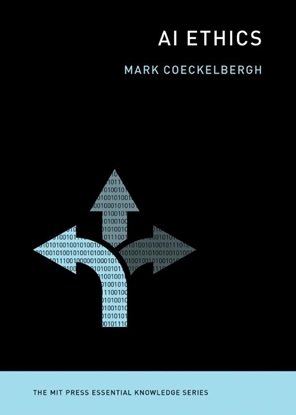
The MIT Press Essential Knowledge series AI Ethics
Artificial intelligence powers Google’s search engine, enables Facebook to target advertising, and allows Alexa and Siri to do their jobs. AI is also behind self-driving cars, predictive policing, and autonomous weapons that can kill without human intervention. These and other AI applications raise complex ethical issues that are the subject of ongoing debate. This volume in the MIT Press Essential Knowledge series offers an accessible synthesis of these issues. Written by a philosopher of technology, AI Ethics goes beyond the usual hype and nightmare scenarios to address concrete questions.
Mark Coeckelbergh describes influential AI narratives, ranging from Frankenstein’s monster to transhumanism and the technological singularity. He surveys relevant philosophical discussions: questions about the fundamental differences between humans and machines and debates over the moral status of AI. He explains the technology of AI, describing different approaches and focusing on machine learning and data science. He offers an overview of important ethical issues, including privacy concerns, responsibility and the delegation of decision making, transparency, and bias as it arises at all stages of data science processes. He also considers the future of work in an AI economy. Finally, he analyzes a range of policy proposals and discusses challenges for policymakers. He argues for ethical practices that embed values in design, translate democratic values into practices and include a vision of the good life and the good society. Lees meer
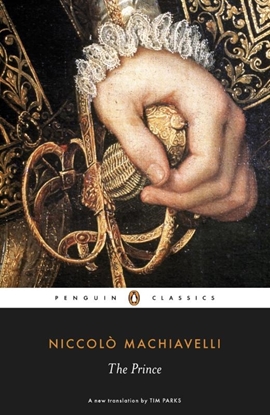
The Prince
'A gripping work, and a gripping translation' Nicholas Lezard, Guardian
Niccolò Machiavelli's brutally uncompromising manual of statecraft, The Prince is translated and edited with an introduction by Tim Parks in Penguin Classics
As a diplomat in turbulent fifteenth-century Florence, Niccolò Machiavelli knew how quickly political fortunes could rise and fall. The Prince, his tough-minded, pragmatic handbook on how power really works, made his name notorious and has remained controversial ever since. How can a leader be strong and decisive, yet still inspire loyalty in his followers? When is it necessary to break the rules? Is it better to be feared than loved? Examining regimes and their rulers the world over and throughout history, from Roman Emperors to renaissance Popes, from Hannibal to Cesare di Borgia, Machievalli answers all these questions in a work of realpolitik that still has shrewd political lessons for today.
Tim Parks's acclaimed contemporary translation renders Machiavelli's no-nonsense original as alarming and enlightening as when it was first written. His introduction discusses Machiavelli's life and reputation, and explores the historical background to the work.
'Tim Parks's swift and supple new translation brings out all its chilling modernity' Boyd Tonkin, Independent
Lees meer