
Theoretische geschiedenis

The JFK Conspiracy
THE INSTANT NYT BESTSELLER
'Fascinating' - The Guardian
A gripping account of the little-known plot that could have put an end to JFK's historic presidency - before it even began.
From the New York Times bestselling authors of The Nazi Conspiracy comes a true, little-known story about the first assassination attempt on John F. Kennedy, right before his inauguration.
Kennedy was infamously assassinated in 1963, ending his historic presidency. But what most people don't know is that JFK's story almost ended before it began - at the hands of a disgruntled sociopathic loner armed with dynamite.
On December 11, 1960, shortly after Kennedy's election and before his inauguration, retired postal worker, Richard Pavlick, waited in his parked Buick on a quiet street in Palm Beach, Florida. Pavlick knew when Kennedy would leave his house and where he was going. From there, Pavlick had a simple plan - one that almost changed the course of history.
Written in the page-turning style that is the hallmark of Brad Meltzer and Josh Mensch's bestselling series, this is a slice of history vividly brought to life. Meltzer and Mensch are at the top of their game with a brilliant exploration of what could've been for one of the most compelling leaders of the 20th century.
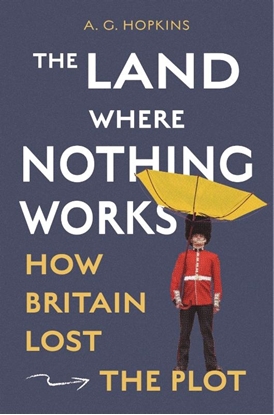
The Land Where Nothing Works
Tracing the origins of Britain’s current malaise to the abandonment of social democracy
What has happened to Britain? As drivers on its roads can attest, it is the pothole capital of Europe. Once-beautiful towns now feature peeling paint, weeds, and broken railings. Public services are no longer fit for purpose. A malaise seems to infect every aspect of British life: its economy, polity, social order, sense of well-being, domestic regional relationships, and place in the world. In The Land Where Nothing Works, the distinguished historian A. G. Hopkins offers an explanation, tracing Britain’s current problems to decisions made in the 1980s that abandoned its postwar experiment in social democracy and mimicked policies of deregulation and privatisation promoted by the United States.
In 1945, the new Labour government’s development programme aimed at creating a social democracy that would benefit all members of society. The counterrevolution launched by Margaret Thatcher’s government in 1979, which remains in force today, promoted individualism and deregulation. The transition from one programme to another was a response to the growth of finance and services centred on the City of London, and to decolonisation, which redirected trade to Europe. The expansion of credit led to the financial crisis of 2008 and the years of austerity that followed, and fuelled the populist movement that culminated in Brexit. Hopkins argues that, instead of following the free-market policies of its mentor, the United States, Britain should draw on its own history of social democracy and borrow from its neighbours in Europe, where communitarian principles continue to be upheld.

The Last Invasion of England
An electrifying narrative history that reframes Britain’s constitutional revolution as a full-scale Dutch invasion
In popular accounts of the Glorious Revolution of 1688, the autocratic Catholic King James II was ousted by his subjects and replaced by his Protestant daughter Mary Stuart, wife of James’s nephew, the Dutch William III of Orange. Devoted to her husband, Mary would not accept the crown alone, and so William and Mary were crowned together, securing a smooth dynastic succession. The Last Invasion of England recounts the forgotten campaign that carried William and his army to English shores and led directly to James’s fall, bringing a revolutionary age vividly to life—and rewriting the history of Britain, Europe and the transatlantic world more widely.
In this bold work of revisionist history, Arthur der Weduwen tells the momentous story of the Dutch Armada, describing the immense risks and near failures of the last seaborne invasion of England—which occurred exactly one hundred years after the defeat of the Spanish Armada. The sixteen thousand Dutch troops who accompanied William were not on hand for moral support. They came with sword, musket and cannon. Der Weduwen argues that the political revolution in Britain could not have been achieved without the willpower, might and resources of William and the Dutch nation, and explains why the Dutch Republic, a small state that celebrated peace and commerce above all else, would dare to undertake a reckless preemptive military strike on its more powerful neighbour.
Transforming our understanding of the Glorious Revolution and Britain’s ascendancy as a global powerhouse, The Last Invasion of England relies entirely on contemporary sources, many from leading protagonists who prepared and executed the invasion, evoking the historical realities of the women and men who lived during turbulent and uncertain times.
The Library of Lost Maps
The Masquerade

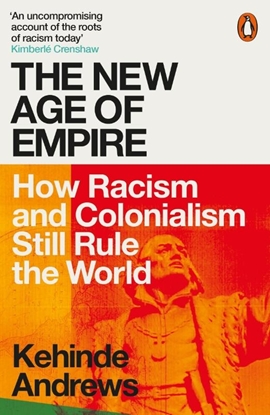
The New Age of Empire
"Kehinde Andrews is a crucial voice walking in a proud tradition of Black radical criticism and action" Akala
"An uncompromising account of the roots of racism today" Kimberlé Crenshaw
"This clear-eyed analysis insists upon the revolutionary acts of freedom we will need to break out of these systems of violence" Ibram X. Kendi
The New Age of Empire takes us back to the beginning of the European Empires, outlining the deliberate terror and suffering wrought during every stage of the expansion, and destroys the self-congratulatory myth that the West was founded on the three great revolutions of science, industry and politics. Instead, genocide, slavery and colonialism are the key foundation stones upon which the West was built, and we are still living under this system today: America is now at the helm, perpetuating global inequality through business, government, and institutions like the UN, the IMF, the World Bank and the WTO.
The West is rich because the Rest is poor. Capitalism is racism. The West congratulations itself on raising poverty by increments in the developing world while ignoring the fact that it created these conditions in the first place, and continues to perpetuate them. The Enlightenment, which underlies every part of our foundational philosophy today, was and is profoundly racist. This colonial logic was and is used to justify the ransacking of Black and brown bodies and their land. The fashionable solutions offered by the white Left in recent years fall far short of even beginning to tackle the West's place at the helm of a racist global order.
Offering no easy answers, The New Age of Empire is essential reading to understand our profoundly corrupt global system. A work of essential clarity, The New Age of Empire is a groundbreaking new blueprint for taking Black Radical thought into the twenty-first century and beyond.

The North Sea
The North Sea, a maritime highway and the edge of a nation of islanders with a proud sea-faring past. Running from Kent and the Rhine estuary to the Norwegian coast and the tip of the Shetland islands, it has been home to warring tribes, foreign invaders, lost civilisations and holidaymakers. Its history spans millennia, since a seismic shift sent land retreating and water rushing in. Today, the North Sea continues to rise, claiming land mass as the east coast crumbles and sinks.
In The North Sea, renowned historian Alistair Moffat spends a year travelling its shores to better understand our relationship to the sea. He takes us on an epic, sweeping history from the Kentish coast to flooded homes, crossing wild fenland and Brexit fault lines, visiting well-worn seaside towns and windswept island monasteries.
The story he tells is one of newcomers and the mark they left, of Roman invasions, the arrival of the Saxons and the Viking raids. But it is also a story of those they met, of Pictish citadels and Orcadian stone circles. It is a story of technological advancement, of submarine engineering and weather forecasting. It is a story of huge industry, from whaling expeditions and fishing trawlers to the boom of North Sea oil and offshore wind farms. This is the story of how the North Sea shaped us and will continue to do so; it is above all a story of insistent, inescapable change.

The Offbeat Sari
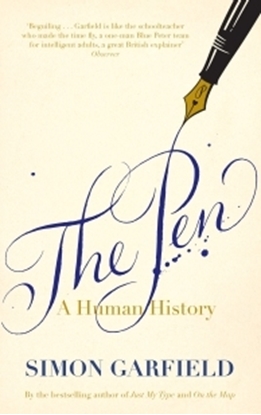
The Pen
'Glorious' EMMA THOMPSON
'Delightful' PHILIP PULLMAN
'Brilliant' JACQUELINE WILSON
From a reed cut on the banks of the Nile to the Sharpie, the pen has been with us for millennia. And all of humanity - from our faintest notions to our wildest inventions, our gossip and legends, our grandest proclamations and most intimate confessions - has flowed from a quill, ink chamber or ballpoint tip. The pen is the enduring link between a writer and anyone, anywhere, who can read their words. But the pen's own story is just as eventful as anything it has described.
In this expansive and engaging history, Simon Garfield traces the pen's remarkable journey across time and place. He examines the inks and instruments used by Shakespeare, Jane Austen and Charles Dickens, meets innovators and obsessives, travels to the workshops of pen makers and into wartime trenches, discovers why fountain pens make such good gadgets for spies and assassins, and learns about the bestselling pen that wouldn't stop leaking.
Written with Garfield's trademark wit and drawing on his own research and interviews, The Pen examines how this everyday object has been the indelible marker of our shared culture - and why it continues to shape the way we communicate in the digital age.
Lees meer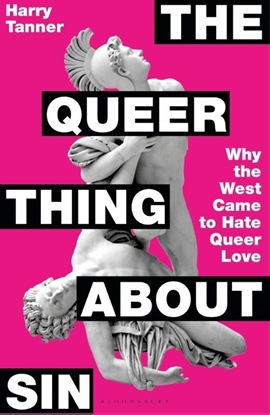
The Queer Thing About Sin
'BOLD AND BEAUTIFULLY WRITTEN' Tom Holland
'MY GOD, THIS BOOK IS NEEDED. HISTORY HAS NEVER SEEMED MORE ALIVE...' Russell T Davies
A gripping new journey through ancient history, uncovering the origins of homophobia and the untold stories of those who dared to love.
In the early days of ancient Greece, queer love was celebrated. The most famous warrior in antiquity loved another man, the poet whose lyrics were memorised by philosophers and kings sang of her desire for women. Men could swear oaths of undying love and live out the rest of their lives together in peace. What fragments survive of this ancient world all tell us one thing: it was not a sin to be queer.
In this extraordinary book, Harry Tanner sets out on a journey to discover the origins of homophobia in the West. He follows the traces of this sinister idea as it swept across the ancient Mediterranean. Wherever he discovers the roots of homophobia taking hold, Tanner finds a confluence of crises mirrored across the centuries. Inequality, fear and an obsession with self-control – this is how societies turn on their queer citizens, time and time again, since the dawn of history.
This is a powerful story that draws on the rich world of the ancients to reveal how homophobia infected Western religion and ideology - the consequences of which we are still living with today - and to that end how we can move forward and resist homophobia in the future.
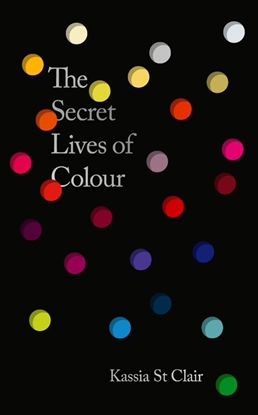
The Secret Lives of Colour
THE MODERN CLASSIC AND SUNDAY TIMES TOP 10 BESTSELLER.
NOW BOLDER, BRIGHTER AND EXPANDED INTO GLORIOUS TECHNICOLOUR WITH 25 NEW COLOURS.
'Dazzling and vibrant' Mail on Sunday
'Extraordinarily full and interesting' TLS
'Gorgeous' Guardian
'Charming' FT
'Beautiful' Daily Mail
'Irresistible' Country Living
The history of colour tells the vivid story of civilisation. From scarlet women to imperial purple, leaf green to the white paint that protected against the atom bomb, Picasso's blue period to the pink Barbie claimed for feminism, The Secret Lives of Colour offers a bright thread throughout human history.
Kassia St Clair's lifelong fascination with colours and where they come from (whether Van Gogh's chrome yellow sunflowers or Dorothy's ruby slippers) takes us on an unforgettable journey through our past, present and future.
'An excellent, innovative and idiosyncratic cultural history that will colour your thinking' Spectator
'If you want to fall back in love with colour, read The Secret Lives of Colour' Sunday Telegraph
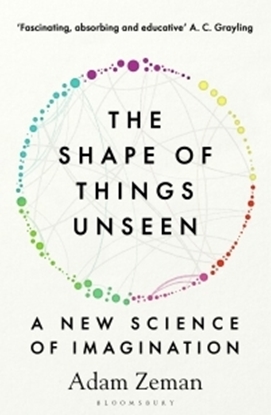
The Shape of Things Unseen
‘Fascinating, absorbing and educative’ A. C. Grayling
‘Highly original and beautifully written’ Dominic Lawson
A compelling insight into how our imagination works, based on the latest scientific research.
People often think of imagination as something used only in creative endeavours. In fact, we use imagination constantly as we reminisce, anticipate, plan, daydream, read, create imagined worlds. The truth is we live in the here and now much less than we tend to think. Imagination isn’t the exception in our daily lives; it’s our default setting. Yet only now are we beginning to understand exactly how it works.
From hallucination to sleepwalking, from REM sleep to delusions, neurologist Adam Zeman brilliantly guides us through the latest scientific studies in the world of the imagination. He draws on research in neuroscience, the study of human origins and child development to show how the human brain is above all else a creative, imaginative organ – and that we have evolved to share what we imagine.
Our brains behave in strikingly similar ways when we observe, remember, imagine or act. Imagine looking at a cube and your eye will trace the contours of the cube as if you were actually seeing it. Yet it turns out that people differ hugely in their imaginative experience. Some people lack sensory imagery altogether – they would be unable to picture their family if asked to – but still lead fulfilling, even highly creative, lives.
From how we visualise to how we understand the minds of others, from the benefits of play to mental disorders, The Shape of Things Unseen dazzles and delights. It is an essential guide to the latest discoveries about the workings of the human mind.

The Shortest History of the United States
The Shortest History books deliver thousands of years of history in one riveting, fast-paced read. Lees meer
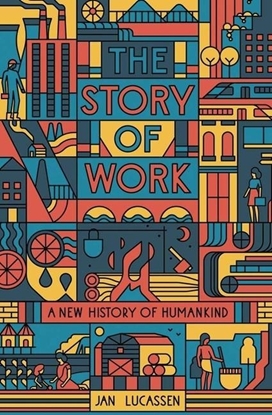
The Story of Work
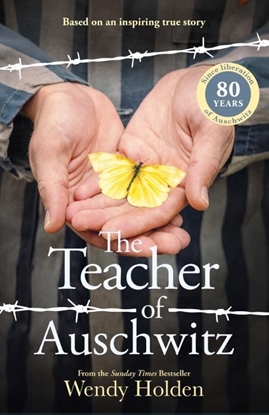
The Teacher of Auschwitz
'A profoundly moving tribute to courage, dignity, and the enduring power of humanity in the face of evil.
Elegantly written and deeply affecting, this is storytelling that honours the truth and ensures it is never forgotten.' Rob Rinder, Sunday Times bestselling author of The Trial
'Haunting and beautiful. Excruciatingly vivid, The Teacher of Auschwitz is rigorously researched and true to the history, powerfully conveying what a smart, loving and energetic man Fredy was.' Dr Elizabeth Baer, United States Holocaust Memorial Museum
'The closest possible narrative a person who did not experience those times herself, could have written... which will do justice to Fredy and all those victims.' Dita Kraus, the real-life inspiration for The Librarian of Auschwitz and one of the last known survivors of the children's block
Fredy built a wall against suffering in their hearts...
At the dark heart of the Holocaust, there was a wooden hut whose walls were painted with cartoons; a place where children sang, staged plays and wrote poetry. Safely inside, but still in the shadow of the chimneys, they were given better food, kept free of vermin, and were even taught meditation to imagine full stomachs and a day without fear. The man who became their guiding light was a young Jewish prisoner named Fredy Hirsch.
But being a teacher in such a brutal concentration camp was no mean feat. Whether it was begging the SS for better provisions, or hiding his homosexuality from his persecutors, he risked his life every day for one thing: to protect the children from the mortal danger they all faced.
But time is running out for Fredy and the hundreds of children in his care. Can he find a way to teach them the one lesson they really need to know: how to survive?
From the bestselling author of Born Survivors, comes an assiduously researched and powerful new novel. Drawn from archives and survivor testimonies, historian and biographer Wendy Holden tells the inspirational and uplifting true story of Fredy Hirsch: The Teacher of Auschwitz.
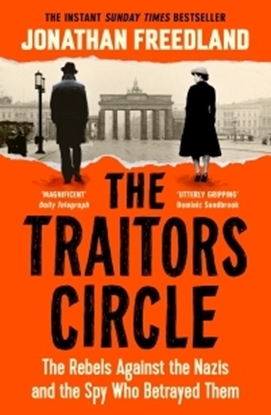
The Traitors Circle
When the whole world is lying, someone must tell the truth.
Berlin, 1943. A group of high-society anti-Nazi dissenters meet for a tea party one late summer afternoon. They do not know that, sitting around the table, is someone poised to betray them all to the Gestapo - revealing their secret to the Nazis' most ruthless detective.
They form a circle of unlikely rebels, drawn from the German elite: two countesses, a diplomat, an intelligence officer, an ambassador's widow and a pioneering headmistress. Meeting in the shadows, rescuing Jews or plotting for a future Germany freed from the Führer's rule, what unites them is a shared loathing of the Nazis, a refusal to bow to Hitler and the courage to perform perilous acts of resistance. Or so they believe.
How did a group of brave, principled rebels, who had successfully defied Adolf Hitler for more than a decade, come to fall into such a lethal trap? And who betrayed them?
Undone from within and pursued to near-destruction by one of the Reich's cruellest men, they showed a heroism that raises a question with new urgency for our time: what kind of person does it take to risk everything and stand up to tyranny?
PRAISE FOR THE ESCAPE ARTIST:
'Thrilling' Daily Mail
'Gripping' Guardian
'Heartwrenching' Yuval Noah Harari
'Magnificent' Philip Pullman
'Excellent' Sunday Times
'Inspiring' Daily Mail
'An immediate classic' Antony Beevor
'Awe inspiring' Simon Sebag Montefiore
'Shattering' Simon Schama
'Utterly compelling' Philippe Sands
'A must-read' Emily Maitlis
'Indispensable' Howard Jacobson
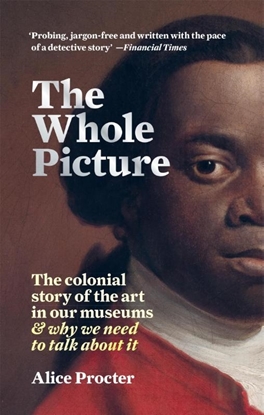
The Whole Picture
'Probing, jargon-free and written with the pace of a detective story... [Procter] dissects western museum culture with such forensic fury that it might be difficult for the reader ever to view those institutions in the same way again.' Financial Times
'A smart, accessible and brilliantly structured work that encourages readers to go beyond the grand architecture of cultural institutions and see the problematic colonial histories behind them.' Sumaya Kassim
***
Should museums be made to give back their marbles? Is it even possible to 'decolonize' our galleries? Must Rhodes fall?
How to deal with the colonial history of art in museums and monuments in the public realm is a thorny issue that we are only just beginning to address. Alice Procter, creator of the Uncomfortable Art Tours, provides a manual for deconstructing everything you thought you knew about art history and tells the stories that have been left out of the canon.
The book is divided into four chronological sections, named after four different kinds of art space: The Palace, The Classroom, The Memorial and The Playground. Each section tackles the fascinating, enlightening and often shocking stories of a selection of art pieces, including the propaganda painting the East India Company used to justify its rule in India; the tattooed Maori skulls collected as 'art objects' by Europeans; and works by contemporary artists who are taking on colonial history in their work and activism today.
The Whole Picture is a much-needed provocation to look more critically at the accepted narratives about art, and rethink and disrupt the way we interact with the museums and galleries that display it.
Lees meer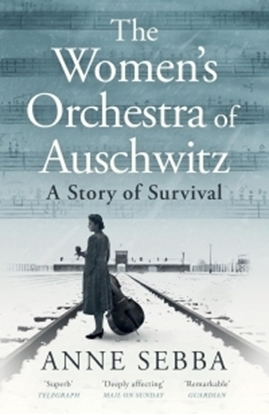
The Women’s Orchestra of Auschwitz
'Superb and timely' KATE MOSSE
'Impressive, important, deeply moving' SARAH WATERS
'Brilliant' ANTHONY HOROWITZ
What role could music play in a death camp? What was the effect on those women who owed their survival to their participation in a Nazi propaganda project? And how did it feel to be forced to provide solace to the perpetrators of a genocide that claimed the lives of their family and friends?
In 1943, German SS officers in charge of Auschwitz-Birkenau ordered that an orchestra should be formed among the female prisoners. Almost fifty women and girls from eleven nations were assembled to play marching music to other inmates - forced labourers who left each morning and returned, exhausted and often broken, at the end of the day - and give weekly concerts for Nazi officers. Individual members were sometimes summoned to give solo performances of an officer's favourite piece of music. It was the only entirely female orchestra in any of the Nazi prison camps and, for almost all of the musicians chosen to take part, being in the orchestra was to save their lives. In The Women's Orchestra of Auschwitz, award-winning historian Anne Sebba tells their astonishing story with sensitivity and care.
Lees meer