Beeldende kunst

Sumi-e Painting
Mindful Artist: Sumi-e Painting teaches you to create your own beautiful, Japanese-inspired ink wash paintings while cultivating a mindful approach to making art.
Centuries ago, Buddhist monks used black ink and brushes to practice mindfulness and create gorgeously harmonious works of art called "sumi-e paintings." The popularity of sumi-e, or ink wash painting, continues to this day. Mindfulness remains an essential element of sumi-e painting, allowing artists to focus on their surroundings, live in the moment, and feel present--thereby reducing their stress.
Walter Foster's new Mindful Artist series encourages you to enjoy working in your favorite media to create art from a reflective point of view--an inspiring, relaxing experience that emphasizes the creative process, rather than the end result. These books are designed to help you move past creative obstacles, like a perfectionist attitude toward making art or self-defeating concerns about your personal talent and abilities. These guides will not only help you stay mindful throughout the process, but also to find personal meaning in the artwork you create.
Mindful Artist: Sumi-e Painting opens with an introduction explaining the links between mindfulness and sumi-e and how they enhance one another. Sections on "The Four Treasures," as the tools needed for sumi-e painting are called; brushstrokes and painting techniques; and "The Four Gentlemen," or the most common subjects in sumi-e painting, ensure that you have a solid background before getting started on the simple, approachable step-by-step painting projects. Throughout the book you can find stunning full-page artwork, tips for remaining mindful while you work, creative prompts and exercises, inspirational ideas, and suggestions on how to add color to black ink pieces.
Learn to practice mindfulness while you master the popular art of ink wash painting with this inspiring and supportive guide.

Super Realism!
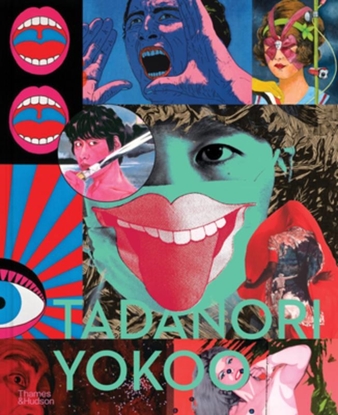
Tadanori Yokoo
Mixing psychedelia, pop art, sexual iconography, and references to Japanese historical tradition such as ukiyo-e prints, Tadanori Yokoo’s work has become synonymous with postwar Japan. Rising in popularity in Tokyo during the 1960s, his subversive designs were favored among the city’s radical youth groups. Covering the full breadth of his work, this expansive tome shines a necessary light on Yokoo’s paintings, offering fresh insight into the pioneering artist’s creative process and practice.
Born in 1936 in Nishiwaki, Japan, Yokoo began his career designing posters and wrapping paper for the Chamber of Commerce in Nishiwaki. Moving to Tokyo at age twenty-four, he worked as a graphic designer for theaters throughout the ’60s.
His commercial posters marked a stark contrast from the often flat style employed at the time. Drawing on influences from Western consumer culture, mysticism, psychedelia, and traditional Japanese techniques, Yokoo created a new visual language that opposed the popular modernist style.
While typically labeled as a graphic artist, this expansive publication offers a fresh focus on Yokoo’s paintings, positioning his work against pivotal social and political events to offer both a history of a nation and an artist. Featuring an essay by Mark Holborn and a translation of the seminal text “Popcorn Minimalism” by iconoclastic Japanese writer Yukio Mishima, quotes from Yokoo punctuate the book throughout.
Lees meer
Tastbare nabijheid
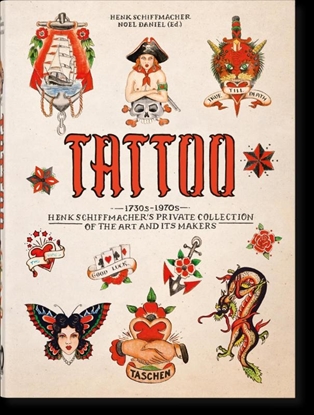
TATTOO
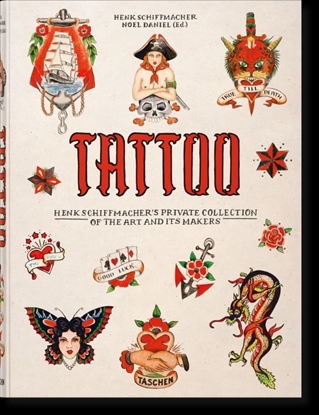
TATTOO
One part history book, one part art book, and one part fascinating memoir, this book is an overview of more than two centuries of tattoo history intermixed with an intimate look at the lives of tattoo artists, and the personal struggles and triumphs, occupational hazards, and artistic courage that have defined so much of this history.
For the last forty years, Henk Schiffmacher has poured his heart and soul into his collection, amassing tattoo drawings, designs, photographs, and artifacts from around the world. The book features many never-before-seen highlights from this collection and includes lithographs, etchings, tattooing instruments, paintings, photographs, posters, shop signs, original drawings, and tattoo designs known in the business as flash, among them extremely rare vintage flash sheets from major players in early Western tattooing.
The vastness and variety of tattooing around the world is chronicled in the book’s 700+ images, including the indigenous tattooing of the Māori and South Pacific islanders, the ancient traditions of Asia, and the origins of old-school Western tattooing in Europe and the United States. The book also features a dozen original illustrations by Schiffmacher in his inimitable style, as well as a personal introduction describing Schiffmacher’s own journey as both an artist and a collector that has shaped his view of the art’s journey from the underground to the mainstream.
Schiffmacher brings a fascinating perspective to tattoo history through his personal reflections and wild tales of adventure. In this book, we learn not only about the history of tattooing, but also about the adventures behind the making of one of the largest tattoo collections in the world, by a self-taught tattoo artist in love with the art and its innovators.
Lees meer


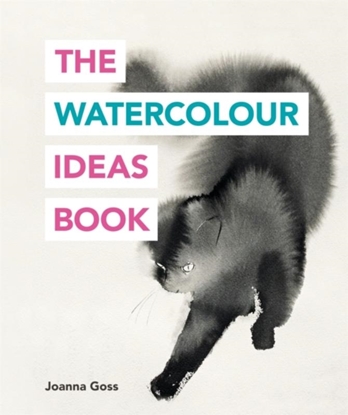
The Art Ideas Books The Watercolour Ideas Book
Many artists first learn to paint in watercolour. But this flexible, dynamic medium has an immediacy that is perfect for experimentation.
Discover textures, applications, techniques, combinations of materials, and new ways of tackling the medium you love.
Rub it, dab it, scratch it, scrunch it. Cut it, glue it, sew it and seal it. And above all, learn from what other people do!
This little book is full of big ideas from contemporary artists to inspire you to think differently. With a new idea on every spread of the book, you will discover fresh ways of working with watercolour to create work that is original and exciting.
Lees meer


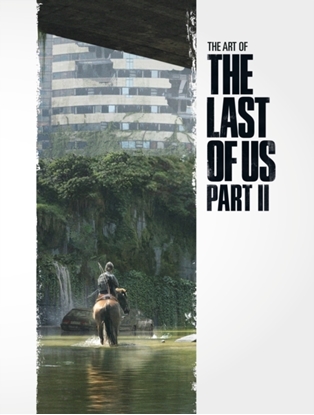
The Art of The Last of Us Part II
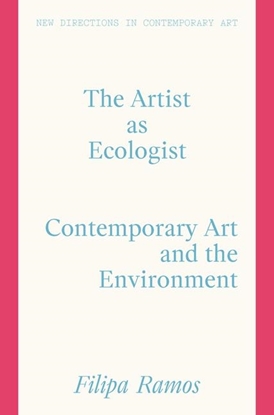
The Artist as Ecologist
How are contemporary artists responding to the climate crisis? Filipa Ramos takes an original approach to the subject by addressing two parallel strands. She looks firstly at pioneering approaches to ecology by key contemporary artists from different generations and cultural backgrounds working in different art media; and she considers the balance between ecology as theme and ecology as practice, underscoring the imperative for both artists and art institutions to adopt responsible environmental positions in their practice.
This topical and important book discusses the work of artists who have returned to the land; reviews how questions of shared rights and environmental justice are represented in contemporary artistic practice; highlights the renewed importance of performance and time-based media in ecologically themed art; and looks at artists’ and art institutions’ complex relationship to environmental action.
Lees meer