
Beeldende kunst

Specials Sarah Maple Labour Of Love


Spring Cannot be Cancelled
On turning eighty, David Hockney sought out rustic tranquillity for the first time: a place to watch the sunset and the changing seasons, and to keep the noise of the world at bay. When Covid-19 and lockdown followed, life at La Grande Cour—the centuries-old Normandy farmhouse where he had set up a studio a year earlier—continued much as before, as he worked on paintings capturing the arrival of spring. In fact, he relished the enforced isolation as an opportunity for even greater devotion to his art.
Spring Cannot Be Cancelled is an uplifting meditation on art’s capacity to divert and inspire. It is based on conversations and correspondence between Hockney and art critic Martin Gayford, his long-time friend and collaborator. Their exchanges are illustrated with Hockney’s pandemic-era drawings and paintings of Normandy, alongside works by Van Gogh, Monet, Bruegel, and others.
We see how Hockney was propelled by his infectious enthusiasm and sense of wonder. A lifelong contrarian, he remained unconcerned with critical opinion or historical judgment. During lockdown, he immersed himself in northern France and the themes that had long fascinated him: light, color, space, perception, water, and trees.
Lees meer
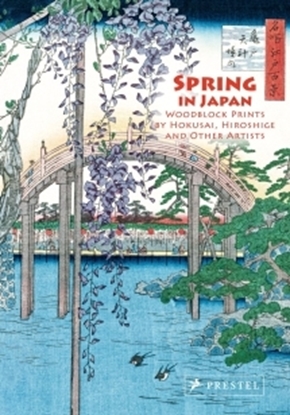
Spring in Japan
The main volume in this beautiful gift book showcases a selection of prints that capture Hanami (the appreciation of the fleeting wonder of spring): blossoming cherry trees, riverside picnics, moonlit gardens, and the quiet rituals of seasonal change.
The works unfold in a striking accordion format, allowing readers to experience them as immersive, panoramic compositions. Alongside this visual journey, a separate booklet by Japan scholar Jocelyn Bouquillard provides insightful background on each image.
Her commentary illuminates the symbolism, historical context, and enduring cultural meanings of spring in Japanese life and art.
- A tribute to the elegance and emotional resonance of Japanese printmaking.
- Presented as a luxurious slipcased set: a booklet and striking accordion fold.
- Famous works by Hiroshige, Hokusai, Yoshitoshi, Kyōsai and Kunisada are featured.
- Pairs timeless art with expert critique in a format designed for reflection and appreciation.
- Perfect for lovers of Japanese aesthetics or anyone drawn to the passing beauty of nature.
This gift book offers a charming glimpse into a world where art, tradition, and the rhythms of the natural world are exquisitely entwined. Lees meer


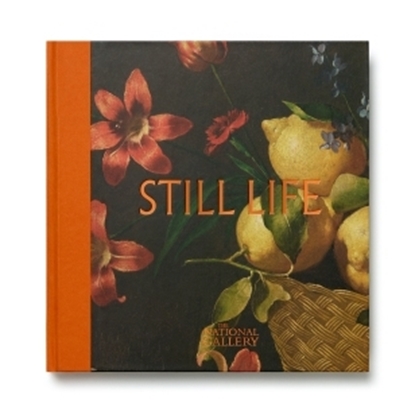
Still Life

Stillevens door Zeeuwse meesters uit de Gouden Eeuw

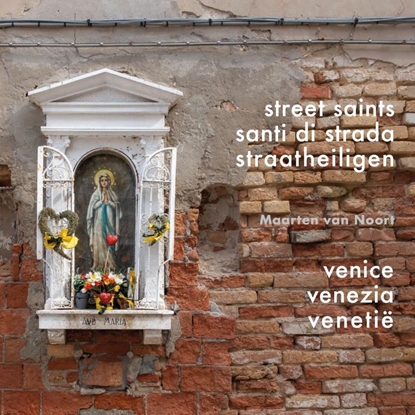
Straatheiligen van Venetië. Street Saints of Venice. Santi di Strada di Venezia

Street Art
Street art is a phenomenon and subculture movement that reaches from the darkest urban backstreets to the most glamorous international art fairs. Despite having earned a place in the canon of twentieth-century art history, its qualifications are often disputed by both the art establishment and practitioners themselves, all concerned with notions of authenticity.
This book examines how street art evolved from its origins in the 1970s New York graffiti scene to embrace many new materials, styles, and techniques. The once marginal art form has graduated into art galleries and the art market, while also heavily influencing design, fashion, advertising, and visual culture. Simon Armstrong walks readers through its controversial history, taking in the movement’s significant artists, artworks, and methods, and showcasing the works that have come to define it. He also discusses its close relationship to pop art and digital art, and explores possible futures for street art.
Packed with detail and written in an engaging, accessible style, this latest installment in the Art Essentials series is a must-read for lovers of street art and anyone interested in the way art movements gradually join the mainstream.
Lees meer
Street art's rising stars


Sumi-e
Learn the engaging art of Japanese sumi painting, where simple sweeps of the brush capture the essence of nature.
The Japanese art tradition of Sumi-e uses brushes and ink washes to combine calligraphic lines with carefully thought out blank spaces. Traditionally focusing on flowers and plants, this mindful art form has roots in Zen Buddhism, striving to capture the essence and natural vitality of a subject, rather than creating a realistic representation.
In this beautifully illustrated step-by-step guide, master calligraphic artist Akemi Lucas describes the equipment, brush positioning, ink-mixing techniques and mindset needed to excel at this delightful art form. Ideal both for beginners and accomplished Sumi-e artists, the projects start with orchid, bamboo, chrysanthemum, and plum blossom – known as ‘The Four Gentlemen’ – and increase in complexity through fruits and flowers to water, insects, and birds. Many of the later projects also include important advice on background washes and other advanced techniques that will add sophistication to your work.
Prepare your ink, clear your mind, and create natural wonderlands using simple sweeps of the brush.
