Exacte wetenschappen/natuurwetenschappen algemeen


Surrounded by Surrounded by Setbacks
How to handle everything (and everyone) around you when all hell breaks loose, from the international bestselling author of Surrounded by Idiots.
Not everything goes the way we want it to - the world or people around us sometimes just spin out of control. Just consider the Covid pandemic for starters. Or how about that mad neighbour you have living next-door to you? Or when work seems to be going down the toilet when the competition keep outsmarting you? So how do you handle everything life throws your way when you'd really prefer to tell everyone to get stuffed?
Thomas Erikson will help you turn adversity into success with the help of the behavioural model made famous in Surrounded by Idiots. Starting by reminding us that life is as it is, Erikson helps you see that it is in fact useless to try to control everything happening around you. Instead of protesting when life throws you curveballs, focus instead on how to handle them. Just as you keep the weeds away from the garden to provide space and amazing flowers, you need to find an approach to adversity that works for you and will give you the chance to turn everything into success. Surrounded by Setbacks will help you pinpoint the approach that works for you and will entertain and empower you in equal measure.
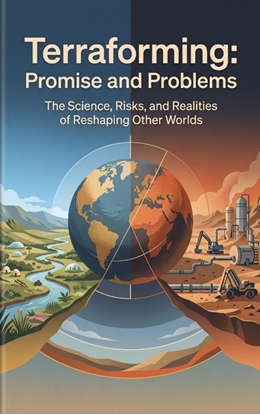
Terraforming: Promise and Problems
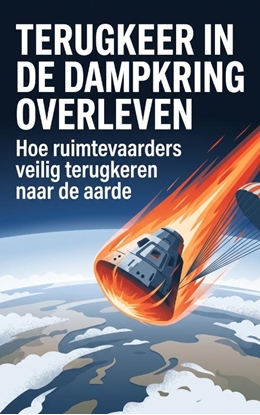
Terugkeer in de dampkring overleven


The Art of Physics
'Exceptionally interesting' Alain de Botton
'A book that will transform how you understand human behaviour' Thomas Erikson
'Insightful and entertaining' Cal Newport
'Fascinating ... You'll never again view your own world in quite the same way' Ian Stewart
Can physics change your life? It already has.
In The Art of Physics, Zahaan Bharmal explains eight ideas from physics that have transformed his view of everyday life and will do the same for you.
Far from being abstract, he argues, physics can help us answer very human questions, questions like: Why are some relationships unstable, while others last a lifetime? Why does inequality persist? And why do we all make so many irrational decisions?
Drawing on quantum mechanics, thermodynamics, chaos and complexity theory, materials science and more, The Art of Physics reveals the hidden, surprising, and sometimes beautiful ways in which physics can help us to make sense of an unpredictable world. Ultimately, it shows how by embracing the paradoxes and uncertainty at the core of physics, we can unlock a deeper understanding of ourselves and our universe.
A deeply personal and thoroughly entertaining tour of life, the universe, and everything.
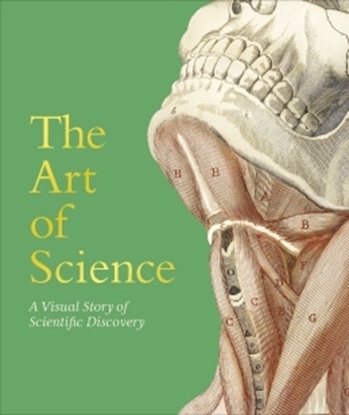
The Art of Science
Follow the story of scientific discovery through the images that have made it come to life.
Making images by hand has always been part of science. Throughout history, scientists and artists have created images to capture what they see and communicate their ideas. That tradition is alive and well today.
In this beautiful book, you will find:
- More than 400 drawings, paintings, and other original artworks that span the millennia and human cultures
- Insightful text that sets the images in context, profiles the men and women who made them, and explains how they changed science
- Contemporary artworks and modern scientific images – including photographs, X-rays, and space telescope images – that explain the science and show features that were hidden from the people who made the original images
The Art of Science draws on a wealth of images from all areas of natural history and science, from plants to the human body and Earth science to astronomy and physics. They include images from landmark books such as Leonardo da Vinci’s notebooks, Alexander von Humboldt’s Kosmos, John James Audubon’s Birds of America, and Charles Darwin’s Zoology of the Voyage of HMS Beagle.
Incredible images record historic leaps forward in understanding – such as the first time cells and their nuclei were seen through a microscope or the Moon’s craters were seen through a telescope. Modern artworks and photographic images explain our current understanding of the ideas encapsulated in the artworks, showcasing where scientific understanding has moved on but also, incredibly, where the people who made the original images were exactly right.
The book opens with an introduction that traces the history of collaboration between artists and scientists and shows how visual communication has moved forward in step with the invention of instruments such as the microscope. It also reveals the transformative effect of the technology for printing and reproduction – from woodblock to the printing press, engraving, and lithography.
A visual history of scientific thought, The Art of Science proves that works of science can also be works of artistry and beauty.
DK would like to thank all the scientists, curators, and historians of science and art who helped to put this book together: Dr Geoffrey Belknap, Tony Allan, Dr Katy Barrett, Dr Richard Bellis, Dr Laura Gray Blair, Carrie Gibson, Dr Thea Goldring, Joel Levy, Philip Parker, Giles Sparrow, Dr Eleanor Stephenson, and Marcus Weeks.
Lees meer

The Black Swan
The phenomenal international bestseller that shows us how to stop trying to predict everything - and take advantage of uncertainty
What have the invention of the wheel, Pompeii, the Wall Street Crash, Harry Potter and the internet got in common? Why are all forecasters con-artists? Why should you never run for a train or read a newspaper?
This book is all about Black Swans: the random events that underlie our lives, from bestsellers to world disasters. Their impact is huge; they're impossible to predict; yet after they happen we always try to rationalize them.
'Taleb is a bouncy and even exhilarating guide ... I came to relish what he said, and even develop a sneaking affection for him as a person' Will Self, Independent on Sunday
'He leaps like some superhero of the mind' Boyd Tonkin, Independent
Lees meer
The Blank Slate
'A passionate defence of the enduring power of human nature ... both life-affirming and deeply satisfying' Daily Telegraph
Recently many people have assumed that we are blank slates shaped by our environment. But this denies the heart of our being: human nature. Violence is not just a product of society; male and female minds are different; the genes we give our children shape them more than our parenting practices. To acknowledge our innate abilities, Pinker shows, is not to condone inequality, but to understand the very foundations of humanity.
'Brilliant ... enjoyable, informative, clear, humane' New Scientist
'If you think the nature-nurture debate has been resolved, you are wrong ... this book is required reading' Literary Review
'An original and vital contribution to science and also a rattling good read' Matt Ridley, Sunday Telegraph
'Startling ... This is a breath of air for a topic that has been politicized for too long' Economist
The Book of Why
The hugely influential book on how the understanding of causality revolutionized science and the world, by the pioneer of artificial intelligence
'Wonderful ... illuminating and fun to read' Daniel Kahneman, Nobel Prize-winner and author of Thinking, Fast and Slow
'Correlation does not imply causation.' For decades, this mantra was invoked by scientists in order to avoid taking positions as to whether one thing caused another, such as smoking and cancer, or carbon dioxide and global warming. But today, that taboo is dead. The causal revolution, sparked by world-renowned computer scientist Judea Pearl and his colleagues, has cut through a century of confusion and placed cause and effect on a firm scientific basis. Now, Pearl and science journalist Dana Mackenzie explain causal thinking to general readers for the first time, showing how it allows us to explore the world that is and the worlds that could have been. It is the essence of human and artificial intelligence. And just as Pearl's discoveries have enabled machines to think better, The Book of Why explains how we too can think better.
'Pearl's accomplishments over the last 30 years have provided the theoretical basis for progress in artificial intelligence and have redefined the term "thinking machine"' Vint Cerf
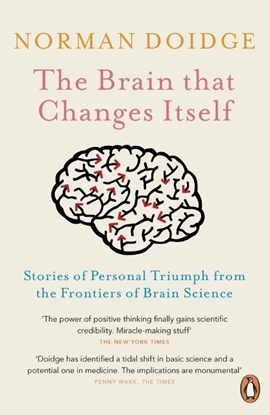
The Brain That Changes Itself
OVER ONE MILLION COPIES SOLD
'A remarkable and hopeful portrait of the endless adaptability of the human brain' Oliver Sacks
'Utterly wonderful . . . without question one of the most important books about the brain you will ever read; yet it is beautifully written, immensely approachable, and full of humanity' Iain McGilchrist MA, author of The Master and His Emissary
Meet the ninety-year-old doctor who is still practicing medicine, the stroke victim who learned to move and talk again and the woman with half a brain that rewired itself to work as a whole. All these people had their lives transformed by the remarkable discovery that our brains can repair themselves through the power of positive thinking.
Here bestselling author, psychiatrist and psychoanalyst Norman Doidge reveals the secrets of the cutting-edge science of 'neuroplasticity'. He introduces incredible case histories - blind people helped to see, IQs raised and memories sharpened - and tells the stories of the maverick scientists who are overturning centuries of assumptions about the brain.
This inspiring book will leave you with a sense of wonder at the capabilities of the mind, and the self-healing power that lies within all of us.
Lees meer
The Brilliant Abyss
The deep sea is the last, vast wilderness on the planet. This is the story of how we imagine, explore and exploit it.
For centuries, myth-makers and storytellers have concocted imaginary monsters of the deep, and now scientists are looking there to find bizarre, unknown species, chemicals to make new medicines, and to gain a greater understanding of how this world of ours works. With an average depth of 12,000 feet and chasms that plunge much deeper, it forms a frontier for new discoveries.
The Brilliant Abyss tells the story of our relationship with the deep sea – how we imagine, explore and exploit it. It captures the golden age of discovery we are currently in and looks back at the history of how we got here, while also looking forward to the unfolding new environmental disasters that are taking place miles beneath the waves, far beyond the public gaze.
Throughout history, there have been two distinct groups of deep-sea explorers. Both have sought knowledge but with different and often conflicting ambitions in mind. Some people want to quench their curiosity; many more have been lured by the possibilities of commerce and profit. The tension between these two opposing sides is the theme that runs throughout the book, while readers are taken on a chronological journey through humanity’s developing relationship with the deep sea. The Brilliant Abyss ends by looking forwards to humanity’s advancing impacts on the deep, including mining and pollution and what we can do about them.