Exacte wetenschappen/natuurwetenschappen algemeen


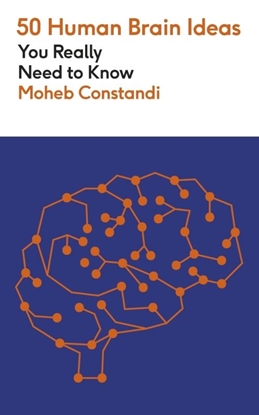
50 Ideas You Really Need to Know series 50 Human Brain Ideas You Really Need to Know
Master the ideas central to understanding the human brain.
In a series of 50 accessible essays, Mo Costandi introduces and explains all we know about the brain and how it works, outlining both long-standing theories and cutting-edge ideas.
From the function of neurons and synaptic transmission, to the nervous system and personality, 50 Human Brain Ideas You Really Need to Know is a complete introduction to the most powerful and mysterious organ in the body.
Lees meer

A Brief History of Black Holes
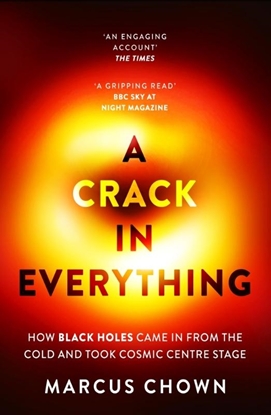
A Crack in Everything
What is space? What is time? Where did the universe come from? The answers to mankind's most enduring questions may lie in science's greatest enigma: black holes.
A black hole is a region of space where gravity is so strong that nothing, not even light, can escape. This can occur when a star approaches the end of its life. Unable to generate enough heat to maintain its outer layers, it shrinks catastrophically down to an infinitely dense point.
When this phenomenon was first proposed in 1916, it defied scientific understanding so much that Albert Einstein dismissed it as too ridiculous to be true. But scientists have since proven otherwise. In 1971, Paul Murdin and Louise Webster discovered the first black hole: Cygnus X-1. Later, in the 1990s, astronomers using NASA's Hubble Space Telescope found that not only do black holes exist, supermassive black holes lie at the heart of almost every galaxy, including our own. It would take another three decades to capture this phenomenon. On 10 April 2019, a team of astronomers made history by producing the first image of a black hole.
A Crack in Everything is the story of how black holes came in from the cold and took cosmic centre stage. Gripping and vivid, it tells one of the great untold stories in modern science.

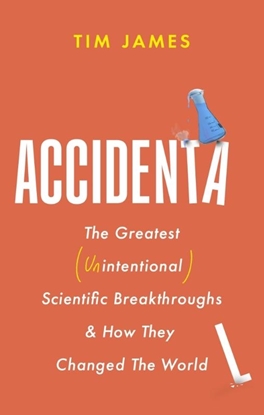
Accidental
Nominated for the best popular science book of 2024 by Smart Book.
'Who said science was dry? Certainly not Tim James'New York Post
'James writes with infectious enthusiasm and optimism'Kirkus Reviews
'A science teacher by profession, Mr. James knows how to get his audience's attention' Wall Street Journal
'Humorous, yet deep' Professor Charles Antoine
A rip-roaring adventure through science gone wrong, and accidentally changing humanity (mostly) for the better.
We may imagine that science is a process of breakthroughs and light bulb moments. But in reality, science goes wrong 99% of the time.
Almost every idea a scientist comes up with is quickly disproved by a failed experiment or rival research. Science moves at a rate of inches per decade and we often like it that way. But occasionally, just occasionally, a complete fluke happens and changes everything as we know it.
From an untimely sneeze in a petri dish leading to the groundbreaking creation of antibiotics, to the incredible discovery of microwaves via melted chocolate, Accidental is a rip-roaring adventure through science gone wrong, and accidentally changing humanity for the better.

Achter het stopcontact

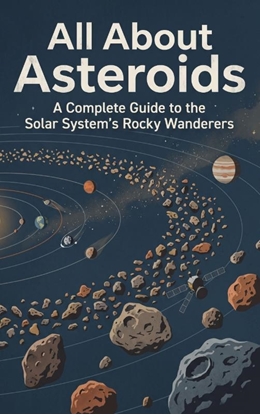
All About Asteroids