Exacte wetenschappen/natuurwetenschappen algemeen

The Gendered Brain
Barbie or Lego? Reading maps or reading emotions? Do you have a female brain or a male brain? Or is that the wrong question?
On a daily basis we face deeply ingrained beliefs that our sex determines our skills and preferences, from toys and colours to career choice and salaries. But what does this mean for our thoughts, decisions and behaviour?
Using the latest cutting-edge neuroscience, Gina Rippon unpacks the stereotypes that bombard us from our earliest moments and shows how these messages mould our ideas of ourselves and even shape our brains. Rigorous, timely and liberating, The Gendered Brain has huge repercussions for women and men, for parents and children, and for how we identify ourselves.
‘Highly accessible… Revolutionary to a glorious degree’ Observer
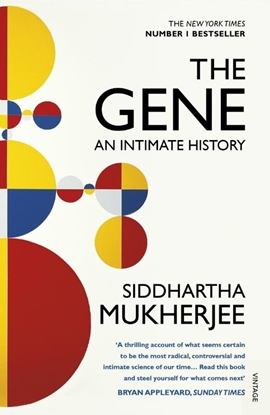
The Gene
An epic, dazzling history of the idea that defines us.
From Gregor Mendel’s pea plants to the discovery of DNA and the CRISPR revolution in gene-editing, The Gene tells the story of how we came to understand heredity – to decipher the master-code that makes and defines humans – land how that knowledge now allows us to rewrite life itself. Siddhartha Mukherjee combines scientific insight with personal history, weaving in his own family’s struggles with mental illness to explore the moral frontiers of genetics.
This is science writing of the highest order, humane, lyrical, and profound, showing how the study of genes illuminates both our biological destiny and our deepest hopes.
‘Siddhartha Mukherjee is the perfect guide to genome science’ Bill Gates
‘Thrilling and comprehensive’ Sunday Times
Lees meer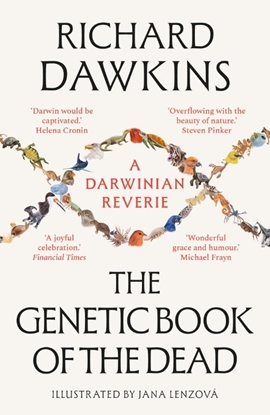
The Genetic Book of the Dead
THE TIMES BEST SCIENCE BOOK OF 2024
GUARDIAN BEST IDEAS BOOKS OF 2024
ECONOMIST BEST BOOKS OF 2024
FINANCIAL TIMES BEST BOOKS OF 2024
From one of the world’s great science writers, a book that explores the deepest principles of evolutionary history.
In this groundbreaking new approach to the evolution of all life, Richard Dawkins shows how the body, behaviour, and genes of every living creature can be read as a book – an archive of the worlds of its ancestors. A perfectly camouflaged desert lizard has a desiccated landscape of sand and stones ‘painted’ on its back. Its skin can be read as a description of ancient deserts in which its ancestors survived – and, before that, of the worlds of its more remote ancestors: a genetic book of the dead.
But such descriptions are more than skin-deep. The fine chisels of Darwinian natural selection carve their way through the very warp and woof of the body, into every biochemical nook and corner, into every cell of every living creature. A zoologist of the future, presented with a hitherto-unknown animal, will be able to reconstruct the worlds that shaped its ancestors, to read its unique ‘book of the dead’.
The book is filled with fascinating examples of the power of Darwinian natural selection to build exquisite perfection, paradoxically accompanied by what look like gross blunders. Along the way, Dawkins dismantles influential criticisms of the ‘gene’s-eye-view’ of life. And, to end with a provocative sting in the tail, the author asks there is a sense in which all our ‘own’ genes can be seen as a gigantic colony of cooperating viruses?
From the author of The Selfish Gene and The Ancestor’s Tale comes a revolutionary, richly illustrated book that unlocks the door to an ancient past, seen through wholly new eyes.
Lees meer
The Grand Design
When and how did the universe begin? Why are we here? Is the apparent 'grand design' of our universe evidence for a benevolent creator who set things in motion? Or does science offer another explanation?
In The Grand Design, the most recent scientific thinking about the mysteries of the universe is presented in language marked by both brilliance and simplicity. Model dependent realism, the multiverse, the top-down theory of cosmology, and the unified M-theory - all are revealed here.
This is the first major work in nearly a decade by one of the world's greatest thinkers. A succinct, startling and lavishly illustrated guide to discoveries that are altering our understanding and threatening some of our most cherished belief systems, The Grand Design is a book that will inform - and provoke - like no other.
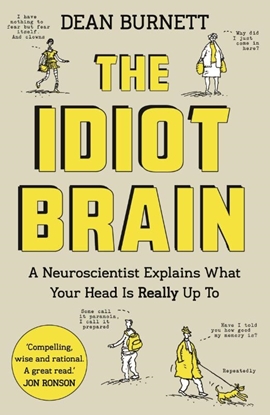
The Idiot Brain
'Compelling and wise and rational.' - Jon Ronson
'A wonderful introduction to neuroscience, and deserves to be widely read.' - Independent
Motion sickness.
Nightmares.
Forgetting people's names.
Why did I walk into this room??
For something supposedly so brilliant and evolutionarily advanced, the human brain is pretty messy, fallible and disorganised. In The Idiot Brain neuroscientist Dean Burnett celebrates the imperfections of the human brain in all their glory, and the impact of these quirks on our daily lives. Expertly researched and entertainingly written, this book is for anyone who has wondered why their brain seems to be sabotaging their life, and what on earth it is really up to.

The Idiot Brain
10th Anniversary Edition
From neuroscientist and internationally bestselling author Dean Burnett comes The Idiot Brain, an accessible, witty examination of how our brains get things wrong – and why that’s absolutely fine.
WITH A NEW INTRODUCTION AND AFTERWORD
'A great read.' JON RONSON
'A wonderful introduction to neuroscience.' INDEPENDENT
Have you wondered why we recognise people's faces but forget their names?
Or why we get motion sickness? Or jet lag, too, for that matter.
And why do we overthink even the smallest things in our lives?
For something supposedly so brilliant and evolutionarily advanced, the human brain is pretty messy, fallible and disorganised. In The Idiot Brain, neuroscientist Dean Burnett celebrates the imperfections of the human brain in all their glory, and the impact of these quirks on our daily lives.
Covering anxiety, memory, intelligence and personality, this expertly researched and entertainingly written book is for anyone who has wondered why their brain seems to get things wrong, and what on earth it's really up to.



The Moral Landscape
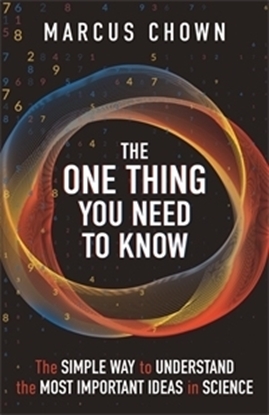
The One Thing You Need to Know
From gravity to black holes, special relativity to global warming, bestselling author Marcus Chown breaks down complex science into manageable chunks, explaining the one thing you really need to know to get to grips with the subject.
Rather than trying to bend your mind around all the vast and confounding details of things such as gravitational waves, electricity and black holes, wouldn’t it be easier to understand just one central concept from which everything else follows?
If you’ve ever found yourself fascinated by the idea of quantum computing but feel a little overwhelmed by the mindblowing subject of quantum mechanics or if you are concerned by climate change but haven’t been able to get to grips with the details of global warming, this book is for you. Let’s take atoms, for example – what on earth are they? Well, if you start to think of them less like things you can’t see with complex little nuclei and more like the alphabet of nature, which in different configurations can make a rose, a galaxy or a newborn baby, they might start to feel a little more understandable. Or gravitational waves – they sound poetic, but why are they creating so much excitement? Think of them as the voice of space or vibrations on the drumskin of space-time, before delving into all their complexities.
In twenty-one short and engaging chapters, Chown explains the one thing you need to know to understand some of the most important scientific ideas of our time. Packed full of astounding facts, scientific history and the entertaining personalities at the heart of the most pivotal discoveries about the workings of our universe, this is an accessible guide to all the tricky stuff you’ve always wanted to understand more about.
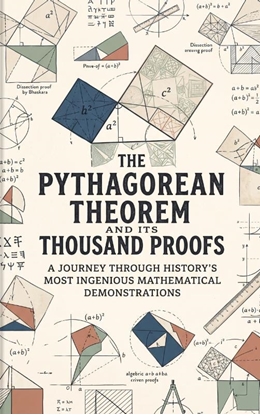
The Pythagorean Theorem and Its Thousand Proofs
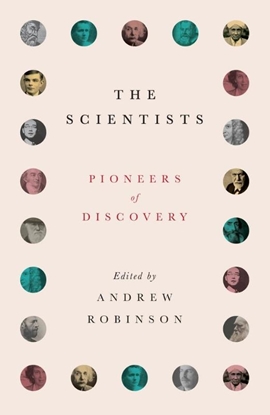
The Scientists
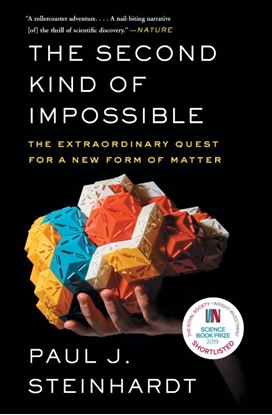
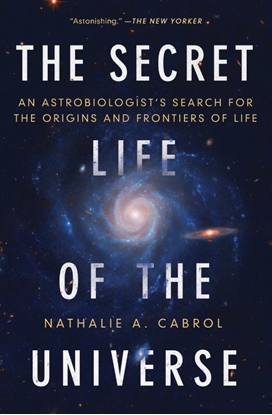

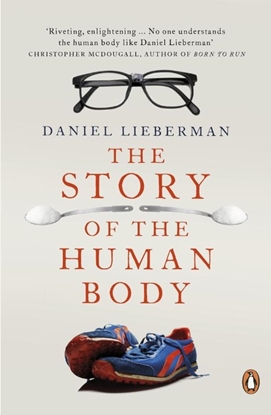
The Story of the Human Body
In The Story of the Human Body, Daniel Lieberman, Professor of human evolutionary biology at Harvard, shows how we need to change our world to fit our hunter-gatherer bodies
This ground-breaking book of popular science explores how the way we use our bodies is all wrong. From an evolutionary perspective, if normal is defined as what most people have done for millions of years, then it's normal to walk and run 9 -15 kilometres a day to hunt and gather fresh food which is high in fibre, low in sugar, and barely processed. It's also normal to spend much of your time nursing, napping, making stone tools, and gossiping with a small band of people.
Our 21st-century lifestyles, argues Daniel Lieberman, are out of synch with our stone-age bodies. Never have we been so healthy and long-lived - but never, too, have we been so prone to a slew of problems that were, until recently, rare or unknown, from asthma, to diabetes, to - scariest of all - overpopulation.
The Story of the Human Body asks how our bodies got to be the way they are, and considers how that evolutionary history - both ancient and recent - can help us evaluate how we use our bodies. How is the present-day state of the human body related to the past? And what is the human body's future?
'Monumental. The Story of the Human Body, by one of our leading experts, takes us on an epic voyage' - Neil Shubin, author of Your Inner Fish
'Riveting, enlightening, and more than a little frightening' - Christopher McDougall, author of Born to Run
Daniel Lieberman is the Chair of the Department of Human Evolutionary Biology at Harvard and a leader in the field. He has written nearly 100 articles, many appearing in the journals Nature and Science, and his cover story on barefoot running in Nature was picked up by major media the world over. His research and discoveries have been highlighted in newspapers and magazines, including The New York Times, Boston Globe, Discover, and National Geographic.
Lees meer