Exacte wetenschappen/natuurwetenschappen algemeen

Thing Explainer
From the No. 1 bestselling author of What If? - the man who created xkcd and explained the laws of science with cartoons - comes a series of brilliantly simple diagrams ('blueprints' if you want to be complicated about it) that show how important things work: from the nuclear bomb to the biro.
It's good to know what the parts of a thing are called, but it's much more interesting to know what they do. Richard Feynman once said that if you can't explain something to a first-year student, you don't really get it. In Thing Explainer, Randall Munroe takes a quantum leap past this: he explains things using only drawings and a vocabulary of just our 1,000 (or the ten hundred) most common words.
Many of the things we use every day - like our food-heating radio boxes ('microwaves'), our very tall roads ('bridges'), and our computer rooms ('datacentres') - are strange to us. So are the other worlds around our sun (the solar system), the big flat rocks we live on (tectonic plates), and even the stuff inside us (cells). Where do these things come from? How do they work? What do they look like if you open them up? And what would happen if we heated them up, cooled them down, pointed them in a different direction, or pressed this button?
In Thing Explainer, Munroe gives us the answers to these questions and many, many more. Funny, interesting, and always understandable, this book is for anyone -- age 5 to 105 -- who has ever wondered how things work, and why.
Lees meer
Things to Make and Do in the Fourth Dimension
'Maths at its most playful and multifarious' Jordan Ellenberg
Matt Parker, author of the No.1 bestseller Humble Pi, takes us on a riotous journey through the possibilities of numbers
Mathematician Matt Parker uses bizarre Klein Bottles, unimaginably small pizza slices, knots no one can untie and computers built from dominoes to reveal some of the most exotic and fascinating ideas in mathematics. Starting with simple numbers and algebra, this book goes on to deal with inconceivably big numbers in more dimensions than you ever knew existed. And always with something for you to make or do along the way.
'The book oozes with sheer joy' New Scientist
'Matt Parker is some sort of unholy fusion of a prankster, wizard and brilliant nerd - clever, funny and ever so slightly naughty' Adam Rutherford, author of Creation
'Matt Parker never got the memo about maths being boring ... he seeks to reconnect us to the numbers around us' Simon Usborne, Independent
'Essential reading' Observer


Titan en zijn rivieren van methaan
Toen de wetenschap ernaast zat
Training for Weightlessness

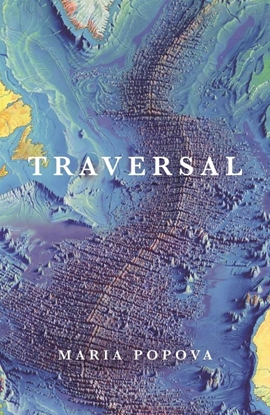
Traversal
In Traversal, Maria Popova traverses the border between life and death, chance and choice, chemistry and consciousness: what makes a body a person? What makes a planet a world? How do we safeguard our love of truth from our lust for power? What slakes our longings and what redeems our losses?
Popova illuminates our various instruments of reckoning with these questions - our telescopes and our treatises, our postulates and our poems - through the intertwined lives, loves and legacies of visionaries both celebrated and sidelined by history, people born into the margins of their time and place who lived to write the future: Mary Shelley, Walt Whitman, Frederick Douglass, Fanny Wright. Woven throughout their stories are other threads - the decoding of the insulin molecule, the invention of the bicycle, how nature creates blue - which come together to create a rich tapestry of life's meaning; exploring what it is that makes life alive and worth living.
By turns epic and intimate, Traversal explores the universe between cells and souls to reveal the world, and our lives, in a dazzling new light.