
Fotoboeken

Frank Horvat
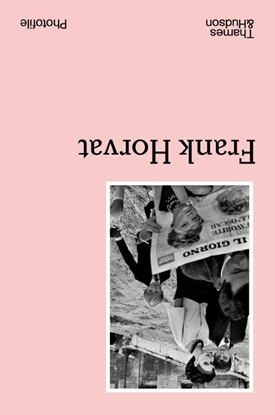
Frank Horvat (1928–2020) changed the course of fashion photography forever. The Italian-born photographer made his debut as a photojournalist in France, where he lived and worked for the rest of his life. It was there that he met Henri Cartier-Bresson, who encouraged him to pursue his photography career. By the mid-1950s, Horvat was collaborating with the biggest fashion magazines in the world, such as Elle, Vogue, and Jardin des Modes. Revolutionizing fashion photography through a more realistic lens, Horvat photographed models on the streets, in the squares, and alongside the locals of postwar Europe.Horvat’s fresh and often imitated style, which brought reportage techniques and the 35mm film camera to the forefront of fashion photography, impressed designers and inspired fashion photographers for generations to come.
Horvat’s work can now be found in permanent collections in prestigious institutions around the world, including the Museum of Modern Art in New York and the Centre Pompidou in Paris.
With a foreword by Virginie Chardin, Frank Horvat, a new title in the renowned Photofile series, exhibits Horvat’s photographic opus through sixty full-page reproductions in a handsome and collectible pocket format.
Lees meer
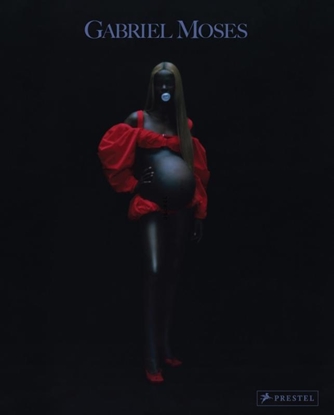
Gabriel Moses
Gabriel Moses was only eighteen when he received his first commission—from Nike. Since then the self-taught British Nigerian photographer has been in enormous demand, with clients that range from Louis Vuitton and Burberry to Dior and Vogue, and from stars such as Pharrell Williams, A$AP Rocky, and Skepta. Gorgeous full page reproductions capture Moses’ uniquely atmospheric vibe—marked by deep colors, rich textures—as well as his startling ease with his subject, be it music, fashion, or sports.
A series of essays include a foreword by Moses, touching on his own ideology and practice; Federico Sargentone’s insightful exploration of Moses’ work; contributions and personal accounts by Matthew Williams, Ciesay, Clint, Samuel Ross and Slawn, among others; and a series of in-conversations, one with Skepta discussing the totality of life; and the second with Nick Knight exploring the depths of photography. Touching on every aspect of his work to date, including a number of previously unpublished images, this stunning and contemporaryfeeling monograph, designed by Hassan Rahim, dives deep into Moses’ visual language and highlights his profound connection to family, community, and the culture around it. Lees meer


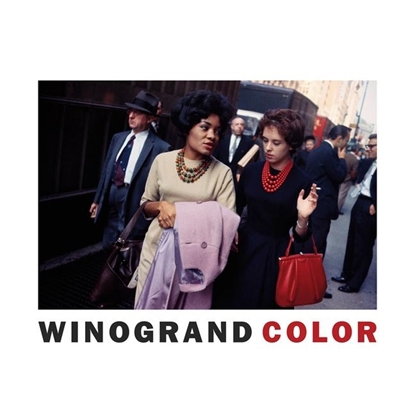
Garry Winogrand: Winogrand Color
Rarely-seen color work from the preeminent master of postwar American street photography
This monograph stands as a groundbreaking tribute to the early color work of renowned American photographer Garry Winogrand. While he is most recognized for his candid and lively black-and-white street photography, Winogrand's portfolio also includes an impressive collection of over 45,000 color slides captured between the early 1950s and the late 1960s. Using two cameras strapped to his chest—one loaded with color film and the other with black-and-white film—he extensively documented his surroundings between commercial assignments, developing and refining a distinct and progressively daring body of personal work.
From the bustling streets of Manhattan to the shaded underside of Coney Island’s boardwalk to the expansive landscapes and open roads of the American West, Winogrand Color unveils a tender portrait of a version of the country that feels at once bygone and timeless. His snapshots of strangers exude an unparalleled sense of intimacy, offering poetic glimpses into everyday postwar America. Presenting 150 photographs selected from the archives at the Center for Creative Photography in Tucson, Arizona, this is the first monograph dedicated in full to Winogrand’s vivid color photography.
Born and raised in the Bronx, Garry Winogrand (1928-84) was a highly influential American photographer who came into prominence for his trailblazing contributions to street photography. His keen eye for human emotions and his ability to freeze spontaneous moments immortalized the essence of American society. His work continues to inspire and shape the field, leaving a lasting impact on both his contemporaries and future generations of photographers.

Gezichten van Valkenburg

Girls with Pearls

Gordon Parks

Gordon Parks: American Gothic

Grachtenhuizen/Amsterdam canal houses
Grand Hotel Parr
Two hundred photobooks across five decades—a raucous, one-of-a-kind tour through Parr's monumental history with the medium.
Published with PhotoBook Museum, Cologne.
As a photographer, publisher, writer, collector and image editor, with an eye trained on the absurdities of our global consumer and leisure culture, Martin Parr (1952–2025) has been bringing the photobook into the consciousness of contemporary photography since the turn of the millennium, publishing more than 200 books over the course of five decades. Grand Hotel Parr accompanies the first comprehensive photobook retrospective on Parr, organized by the PhotoBookMuseum and the Neues Museum in Cologne, Germany. In an elaborate staging inspired by the appearance of a hotel complex, the titular exhibition invites visitors to explore over 200 of the artist's photobooks. The tour through the various rooms of the hotel, such as the billiard room, the dining room and the fashion boutique, picks up on various themes from Parr's publications, creating a bizarre world that vacillates between ostentation and kitsch. Grand Hotel Parr showcases photographs from this one-of-a-kind exhibition as well as a bevy of essays by scholars and curators who explore Parr's storied history with the medium.

