
Fotoboeken





Ground Truth


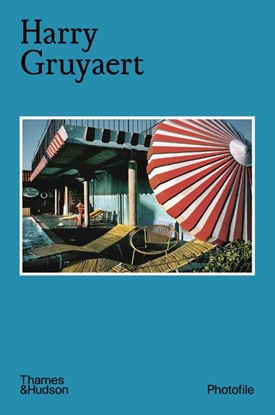
Harry Gruyaert
Born in Antwerp in 1941 and a member of Magnum Photos since 1981, Harry Gruyaert revolutionized the creative and experimental use of color in the 1970s and 1980s. Influenced by cinema and American photographers, his work defined new territory for color photography: an emotive, non-narrative, and boldly graphic way of perceiving the world.
A new entry in the acclaimed Photofile series, Harry Gruyaert reproduces the photographer’s influential work in over sixty full-page images alongside an introduction by Brice Matthieussent.
Lees meer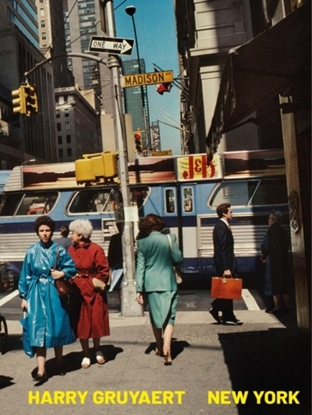
Harry Gruyaert: New York
For over fifty years, Harry Gruyaert has wandered New York City's streets, capturing its dazzling contrasts—from towering skylines and neon-lit diners to multicultural neighborhoods and fleeting street scenes. Designed as a large-format visual album, this book presents each photograph across a double-page spread, evoking the rhythm and energy of a cinematic storyboard.
Accompanying this striking visual journey are fictional vignettes by acclaimed filmmaker Cédric Klapisch, blurring the lines between reality and imagination. A city of endless spectacle, New York becomes a global stage in Gruyaert's hands—alive with drama, diversity, and color.
Lees meer


Helen Levitt
Over six decades, Helen Levitt (1913–2009) explored the streets of her native New York City with a handheld camera. Influenced by Henri Cartier-Bresson, she found inspiration in the theater and spontaneity of the street, capturing everyday moments in urban life and forging a distinct visual language from her private observations. Levitt’s eye was drawn to fleeting incidents of tenderness, mischief, and tension between communities and strangers in the city: children drawing in chalk on the sidewalks, the elderly chatting on their stoops, and workers on the subway. Exuding a keen warmth and sensitivity for human gesture and movement, her photographs capture, in James Agee's words, the "pure spontaneity of true folk art."
The first of its kind to draw from Levitt’s complete archive, this ambitious publication showcases her entire output. It not only includes her best-known photographs but also features rarely seen early works from her first year using a Leica and all fifty works from the original edit of her classic 1965 photobook A Way of Seeing, with record prints preserved by Levitt herself.
Essays by a range of scholars and specialists home in on key thematic, technical, and biographical aspects of Levitt’s life and work, including an examination of the photos she took during her trip to Mexico in 1941, her innovative use of color in the 1950s, and her late work from the 1980s, providing an authoritative insight into one of the most influential photographers of the twentieth century.
Lees meer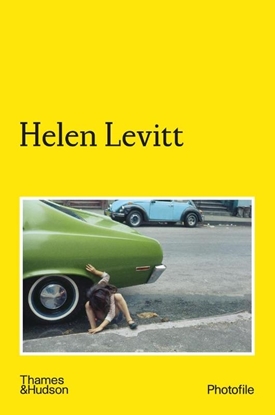
Helen Levitt
The classic Photofile series brings together the best work of the world’s greatest photographers in an attractive format and at a reasonable price. Handsome and collectible, each book contains a selection of the photographer’s most important and representative images in beautiful duotone and/or color, plus an introduction and a bibliography.
This new addition to the series features the work of Helen Levitt. Born in Brooklyn in 1913, Helen Levitt is best known for her photographs of New York, which have inspired generations of photographers, collectors, and a general audience entranced by images of daily life in the great city. Helen Levitt’s first major museum exhibition was presented at the Museum of Modern Art in 1943, and a second solo show was held there in 1974. Retrospectives of her work have been shown at museums across America and around the world, including the San Francisco Museum of Modern Art, the Metropolitan Museum of Art, the International Center of Photography, and the Centre National de la Photographie in Paris.
Lees meer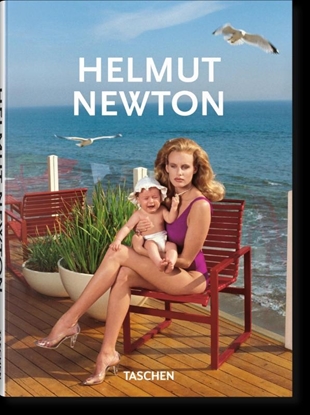
Helmut Newton
Helmut Newton’s unforgettable images, at once sophisticated and provocative, constitute a rich and ever-relevant artistic legacy. This book presents a compact but wide-ranging and impactful portfolio of his work, supported by an insightful introduction and a detailed biographical chronology.
Newton’s images straddle the knife-edge of ambiguity, teasing out allusions and social observations that both entice and challenge their viewers. In this portfolio, Newton’s unique perspective is effectively showcased, reflecting the complex undercurrents that give his images their distinct character across the breadth of his editorial work in the fields of fashion and portraiture.
This book reveals Newton’s evolution into a contrarian, a savvy and mischievous cynic, at once voyeur and satirist, whose lens framed contentious yet pivotal aspects of high fashion and high society in the latter decades of the twentieth century. He worked as a “gun for hire” while imposing his own perspectives and obsessions, defining most notably his idea of a powerful, self-assured woman. This figure became his most insistent theme, developed in erotically charged scenarios, most typically set in the seductive environment of opulent apartments or grand hotels, most notably in Paris, Monte Carlo, and Los Angeles.
From the mid-sixties, Newton’s dynamic images established his reputation in the world of fashion, through work published in leading magazines, among them Vogue Paris, Elle, Marie Claire, Nova, Queen, and British Vogue. From the mid-seventies his notoriety was extended through his first books and exhibitions. His images immortalize such luminaries of society, film, and fashion as Princess Caroline of Monaco, Charlotte Rampling, Paloma Picasso, and Karl Lagerfeld.
Helmut Newton’s glamorous, ground-breaking, and boundary-pushing photographs have an indisputable signature authority that maintains their hold on our imaginations.
Helmut Newton
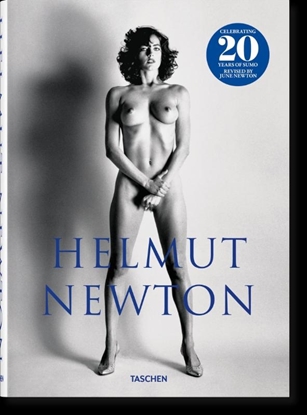
Helmut Newton (1920–2004) always showed a healthy disdain for the easy or predictable, so it’s no surprise that the SUMO was an irresistible project. The idea of a book the size of a private exhibition, with spectacular images reproduced to state-of-the-art origination and printing standards, emerged from an open, experimental dialogue between photographer and publisher. With the SUMO weighing in—boxed and shrink-wrapped—at 35.4 kg (just under 80 pounds), Newton created a landmark book that stood head and shoulders above anything previously attempted, both in terms of conceptual extravagance and technical specifications.
Published in an edition of 10,000 signed and numbered copies, the SUMO sold out soon after publication and quickly multiplied its value. It now features in numerous collections around the world, including New York’s Museum of Modern Art. The legendary copy number one, signed by more than 100 of the book’s featured celebrities, broke the record for the most expensive book published in the 20th century, sold at an auction in Berlin on April 6, 2000 for 620,000 German marks—about 317,000 euros.
Now, this XL edition celebrates 20 years of SUMO, the result of a project conceived by Helmut Newton some years ago. Revised by his wife June, the volume gathers 394 images and a booklet that takes us through the making-of this publishing venture—a spectacular tribute to the larger-than-life Helmut Newton, now in a friendly format.
