
Kunstgeschiedenis
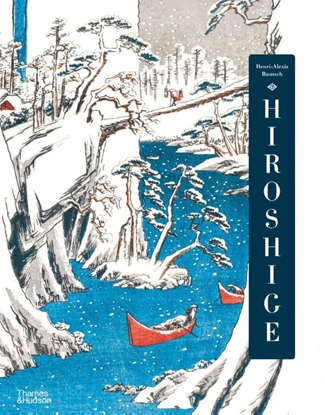
Hiroshige
This book offers a fascinating look at Hiroshige’s life and work, tracing the journey of a fire warden who turned to printmaking later in life. It invites readers to follow in Hiroshige’s footsteps through 19th-century Tokyo, discovering the iconic landscapes he immortalized while traveling the famed Tokaido and Kiso Kaido roads. This book features an exceptional selection of works accompanied by vivid text, drawing from Hiroshige’s diaries, his talent for humorous poetry, taste for travel (with all its pleasures and challenges), and deep affinity for the natural world.
This volume makes accessible a deep understanding of Hiroshige’s body of work, and transports readers to Edo, Japan via his timeless prints.
Lees meer
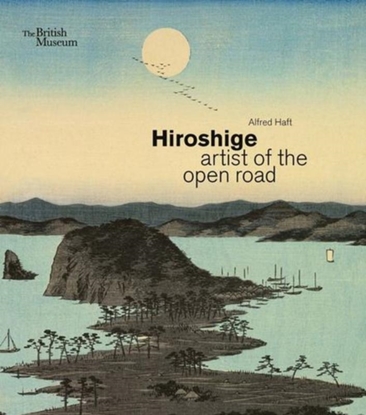
Hiroshige
History of Art in Japan
History of Japanese Art after 1945


Hokusai
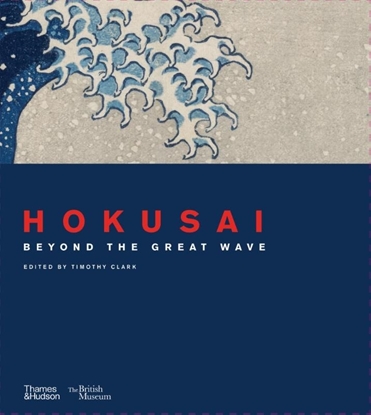
Hokusai
Hokusai (1760–1849) created sublime works during the last thirty years of his life, right up to his death at the age of almost ninety. This book presents fresh scholarship on the paintings and prints created by the artist during his final three decades, bringing together the finest examples to be found in Japan and around the world.
Hokusai's personal beliefs are studied here through major brush paintings, drawings, woodblock prints, and illustrated books. This publication gives due attention to the contribution of Hokusai's daughter Eijo (Oi), an accomplished artist in her own right. Hokusai continually explored the mutability and minutiae of natural phenomena in his art. His late subjects and styles were based on a mastery of eclectic Japanese, Chinese, and European techniques and an encyclopedic knowledge of nature, myth, and history. This collection of Hokusai's works is a uniquely valuable overview of the artist’s late career.
Lees meer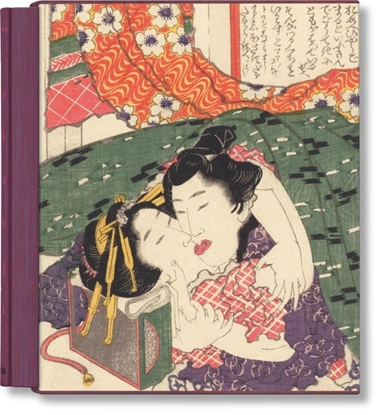
Hokusai
If you think you know Hokusai (1760–1849), think again. Long before The Great Wave, the great master turned his hand (and eye) to something altogether more intimate. From maidservants and wives to courtesans, lovers, and curious onlookers – and, yes, an infamous pair of frisky octopuses – Hokusai’s shunga (literally “spring pictures”) are bold, joyful, and often laugh-out-loud funny.
This comprehensive portfolio brings together eight complete books and print sets from 1786–1823, with many of their accompanying narratives penned by the artist himself. Blending the visual with the verbal, the pages brim with exaggerated anatomy, impish voyeurism, tender exchanges, and a surprisingly egalitarian attitude to enjoyment for both sexes.
In contrast to the prudery of 18th-century Europe, Edo-period (1603–1868) Japan accepted sexuality as a natural part of life. With shunga officially banned but tolerated in practice, many reputable artists navigated government censorship to embrace the genre with gusto, albeit under pseudonyms. These works were made to entertain, to arouse, and even used for good luck – samurai carried them as talismans when going into battle. Technical innovations in printing during Hokusai’s lifetime allowed for rich colours and exquisitely rendered textiles, but the content remained delightfully human: full of risky rendezvous, stolen moments, and scenes of marital (or extra-marital) bliss.
Realized with new photography of these rare works, and complemented by an in-depth introduction and explanatory essays, this retrospective offers gorgeous glimpses into a lesser-known but wildly imaginative thread in Hokusai’s over 70-year career: proof, perhaps, that great masters have their guilty pleasures too.
Lees meer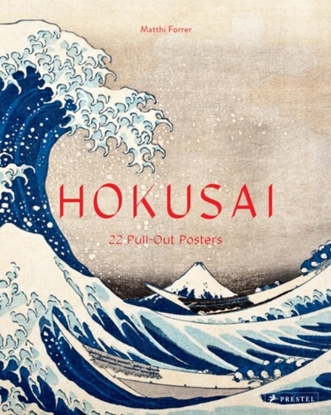
Hokusai
During his lifetime, Hokusai was one of the most revered artists working in the ukiyo-e school of painting and printmaking. This book gathers the finest examples of Hokusai's breathtaking prints, including his iconic The Great Wave off Kanagawa, views of Mt. Fuji, landscapes, domestic scenes, and painstakingly rendered flora and fauna. An introduction by Matthi Forrer offers a brief biography of Hokusai and commentary on his practice and influence. Each full color poster is backed with a substantial caption that provides insights into the piece's significance and notable characteristics. Printed on heavy coated paper, these detachable posters are suitable for framing, but also taken together create a lasting and illuminating introduction to Hokusai's extraordinary accomplishment. Lees meer

Hokusai
Hokusai’s personal beliefs are contemplated here through analyses of major brush paintings, drawings, woodblock prints, and illustrated books. The publication gives due attention to the contribution of Hokusai’s daughter Eijo (Oi), also an accomplished artist. Hokusai continually explored the mutability and minutiae of natural phenomena in his art. His late subjects and styles were based on a mastery of eclectic Japanese, Chinese, and European techniques and an encyclopedic knowledge of nature, myth, and history.
Hokusai: Beyond the Great Wave draws on the finest collections of his work in Japan and around the world, making this the most important publication for years on Hokusai and a uniquely valuable overview of the artist’s late career. Lees meer
Hokusai Prints Coloring Book
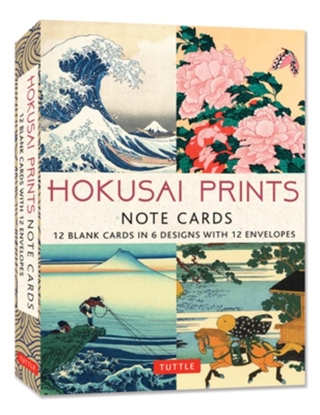
Hokusai Prints Note Cards - 12 Cards
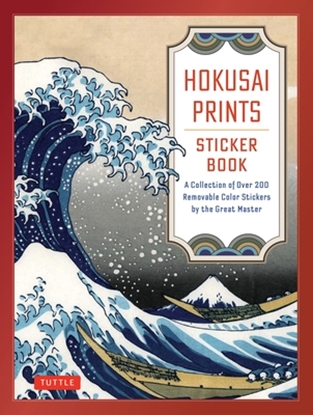
Hokusai Prints Sticker Book
Katsushika Hokusai's works are celebrated for their dynamic compositions, vibrant colors, and innovative use of perspective. His most famous series, "Thirty-Six Views of Mount Fuji," includes the iconic "The Great Wave off Kanagawa," showcasing his mastery in capturing the power and beauty of nature. Hokusai's oeuvre spans a wide range of subjects, from serene landscapes and intricate nature studies to lively scenes of daily life and detailed portraits of kabuki actors. Blending traditional Japanese techniques with Western influences, Hokusai's art remains influential and admired worldwide.
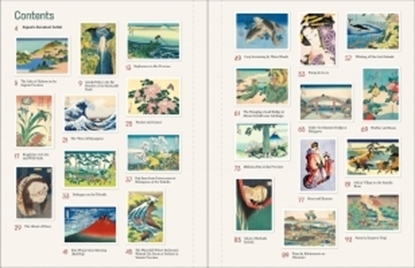
The dramatic Hokusai subjects included in this deluxe hardcover volume are:
- "Thirty-Six Views of Mount Fuji" — Hokusai's greatest work, featuring unusual views of Japan's sacred mountain, including the iconic "Great Wave off Kanagawa"
- A Tour of Japan's Waterfalls" — Depicting Japan's scenic mountain waterfalls in dramatic compositions
- "Snow, Moon, and Flowers" — Sensual beauty and natural landscapes including
- "Kabuki Actors" — Leading actors of the day, depicting iconic characters from Japanese history
- Plus many more!
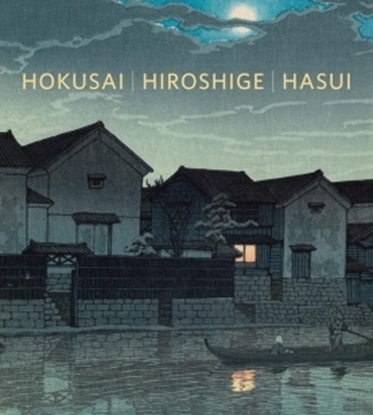
Hokusai, Hiroshige, Hasui
A look at three masters of Japanese landscape prints from one of the world’s best collections of the genre
In the 1830s, a new type of color woodblock print caused a sensation in the world of Japanese popular culture. The bestselling success of landscape series by Katsushika Hokusai (1760–1849) and his younger colleague and rival Utagawa Hiroshige (1797–1858) suddenly made landscape prints as important as figure prints, and numerous other artists started to emulate these two masters. Beginning in the 1860s, these works entered the European market and influenced artists such as Vincent van Gogh and Claude Monet; at the same time, Japanese artists began to study and take inspiration from Western art. As a result, artists such as Kawase Hasui (1883–1957) produced color woodblock prints that captured the beauty of the Japanese landscape by traditional production methods but in a new, Westernized drawing style. This publication examines the historical development of the Japanese landscape print through a comparison of these three major artists: Hokusai, the innovator; Hiroshige, the developer; and Hasui, who reinvented the field in modern terms. Featuring lavish reproductions of more than 100 artworks, as well as commentary by curator Sarah E. Thompson, this visual triptych underscoring the enduring appeal of these artists will delight and inspire readers.
Lees meer
Hold Still
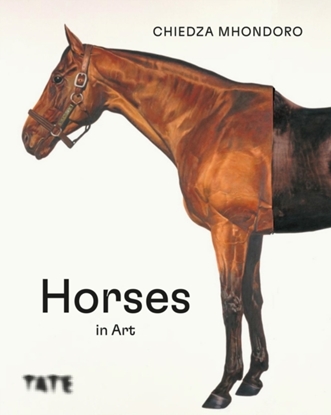
Horses in Art
Horses have appeared in works of art throughout history and across the globe, frequently as depictions of the horse in battle, as a form of transportation or within the settings of racing, hunting or breeding. Culturally, the horse is significant across the world.
This book seeks to explore the long and rich trajectory of art focusing on horses and equestrian art from their historic use in battle or as tools in agricultural labour up to their representation as an allegory for wildness and power in modern art to the current fascination with horse racing and breeding.
Offering in-depth explorations of over fifty artworks from the last 260 years mostly in western art, it explores the changing and fascinating relationship we have had with horses, from the classical paintings of George Stubbs to the subversive feminist performances of Rose English.
Lees meer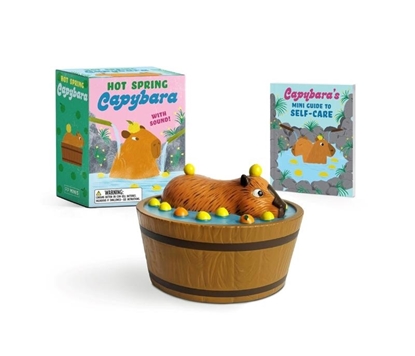
Hot Spring Capybara
- One-of-a-kind collectible: A 2-3/4 inch tall collectible of hot spring tub with an adorable capybara inside
- With relaxing sounds: Enjoy soothing hot spring sounds when the capybara is pushed down into its tub
- Mini book included: Learn more about this water loving rodent in the 32-page, 2-1/2 x 3 inch mini book
- A Unique Gift: A perfect humorous gift for those who love capybaras


