Kunstgeschiedenis

Identifying Art
Imagining England's Past
England has long built its sense of self on its past. What does it mean for Geoffrey of Monmouth to call forth King Arthur from the post-Roman fog, for William Morris to resurrect the skills of the medieval workshop, and Julia Margaret Cameron to portray the Arthurian court using her Victorian camera?
Told through the distinctive imaginings of successive generations, this book considers how and why national myths have come into being, the multitude of forms they have taken, and what centuries of looking back might mean for the present and future. More than three hundred voices are featured from over thirteen centuries, from Beowulf, Walter Scott, and Queen Victoria to Pauline Boty and Lubaina Himid.
Not a history of England, but a history of those who have written, drawn, and dreamed it into being, Imagining England’s Past offers a lively, erudite account of the creation and narration of the English past.
Lees meer
Immortal Thoughts
Impressionism
The enduring popularity of Impressionism belies what the group of eponymous painters stood for. In the 1870s and 1880s, French artists dubbed the Impressionists, including Pissarro, Monet, Degas, Morisot, and Renoir, adopted a revolutionary style of technique and subject matter that defied the traditions of the French Academy and the salons. Rooted in anarchism, political radicalism, and a belief in science and individualism, their paintings captured modern life in ways never seen before.
Acclaimed art historian Belinda Thomson’s insightful study sheds light on the personal lives and creative thinking behind the great Impressionists, exploring the varied factors that shaped their masterpieces. From family backgrounds to the importance of the art market and the critical reception that challenged, yet ultimately defined their work, this introduction offers a nuanced exploration of one of the most transformative movements in art history.
Lees meer
Impressionism
One of the art world’s most recognizable and popular styles, Impressionism is also one of the most complex.
In this sumptuous overview Norbert Wolf lends his attention to all aspects of Impressionism: its historical precursors, contemporary rivals, and the movements it inspired. Over 200 reproductions of entire works and highlighted details introduce readers to the Impressionists’ aesthetics and techniques. Wolf draws insightful parallels between these paintings and other contemporary works of music, photography, and literature. Charting the movement’s expansion from France to the rest of Europe and North America, this volume shines a spotlight on the main protagonists who were key in the development of Impressionism. It highlights not only the French pioneers — Claude Monet, Gustave Caillebotte, Édouard Manet, Pierre- Auguste Renoir, Camille Pissarro, and others—but also Max Liebermann, Lovis Corinth, John Singer Sargent, Mary Cassatt, William Merritt Chase, and James McNeill Whistler.
Authoritative and illuminating, this wide-ranging exploration of Impressionism’s astounding impact on art history will surprise even the most seasoned aficionado. Lees meer
Impressionism
Discover how scenes of daily life and delicate dabs of color shocked the art world establishment.
In this TASCHEN Basic Art introduction to Impressionism, we explore the artists, subjects, and techniques that first brought the easel out of the studio and shifted artistic attention from history, religion, or portraiture to the evanescent ebb and flow of modern life.
As we tour the theaters, bars, and parks of Paris and beyond, we take in the movement’s radical innovations in style and subject, from the principle of plein air painting to the rapid, broken brushwork that allowed the Impressionists to emphasize spontaneity, movement, and the changing qualities of light. We take a close look at their unusual new perspectives and their fresh palette of pure, unblended colors, including many vividly bright shades that brought a whole new level of chromatic intensity to the canvas.
Along the way, we recognize Impressionism’s established greats, such as Edgar Degas, Claude Monet, Berthe Morisot, and Camille Pissarro, as well as many associated artists worthy of closer attention, including Marie Bracquemond, Medardo Rosso, and Fritz von Uhde.

Impressionism
It is often forgotten just how provocative and unsettling impressionist canvases seemed when they were first exhibited in 1874. Critics, professional artists, and gallery visitors alike were shocked to encounter the unorthodox paintings on display, with their seemingly unfinished surfaces and lack of any elements of traditional composition. The advocates of this new approach rejected nearly all the established principles and practices of oil painting prevalent at that time in France.
Tracing the origins and history of impressionism in a concise, introductory volume, Ralph Skea highlights the major differences between the new techniques and aesthetic principles of the impressionists and the academic art they abhorred, and goes a step further in exploring the original intellectual focus of the movement. Skea explores the impressionists’ desire to investigate their own sensory perceptions when painting, which resulted in their unique “impressions.”
An ideal companion for museum-goers, as well as those who are entirely new to the subject, Impressionism weaves an engaging narrative around a selection of striking illustrations, discussing the movement’s greatest artists, their works and where to find them.
Lees meer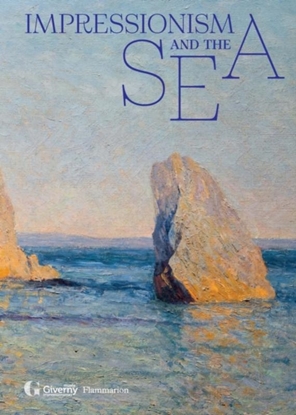
Impressionism and the Sea
The impressionists were forever inspired by the sea, which Claude Monet considered “a wonderful teacher for landscape artists.” The movement’s penchant for plein air painting and its characteristic style, with delicate brushstrokes and incomparable color palettes, was perfectly suited to portrayals of the sea and its perpetual movement, from gently rippling waves to raging storms.
Capturing the natural beauty of coastal landscapes and the delicate play of light on water, this volume illuminates the works of Claude Monet, Édouard Manet, Pierre-Auguste Renoir, Camille Pissarro, Berthe Morisot, Gustave Courbet, Paul Gauguin, Eugène Boudin, Johan Barthold Jongkind, and more, taking readers on a journey along shorelines and beaches—from the coasts of Normandy and Brittany, to the Mediterranean Sea, to Tahiti—to discover all aspects of nautical and seaside life in the nineteenth century.
Portraits of children playing in the sand or strolling vacationers at seaside resorts contrast with scenes of the maritime industry, which depict the hustle and bustle of ports with their dockers, the to-and-fro of passing ships, and fishermen at work in boats. Atmospheric marine landscapes abound, from rugged cliffs and jagged rocks emerging from the waves to serene sunsets or sunrises along the horizon.
Published in collaboration with the Musée des Impressionnismes Giverny, this volume includes 110 paintings and drawings, presented alongside photographs by masters such as Gustave Le Gray, which transport readers to the very coastlines interpreted by the impressionists. Lees meer
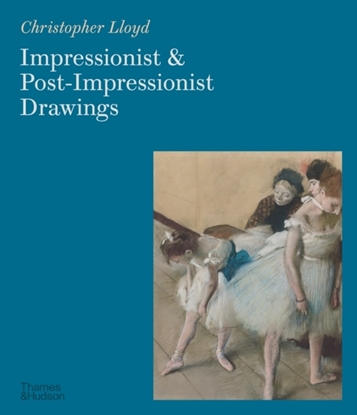
Impressionist and Post-Impressionist Drawings
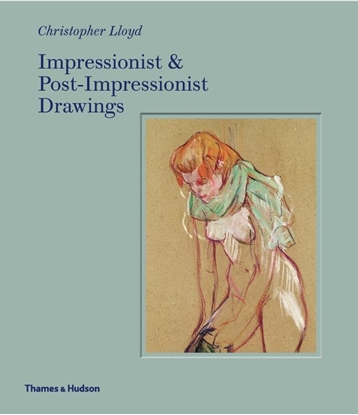
Impressionist and Post-Impressionist Drawings
Claude Monet, Mary Cassatt, Edgar Degas, Paul Ce´zanne, Georges Seurat, Paul Gauguin, Vincent van Gogh, and their colleagues made some of the most beautiful drawings in the history of art. This book sets drawings by the impressionists and post-impressionists in the context of late nineteenth-century France, explaining why these particular works are as important as these artists’ paintings in the representation of modernity.
A new approach to materials and a wholly inclusive attitude to exhibitions elevated drawing's status higher in this period than ever before, which avant-garde artists welcomed in their preference for scenes from contemporary life. For the first time, painting and drawing shared the same stylistic principles of spontaneity, freer handling, and lack of finish. Pastels by Degas, watercolors by Ce´zanne, pen-and-ink drawings by Van Gogh, and mixed media works by Henri de Toulouse-Lautrec have an autonomy of their own, which proved instrumental in the development of modern art. With short introductory essays on twenty of the leading Impressionist and Post-Impressionist artists, each followed by a portfolio of their drawings, Impressionist & Post-Impressionist Drawing highlights an aspect of French avant-garde art that was of immense importance for the art movements that followed.
Lees meer
Impressionist Paris – A Panoramic View of Paris in French Impressionism
Magnificent publication on the depiction of Paris by the French impressionists such as Monet, Cassatt, Renoir and Degas
Lees meer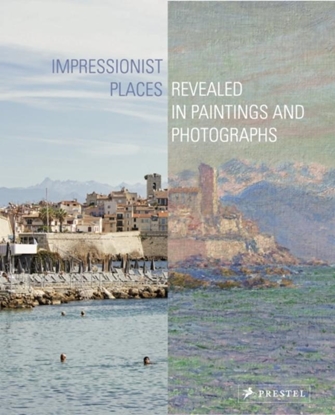
Impressionist Places
In their light-filled landscapes, Impressionist artists created a new way of seeing nature, but what do the places they painted look like one hundred and fifty years on? Inspired by the Barberini Museum’s collection of Impressionist masterpieces, photographer Christoph Irrgang traveled to dozens of European places immortalized in paintings to document the effects of time and modernization on the landscape.
Here his photographs are placed side-by-side with gorgeous reproductions of the original paintings—and the results are, in turn, astonishing and illuminating. Readers will discover how artists imbued their settings with a certain aura and how their magic flows into the reality of the present. At Le Havre, where Monet painted the busy port, the efforts of rebuilding after World War II led UNESCO to inscribe it a World Heritage Site. They will travel to the town of Louveciennes, outside Paris, where Renoir painted his gently shaded pathway.
Readers will revisit the home of novelist Octave Mirbeau, whose garden Pissarro painted as a riot of color. And they will inspect the concrete and iron railroad bridge in the town of Argenteuil on the Seine, which Caillebotte depicted as a modern landscape where nature mingled harmoniously with industry. In addition to informative texts about each painting and each location, this book features precise GPS coordinates of each site. This fascinating study in the juxtaposition of art and photography of past and present will have readers desperate to travel in the footsteps of the Impressionists. Lees meer
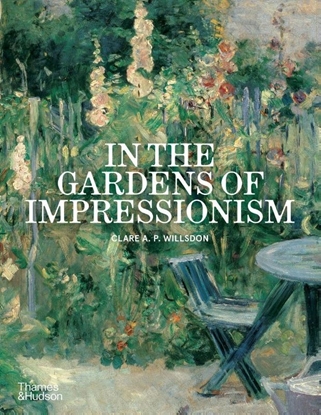
In the Gardens of Impressionism
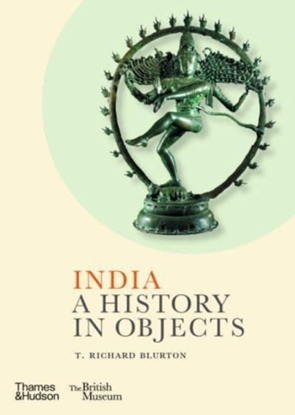
India
India: A History in Objects presents a beautiful collection of material culture from South Asia and traces its history through a huge variety of art and artifacts, both religious and secular.
Arranged chronologically, and abundantly illustrated with expertly selected objects, this superb new overview connects today’s South Asia with its past. Early chapters describe prehistoric objects from 1.5 million years ago, examine artifacts from the Indus Civilization, and follow the emergence of Buddhism, Jainism, Hinduism, Sikhism, Islam, and Christianity. The collection outlines the rise of the Mughals, the greatest Muslim dynasty of India, who made India a leading economic power. The distinct Mughal style is traced through paintings, architecture, hardstone carving, metalwork, and jewelry. This volume also explores the early trade industry to Europe via examples of spice pots, textiles, and other luxury goods. Finally, modernism and political independence in the 20th century are examined through Indian culture such as popular prints, contemporary photography, and the performing arts.
This volume presents a vast panoply, from the urban splendor of dynastic empires to the rural life of the subcontinent. A compelling visual history of rich and diverse cultures, this book will inspire and inform anyone interested in India and material culture.
Lees meer

Innovative Impressions
The first in-depth study to focus on Cassatt, Degas, and Pissarro together, Innovative Impressions explores this under-examined aspect of their careers. Highlighting works drawn from collections across the United States, this volume reveals how these impressionists collaborative engagement with printmaking helped them to develop a visual language whose expressive potential far surpassed the traditional reproductive purpose of the medium and went on to inspire the uses of color for which these artists later became famous.
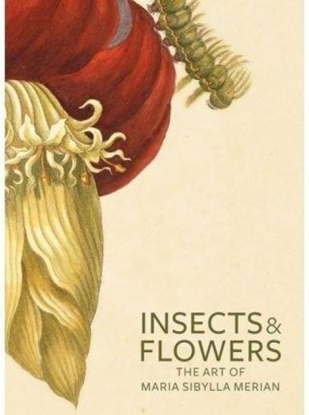
Insects and Flowers – The Art of Maria Sibylla Merian
Instagrammable