
Kunstgeschiedenis

Stylepedia

Subway Art
In new introductions, authors Martha Cooper and Henry Chalfant recall how they gained entry into the New York City graffiti community in the 1970s and 1980s. New afterwords continue the story, tracing the decline of the subway and graffiti scene in the late 1980s to its unexpected rebirth as a global art movement. The authors reveal how the lives of the original subway artists have unfolded and mourn the loss of several to the darker forces of the street. Lees meer

Surrealism
Surrealism was launched as a literary and artistic movement by French poet André Breton in 1924, and by the time of his death in 1966 it had become one of the most popular and recognizable art movements of the twentieth century.
Contrary to common belief, surrealism was created in contrast to the chaos and spontaneity of Dada. Surrealism was a highly organized movement with doctrinaire theories that helped it spread to all corners of the globe, until its very name had entered everyday usage as a synonym for the bizarre.
Taking the reader on a narrative journey beyond such obvious surrealist stars as Salvador Dalí, Surrealism is a digestible introduction to the movement’s key figures as well as their works and where to find them. Complete with a glossary of key terms and chronology, this addition to the Art Essentials series provides an indispensable resource for anyone interested in learning about this influential and wonderfully idiosyncratic style in art.
Lees meer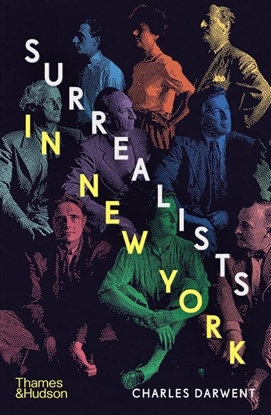
Surrealists in New York
In 1957 the American artist Robert Motherwell made an unexpected claim: "I have only known two painting milieus well … the Parisian Surrealists, with whom I began painting seriously in New York in 1940, and the native movement that has come to be known as 'abstract expressionism,' but which genetically would have been more properly called 'abstract surrealism.'"
Motherwell’s bold assertion, that abstract expressionism was neither new nor local, but born of a brief liaison between America and France, verged on the controversial. Surrealists in New York tells the story of this "liaison" and the European exiles who bought Surrealism with them—an artistic exchange between the Old World and the New—centering on taciturn printmaker Stanley William Hayter and the legendary Atelier 17 print studio he founded. Here artists’ experiments literally pushed the boundaries of modern art. It was in Hayter’s studio that Jackson Pollock found the balance of freedom and control that would culminate in his distinctive drip paintings.
The impact of Max Ernst, André Masson, Louise Bourgeois and other noted émigrés on the work of Motherwell, Pollock, Mark Rothko, and the American avant-garde has for too long been quietly written out of art history. Drawing on first-hand documents, interviews, and archive materials, Charles Darwent brings to life the events and personalities from this crucial encounter, revealing a fascinating new perspective on the history of the art of the twentieth century.
Lees meer
Symbols in Art
Iconography, or the study of symbols—be they animals, artifacts, plants, geometric shapes, or gestures—is an essential aspect of interpreting art. One of the most consistent features of human society throughout time has been the use of visual symbols, which often act as substitutions for the written word, crossing dialects and borders and uniting understandings of the world through a shared language. Incorporating and analyzing a wealth of cultures, Symbols in Art serves as a reference guide to fifty of the most frequently occurring symbols in global art history from 2300 BCE to the present day, exploring their subtle implications and covert meanings.
Entries devoted to specific symbols expose nuances of meaning and historical use, from easily identifiable symbols across the globe to those used to speak to specific cultural groups. This book exposes such intriguing correspondences as the symbolism of grapevines in a fifteenth-century painting by Giovanni Bellini compared to the images in Yinka Shonibare’s Last Supper. Complete with a user-friendly glossary of symbols and a well-selected array of illustrations, this book illuminates common and thought-provoking symbols in art across history and the globe, functioning as an indispensable tool for interpretation.
Lees meer
Taking a Stand: Kathe Kollwitz
Raw, unprettified, and decried in conservative circles as gutter art, Käthe Kollwitz employed her art uncompromisingly as a political voice for the social and human misery of her time. Her focus always lay on the dignity of humankind. Taking a Stand provides wide-ranging insight into the commitment and creative work of the artist, whose achievements are more topical than ever. It covers the entire spectrum of Kollwitzs creative work, including the world-famous cycles of the graphic works A Weavers Revolt and Peasants War, rare proofs, moving drawings, and sculptures, each of which showcases all facets of her masterful skills. The political dimension of Kollwitzs art becomes tangible in a particularly impressive manner through her posters. The unbroken validity of her work is demonstrated in a juxtaposition with the interventions by the contemporary artist Mona Hatoum, which revolve around topics such as vulnerability, persecution, and the experience of conflict.
Lees meer
Tales of the City
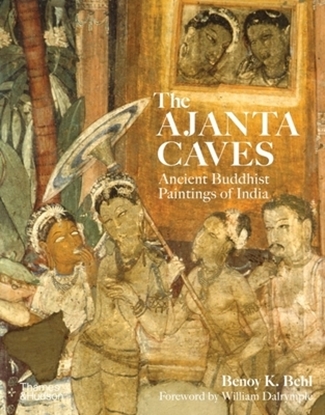
The Ajanta Caves
Since their chance rediscovery in 1819, the breathtaking paintings and sculptures of the Ajanta caves have inspired and delighted experts and amateurs alike. Ranging in date from the second century BCE to the sixth century CE, these ancient Buddhist artworks rank among the world’s most important cultural treasures. Benoy K. Behl captured the beauty and luminosity of these works using long exposures and natural light and now presents them here digitally restored to show the paintings closer to their original glory than ever before.
The exquisite murals, depicting the tales of previous incarnations of Buddha, scenes of princely processions, and fantastical birds and beasts, provide virtually the only evidence of painting styles that first developed in India and remain crucially important to the understanding of Buddhist art throughout Asia. On UNESCO’s list of World Heritage Sites, the Ajanta caves survive as a potent symbol of the great beauty of India’s rich artistic past.
This new edition provides for the first time a view of some of the masterpieces of Ajanta painstakingly digitally restored by Behl. Sensitively carried out, the restoration makes the paintings clearer without interfering with their original grace and nuance, leading to a deeper appreciation of their artistry. Accompanied by expert commentaries to fully immerse the reader in the cultural context of the murals, The Ajanta Caves will help preserve the legacy of the glorious art of Ajanta for years to come.
Lees meer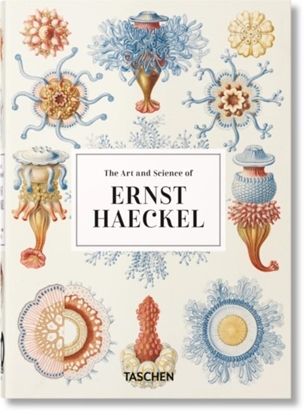
The Art and Science of Ernst Haeckel
Ernst Haeckel (1834–1919) was a German-born biologist, naturalist, evolutionist, artist, philosopher, and doctor who spent his life researching flora and fauna from the highest mountaintops to the deepest ocean. A vociferous supporter and developer of Darwin’s theories of evolution, he denounced religious dogma, authored philosophical treatises, gained a doctorate in zoology, and coined scientific terms which have passed into common usage, including ecology, phylum, and stem cell.
At the heart of Haeckel’s colossal legacy was the motivation not only to discover but also to explain. To do this, he created hundreds of detailed drawings, watercolors, and sketches of his findings which he published in successive volumes, including several marine organism collections and the majestic Kunstformen der Natur (Art Forms in Nature), which could serve as the cornerstone of Haeckel’s entire life project. Like a meticulous visual encyclopedia of living things, Haeckel’s work was as remarkable for its graphic precision and meticulous shading as for its understanding of organic evolution. From bats to the box jellyfish, lizards to lichen, and spider legs to sea anemones, Haeckel emphasized the essential symmetries and order of nature, and found biological beauty in even the most unlikely of creatures.
In this book, we celebrate the scientific, artistic, and environmental importance of Haeckel’s work, with a collection of 300 of his finest prints from several of his most important tomes, including Die Radiolarien, Monographie der Medusen, Die Kalkschwämme, and Kunstformen der Natur. At a time when biodiversity is increasingly threatened by human activities, the book is at once a visual masterwork, an underwater exploration, and a vivid reminder of the precious variety of life.
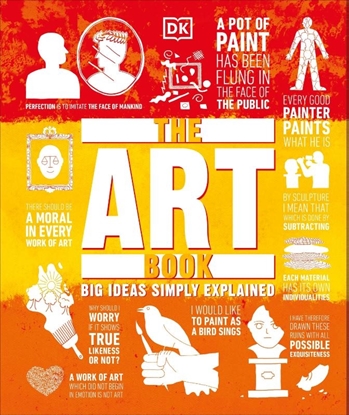
The Art Book
Learn about key movements like impressionism, cubism and symbolism in The Art Book.
Part of the fascinating Big Ideas series, this book tackles tricky topics and themes in a simple and easy to follow format. Learn about Art in this overview guide to the subject, brilliant for novices looking to find out more and experts wishing to refresh their knowledge alike! The Art Book brings a fresh and vibrant take on the topic through eye-catching graphics and diagrams to immerse yourself in.
This captivating book will broaden your understanding of Art, with:
- More than 80 of the world's most remarkable artworks
- Packed with facts, charts, timelines and graphs to help explain core concepts
- A visual approach to big subjects with striking illustrations and graphics throughout
- Easy to follow text makes topics accessible for people at any level of understanding
The Art Book is a captivating introduction to painting, drawing, printing, sculpture, conceptual art, and performance art - from ancient history to the modern day - aimed at adults with an interest in the subject and students wanting to gain more of an overview. Here you'll discover more than 80 of the world's most groundbreaking artworks by history's most influential painters, sculptors and artists, through exciting text and bold graphics.
Your Art Questions, Simply Explained
This fresh new guide examines the ideas that inspired masterpieces by Van Gogh, Rembrandt, Klimt, Matisse, Picasso, and dozens more! If you thought it was difficult to learn about the defining movements, The Art Book presents key information in a clear layout. Find out about subject matters, techniques, and materials, and learn about the talented artists behind the great works, through superb mind maps and step-by-step summaries.
The Big Ideas Series
With millions of copies sold worldwide, The Art Book is part of the award-winning Big Ideas series from DK. The series uses striking graphics along with engaging writing, making big topics easy to understand.
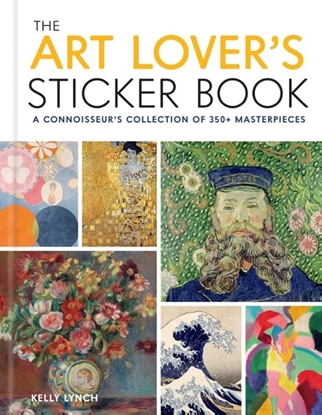
The Art Lover's Sticker Book
A visual feast for art lovers, here is a world-class collection of 350 masterpiecesall in sticker form. Imagine Johannes Vermeer's iconic Girl with a Pearl Earring at your fingertips, ready to display wherever you want it. Same with Vincent van Gogh's Almond Blossom, Mary Cassatt's Mother and Child, Katsushika Hokusai's The Great Wave, Grant Wood's American Gothic, and Claude Monet's Waterlilies. Plus even more stunning art by Edgar Degas, Horace Pippin, Berthe Morisot, Pierre-Auguste Renoir, Hilma af Klint, and so many more. Meticulously curated and whimsically organized to showcase the works in a fresh way, it's a treasure trove of beautiful stickers that offers hours of crafty magic and creative pleasure, and above all, endless inspiration. Lees meer

The Art of Contemporary China
Contemporary Chinese art is a subject of sustained and growing significance in present-day culture across the globe. This new volume in the World of Art series reframes Chinese art since the end of China’s Cultural Revolution more than four decades ago, placing it in the context of the nation’s unprecedented cultural, political, and urban transformation.
Based on original research by writer, curator, and leading scholar in the field of contemporary Chinese art, Jiang Jiehong, this volume explores the area through firsthand materials and in-depth interviews with more than thirty artists. Providing the most up-to-date understanding of contemporary Chinese art, Jiang includes a variety of media, ranging from painting, printmaking, sculpture, and photography to installation, video, performance, and participatory art. Featuring over 150 color images of artworks by more than fifty internationally renowned Chinese artists, including Ai Weiwei and Zhang Peili, as well as emerging artists, such as Zhao Zhao, The Art of Contemporary China presents a wide variety of practices through curatorial discussions and images of original installation views and historical art events.
What emerges are revelations on art, and new insights into contemporary China. Fulfilling a need for an accessible, affordable introduction to contemporary Chinese art, this volume offers a concise but far-reaching survey of the movement.
Lees meer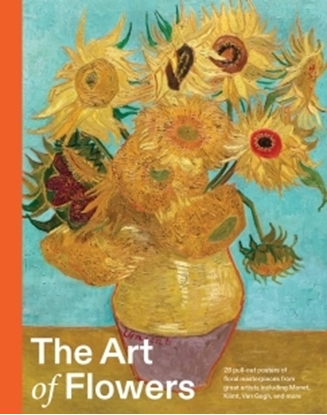
The Art of Flowers
From Monet’s Water Lilies and Klimt’s Farm Garden with Sunflowers to Renoir’s Flowers in a Vase and Cézanne’s The Blue Vase, The Art of Flowers features 28 posters of art history’s most iconic floral paintings, ready to be hung, stuck, or pinned to your walls.
Compiled in an easy-glide, pull-out format, this large-format poster book features affordable and beautiful artworks on quality card, to fit a standard 11 × 14” frame. Lees meer
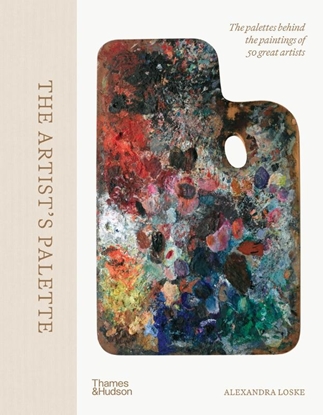
The Artist's Palette
The Bayeux Tapestry: Fold-Out Edition

The Beauty of the Flower
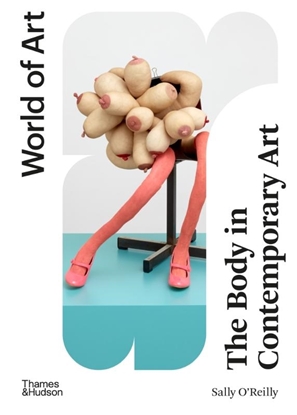
The Body in Contemporary Art
The Body in Contemporary Art presents a global survey of art made since 2000 that takes the body as its focus. Examining such areas as nature and technology, identity politics, and the grotesque, writer and critic Sally O'Reilly traces the body’s movement from a subject to a live medium of art, and highlights how sociopolitical and cultural developments, from contemporary scientific breakthroughs to the Russian-Ukrainian war, have all had a profound influence on representations of the human form.
From painting and sculpture to installation, video art, and performance, O’Reilly reveals the myriad ways in which the body has inspired a generation of artists. Featuring the work of both renowned and up-and-coming figures, including Marina Abramovic, Hew Locke, Jenkin van Zyl, Shirin Neshat, Sarah Lucas, and Shawanda Corbett, The Body in Contemporary Art shows how the human form continues to be pivotal to our understanding and expression of our place in the universe.
International in scope with color illustrations throughout, this edition has been comprehensively revised, with an updated selection of artists and five new chapters covering topics such as clothing, work and economics, the nude, and illness.
Lees meer