Kunstgeschiedenis
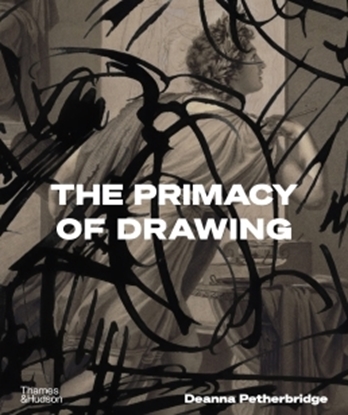
The Primacy of Drawing
Drawing has always been an inseparable part of art-making, both as a distinct art form and a crucial step in many other creative visual practice. Yet, its role has faced increasing scrutiny in recent decades. The popularity of readymades, the endless possibilities of new technologies, and the idea of the artist as a performer have shifted attention away from traditional studies or sketches. Deanna Petherbridge's second edition of The Primacy of Drawing invites new perspectives on the practice, which she argues is central to "all aspects of cultural making and thinking."
Petherbridge begins by exploring ancient myths about the origins of drawing, then examines the contrasts between open-ended sketches and highly formalized studies, which together form a drawing continuum—graphic parameters within which artists continue to experiment. She also delves into the economy of drawing—its qualities of line and mark, and analyzes the strategies behind making, composing, and inventing drawn images. The teaching of drawing in academies has led to complex theories on copying, genre hierarchies, and expressive figure drawing. The manner in which satire, sexuality, and play develop compositional strategies reflects Petherbridge’s perspective as a teacher, deeply engaged with the hows and whys of visual thinking.
The Primacy of Drawing serves as both a much-needed history of the practice and a valuable resource for anyone interested in drawing.
Lees meer
The Royals

The Salon of 1846
Charles Baudelaire, considered a father of modern poetry, wrote some of the most daring and influential prose of the nineteenth century. Prior to publishing the international bestseller Les Fleurs du mal (1857), he was already notable as a forthright and witty critic of art and literature. Captivated by the Salons in Paris, Baudelaire took to writing to express his theories on modern art and art philosophy.
The Salon of 1846 expands upon the tenets of romanticism as Baudelaire methodically takes his reader through paintings by Delacroix and Ingres, illuminating his belief that the pursuit of the ideal must be paramount in artistic expression. Here we also see Baudelaire caught in a fundamental struggle with the urban commodity of capitalism developing in Paris at that time. Baudelaire’s text proves to be a useful lens for understanding art criticism in mid-nineteenth-century France, as well as the changing opinions regarding the essential nature of romanticism and the artist as creative genius.
Acclaimed art historian and art critic Michael Fried’s introduction offers a new reading of Baudelaire’s seminal text and highlights the importance of his writing and its relevance to today’s audience. Lees meer
The Secret Language of Plants
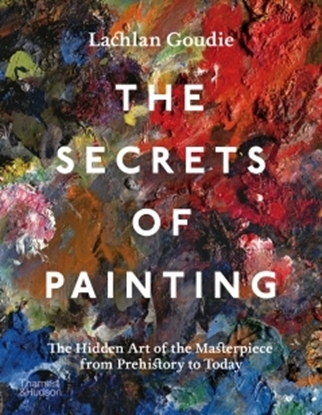
The Secrets of Painting
When looking at a work of art, the first question that painter Lachlan Goudie considers is not why but how was it created?
Goudie knows from experience that masterpieces don’t simply emerge from an artist's studio. They are the result of a long tussle between dirty hands and crushed pigment, hog's-hair brushes and linseed oil, rabbit-skin glue and pulverized chalk. Great paintings are the product of a struggle involving artists and their materials, one that pushes the practitioner to the very limits of technical ability.
Above all else, the secrets of painting lie in the physical elements from which an image is crafted. The nature of these elements has changed over time and across continents. And as each generation of painters exploits the new materials and technical innovations of their era, they define the essence of their work and shift the course of art history.
Goudie traces this story all the way back to the original "big bang" in the story of art: the very first painting pigments, made from charcoal and minerals, and used to paint extraordinary art on the walls of the caves at Chauvet thirty-six thousand years ago. He goes on to explore the impact of numerous new inventions and discoveries over the centuries, including ink, fresco, egg tempera, oil paint, canvas, watercolor, gouache, impasto, tubes of manufactured oil paint, collage, household gloss, acrylic, digital media, and AI. Each chapter focuses on a technical turning point, as embodied in the work of artists including Giotto, Artemisia Gentileschi, Alma Thomas, Anselm Kiefer, David Hockney, and many more.
Lees meer
The Self-Portrait
After six centuries, self-portraiture shows no sign of losing its ability to capture the public imagination. Self-portraits have the power to illuminate a range of universal concerns, from identity, purpose, and authenticity, to frailty, futility, and mortality.
In this volume in the Art Essentials series, author Natalie Rudd expertly casts fresh light on the self-portrait and its international appeal, exploring the historical contexts within which self-portraits developed and considering the meanings they hold today. With commentaries on works by artists ranging from Jan van Eyck, Francisco Goya, and Vincent van Gogh, to Frida Kahlo, Faith Ringgold, and Cindy Sherman, this book explores the emotive and expressive potential of self-portraiture. The Self-Portrait also considers a wide range of materials available for self-expression, from painting and photography to installation and performance. In the process, the book explores the central question of why artists return to the self-portrait again and again. In her vibrant and timely text, Rudd dissects this and other important questions, revealing the shifting faces of individuality and selfhood in an age where we are interrogating notions of personal identity more than ever before.
Lees meer
The Short Story of Modern Art

The Spirit of Indian Painting

The Splendour of Modernity

The Story of Art
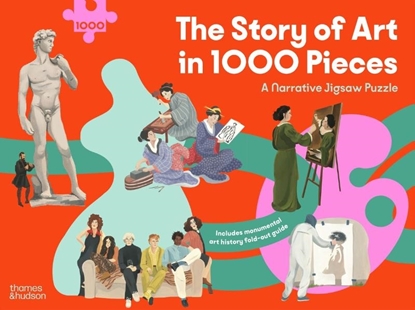
The Story of Art in 1000 Pieces
New to art history and puzzled about where to start?
Try piecing together this beautifully illustrated timeline featuring fifty key moments in art history. This jigsaw traces the story of art, starting at Blombos Cave, the oldest known workshop where the first drawings were discovered. Step inside the studio of Artemisia Gentileschi, follow Sebastião Salgado documenting life in the Amazon, and uncover Emperor Qin Shi Huang's vast Terracotta Army.
This is perfect for puzzlers who want a fun introduction to art history.
For ages 10+
Lees meer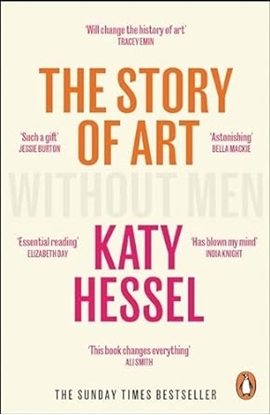
The Story of Art without Men
OUT NOW: How to Live an Artful Life, Katy Hessel's new guide to finding art in the everyday
WATERSTONES BOOK OF THE YEAR 2022
THE INSTANT SUNDAY TIMES AND NEW YORK TIMES BESTSELLER
** Now available: The Story of Art Without Men, illustrated edition **
'A long overdue, revisionist history of art by the brilliant Katy Hessel . . . Never stuffy or supercilious, Hessel's book is a revelation and an important first step towards redressing the balance of an art world in which women have been sidelined, stepped over and trampled upon for far too long.' REFINERY29
'An extraordinary achievement that will have a disruptive cultural legacy and help determine the landscape for years to come.' HARPER'S BAZAAR
'Katy Hessel is a brilliant chronicler of the overlooked. I am so thrilled this book exists as an empowering, enlightening guide to the unforgettable vision of these brilliant artists. Essential reading.' ELIZABETH DAY
'Will change the history of art . . . thank God.' TRACEY EMIN
'I was not aware how hungry I was for this book until I dropped everything and ate it from cover to cover. I was not aware how angry I was that this book did not exist until it existed. It's an urgently needed, un-put-downable, joyful, insightful, glorious, perspective-shifting revision of the Story of Art.' ES DEVLIN
__________________________________
How many women artists do you know? Who makes art history? Did women even work as artists before the twentieth century? And what is the Baroque anyway?
Have your sense of art history overturned, and your eyes opened to many art forms often overlooked or dismissed. From the Cornish coast to Manhattan, Nigeria to Japan, this is the story of art for our times - one with women at its heart, brought together for the first time by the creator of @thegreatwomenartists.
__________________________________
'A spirited, inspiring, brilliantly illustrated history of female artistic endeavour . . . The Story of Art Without Men should be on the reading list of every A-level and university art history course and on the front table of every museum and gallery shop.' LAURA FREEMAN, THE TIMES
'Passionate, enthusiastic and witty . . . I wish I had had this book as a teenager' THE I
Sunday Times bestseller, January 2023
Lees meer
The Story of Art without Men
How many women artists do you know? Who makes art history? Did women even work as artists before the twentieth century? And what is the Baroque anyway?
Discover the glittering Sofonisba Anguissola of the Renaissance, the radical work of Harriet Powers in the nineteenth-century USA and the artist who really invented the Readymade. Explore the Dutch Golden Age, the astonishing work of post-War artists in Latin America and the women artists defining art in the 2020s. Have your sense of art history overturned, and your eyes opened to many art forms often overlooked or dismissed. From the Cornish coast to Manhattan, Nigeria to Japan, this is the history of art as it's never been told before.
Lees meer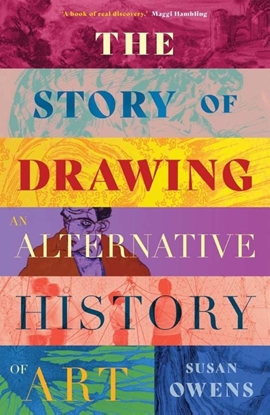
The Story of Drawing
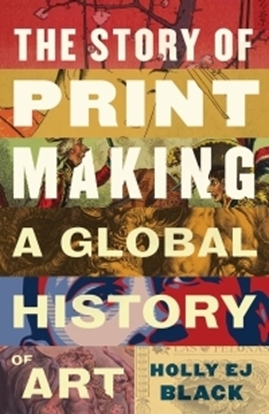
The Story of Printmaking

The Subversive Stitch
Rozsika Parker's re-evaluation of the reciprocal relationship between women and embroidery has brought stitchery out from the private world of female domesticity into the fine arts, created a major breakthrough in art history and criticism, and fostered the emergence of today's dynamic and expanding crafts movements.
The Subversive Stitch is now available again with a new Introduction that brings the book up to date with exploration of the stitched art of Louise Bourgeois and Tracey Emin, as well as the work of new young female and male embroiderers. Rozsika Parker uses household accounts, women's magazines, letters, novels and the works of art themselves to trace through history how the separation of the craft of embroidery from the fine arts came to be a major force in the marginalisation of women's work. Beautifully illustrated, her book also discusses the contradictory nature of women's experience of embroidery: how it has inculcated female subservience while providing an immensely pleasurable source of creativity, forging links between women.
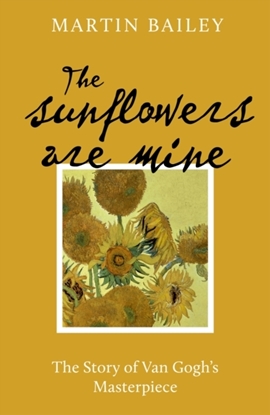
The Sunflowers are Mine
This is the story of one of the world’ s most iconic images. Martin Bailey explains why Van Gogh painted a series of sunflower still lifes in Provence. He then explores the subsequent adventures of the seven pictures, and their influence on modern art. Through the Sunflowers, we gain fresh insights into Van Gogh’ s life and his path to fame. Based on original research, the book is packed with discoveries – throwing new light on the legendary artist.
Lees meer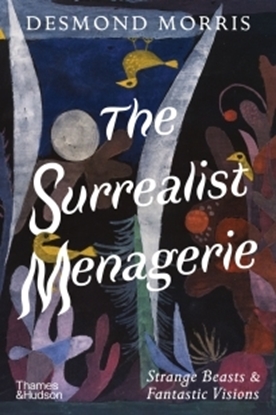
The Surrealist Menagerie
Authored by renowned zoologist Desmond Morris—the last surviving member of the surrealist movement—The Surrealist Menagerie explores the many ways that animals have been represented in surrealist art. Creature by creature, Morris plots an uncanny and entertaining expedition through the animal kingdom as reinterpreted by the likes of Max Ernst, René Magritte, Dorothea Tanning, and Remedios Varo. Combining the trained eye of a scientist and a unique insider’s perspective, Morris provides extraordinary insights into the significance and symbolism of specific life-forms in some of the movement’s most imaginative works.
From Leonora Carrington’s hyenas to Salvador Dalí's chimeras, Leonor Fini's cats to Félix Labisse's mollusks, nonhuman creatures became enduring points of fascination for many surrealist artists. These recurring motifs were used to explore ideas of mutability, psychology, the marvelous, the natural, and the uncanny.
More than a bestiary of the bizarre, The Surrealist Menagerie is a celebration of one of modern art’s most revolutionary movements—a must-read for lovers of surrealism, zoology, and the beautiful strangeness of the natural world.
Lees meer