
Kunstgeschiedenis
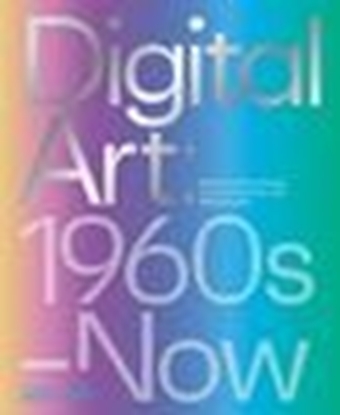
Digital Art
This new, image-led history of global digital art from the 1960s to the present day draws on the V&A's rich collection while linking the digital art scene to wider art and design histories, and to their social, political, and technological contexts. Decade-by-decade essays by leading authorities explore evolving digital art practices, and a series of interviews and discussions with prominent artists, gallerists, museum curators, and collectors from the world of digital art offer fascinating insights into the subject.
Digital Art: 1960s to Now explores ideas of artificial intelligence, computer animation, simulation, and cybernetics. Global in reach, it features historic works from pioneering artists such as Analivia Cordeiro, Eduardo Mac Entyre, Manfred Mohr, Vera Molnar, and Frieder Nake, alongside renowned contemporary artists such as Danielle Brathwaite-Shirley, Harm van den Dorpel, Trevor Paglen, Anna Ridler, and Nye Thompson.
Dix Portraits
Written between 1913 and 1929, revolutionary years in art history, Dix Portraits conveys the deep human engagement between an artist and her subject. The artist book unites Stein’s ten portraits in prose with sketches by five artists: Pablo Picasso, Christian Bérard, Eugene Berman, Pavel Tchelitchew, and Kristians Tonny. Utilizing the interplay between word and image, Stein’s writing and the artists’ images provide nuance and depth, balancing humor and sincerity.
With a new introduction by the writer Lynne Tillman, Dix Portraits is an unforgettable artistic collaboration. The subjects represented include Guillaume Apollinaire, Christian Bérard, Eugene Berman, Bernard Faÿ, Georges Hugnet, Pablo Picasso, Erik Satie, Pavel Tchelitchew, Virgil Thomson, and Kristians Tonny. Originally printed in an edition of one hundred copies with the lithography, and now widely accessible for the first time, Dix Portraits captures Stein’s legacy as a champion of artists and a pioneer of creativity. Lees meer
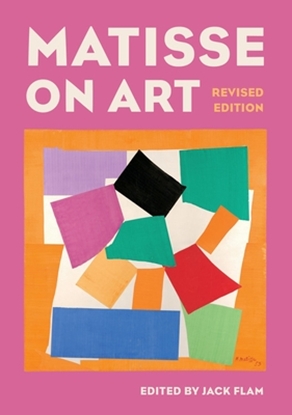
Documents of Twentieth Century Art Matisse on Art, Revised edition
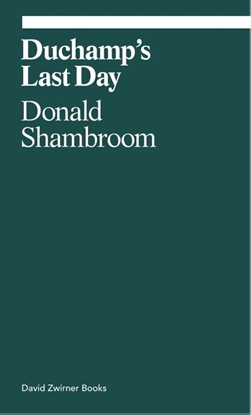
Duchamp's Last Day
Just moments after Duchamp died, his closest friend Man Ray took a photograph of him. His face is wan; his eyes are closed; he appears calm. Taking this image as a point of departure, Donald Shambroom begins to examine the surrounding context—the dinner with Man Ray and another friend, Robert Lebel, the night Duchamp died, the conversations about his own death at that dinner and elsewhere, and the larger question of whether this radical artist’s death can be read as an extension of his work.
Shambroom’s in-depth research into this final night, and his analysis of the photograph, feeds into larger questions about the very nature of artworks and authorship which Duchamp raised in his lifetime. In the case of this mysterious and once long-lost photograph, who is the author? Man Ray or Duchamp? Is it an artwork or merely a record? Has the artist himself turned into one of his own readymades?
A fascinating essay that is both intimate and steeped in art history, Duchamp’s Last Day is filled with intricate details from decades of research into this peculiar encounter between art, life, and death. Shambroom’s book is a wonderful study of one of the greatest artists of the twentieth century. Lees meer
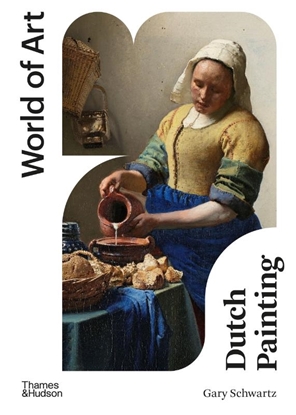
Dutch Painting
Renowned art historian Gary Schwartz offers a fresh and contemporary perspective on seventeenth-century Dutch painting, one of the most significant movements in European art. This engaging and authoritative guide brings together a range of notable paintings from leading museum collections to explore the work of well-known masters such as Rembrandt van Rijn, Judith Leyster, and Johannes Vermeer, as well as artists that readers may be discovering for the first time, such as Adriaen van de Velde and Gesina ter Borch.
In nine chapters, the book delves into patronage and the art market; the reception and study of Dutch painting; gender and race; painters working in Europe, Asia, and beyond; as well as issues of attribution. Covering a broad range of subjects and styles, Dutch Painting examines the full spectrum of seventeenth-century European painters, offering a comprehensive overview of Dutch painting both in its historical context and through a contemporary lens with up-to-date and insightful analysis.
Lees meer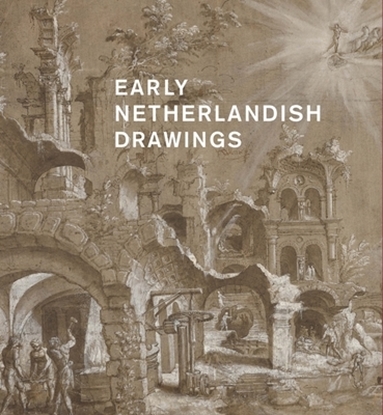
Early Netherlandish drawings, 1400–1600
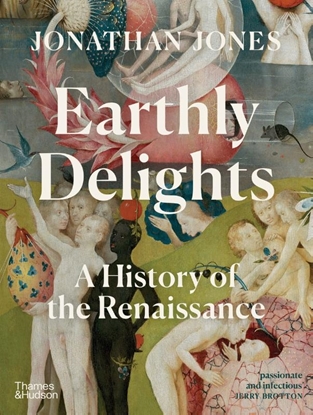
Earthly Delights
What was the "Renaissance"? In the nineteenth century this flowering of creativity and thought was celebrated as the birth of the modern world. Today many historians are sceptical about its very existence. Earthly Delights rekindles the Renaissance as a seismic change in European mentalities, in a panoramic history that encompasses Florence and Bruges, London and Nuremberg. Artists from northern as well as southern Europe, including Leonardo, Bosch, Bruegel, and Titian, star in a captivating and beautifully illustrated narrative that sets their lives against a period of convulsive change across a continent that was finding itself as it "discovered" the world.
Art critic and writer Jonathan Jones tells the story of Renaissance artists as pioneers, adventurers and "geniuses," a Renaissance concept. Albrecht Dürer gazes with wonder on Aztec art in Brussels in 1520, Leonardo da Vinci tries to perfect a flying machine, Hieronymus Bosch finds inspiration in West African ivory carvings imported by the Portuguese to Antwerp. A then unknown Netherlandish painter, Pieter Bruegel, arrives in 1550s Rome just as Michelangelo is striving in the same city to raise the new St Peter’s Basilica towards heaven. From Atlantic voyages to Germanic woods, Italian palazzi to the royal castle of Prague, this was an age when people dared to experiment with the occult and dabble in utopias: to think and create new worlds.
Lees meer
Edgar Degas
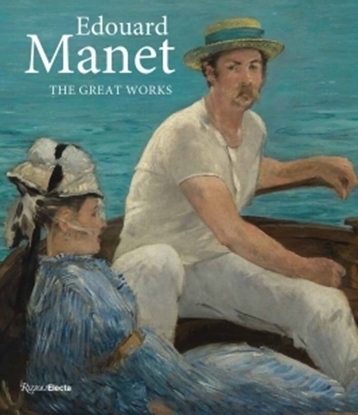
Edouard Manet
With nearly one hundred seminal paintings, this publication celebrates the artist who paved the way for the Impressionist movement and the rise of modernism. Combining a radical technique with contemporary subjects, Manet’s groundbreaking works engage with modern Paris, depicting its new boulevards and fashionable parks and cafés along with a range of urban types, from ragpickers and prostitutes to barmaids and elegant Parisians.
Included here are the artist’s iconic scenes of modern life such as Luncheon on the Grass, with its shocking juxtaposition of a female nude and a pair of fully dressed men, and Olympia, a modern reworking of Titian’s Renaissance masterpiece, Venus of Urbino, that scandalized Paris in the 1860s and established Manet as the leader of the avant-garde.
This book also explores Manet’s artistic legacy in the work of subsequent generations of artists, from Cézanne and Picasso to contemporary artists including Nicole Eisenman. Lees meer
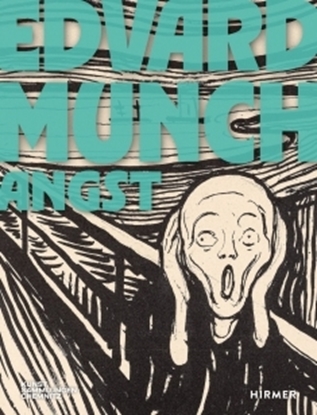
Edvard Munch
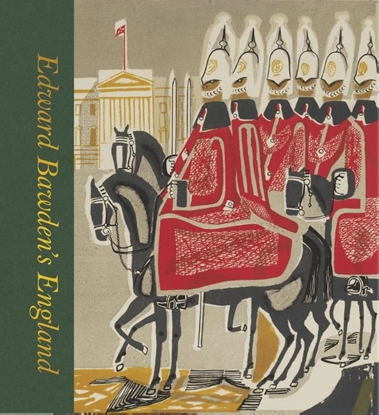
Edward Bawden’s England
The work of Edward Bawden (1903–1989), a painter, printmaker, illustrator, and designer, brims with lively, affectionate, and entertaining accounts of English life. Bawden’s subjects include classic London scenes, such as St. Paul’s Cathedral, the Tower of London, Liverpool Street station, the Queen’s Guards at Buckingham Palace, as well as charming rural scenes with churches, country houses, cottages, gardens, markets, parks, piers, pubs, and steam trains. He created murals, designed tiles and wallpapers, and was regularly commissioned to deploy his vivacious humor in advertisements, posters, book jackets, and brochures. It was England, with its quiet landscapes, its pleasures and pastimes, and its time-honored trades and traditions, that was the source of some of Bawden’s finest work.
This beautifully designed book begins with a brief introduction before exploring examples of Bawden’s work, with each illustration accompanied by an extended caption revealing the artistic vision of this quintessentially English artist.
Lees meer


Erasing History

Erwin Osen: Egon Schiele's Artist Friend
A multifaceted artist and charismatic figure in Viennas art scene, Erwin Osen (18911970) is best known today as Egon Schieles friend and one of his models. While their relationship inspired some of Schieles masterpieces, Osen also left his mark on expressionism through his work, which is ripe for rediscovery.
A true Renaissance man, Osen counted drawing and painting among his art practices, as well as stage decor and set design, acting, pantomime, singing, cabaret, theater, and filmmaking. He and Schiele shared a studio, as well as an interest in the experience of patients in healthcare settings. Both a biography and a chronicle of the fruitful interaction between two artists, Erwin Osen shines a light on a fascinating and underappreciated creative. Lees meer
Expressionism
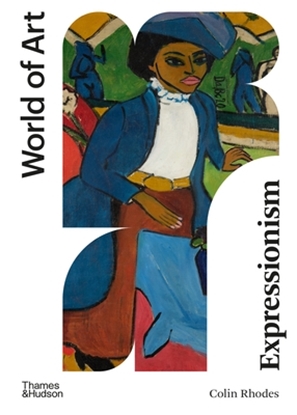
Expressionist artists believed in art's ability to communicate emotion, irrespective of any representational or narrative content. In this comprehensive introduction to one of the most radical artistic movements of our time, writer, artist, curator, and educator Colin Rhodes traces the thread of expressionist thought from the nineteenth century to the present day, mapping its various manifestations across Europe and the US, as well as parts of Africa, Asia, and South America.
By paying particular attention to nuanced issues of gender, sexuality, and cultural appropriation, Rhodes challenges the received art-historical narrative and reassesses it in the context of broader twentieth- and twenty-first-century artistic practice. Generously illustrated, the diverse selection of artists featured in this book range from Wassily Kandinsky, Erma Bossi, Francis Bacon, and Mark Rothko to Ursula Schultze-Bluhm, Gillian Ayres, Purvis Young, and Jadé Fadojutimi.
Lees meer